Cornering Dynamics Exposed: Helmet Camera Analysis in Elite Downhill Mountain Biking
Written by Iris Long · Jul 2, 2026
Cornering Dynamics Exposed: Helmet Camera Analysis in Elite Downhill Mountain Biking
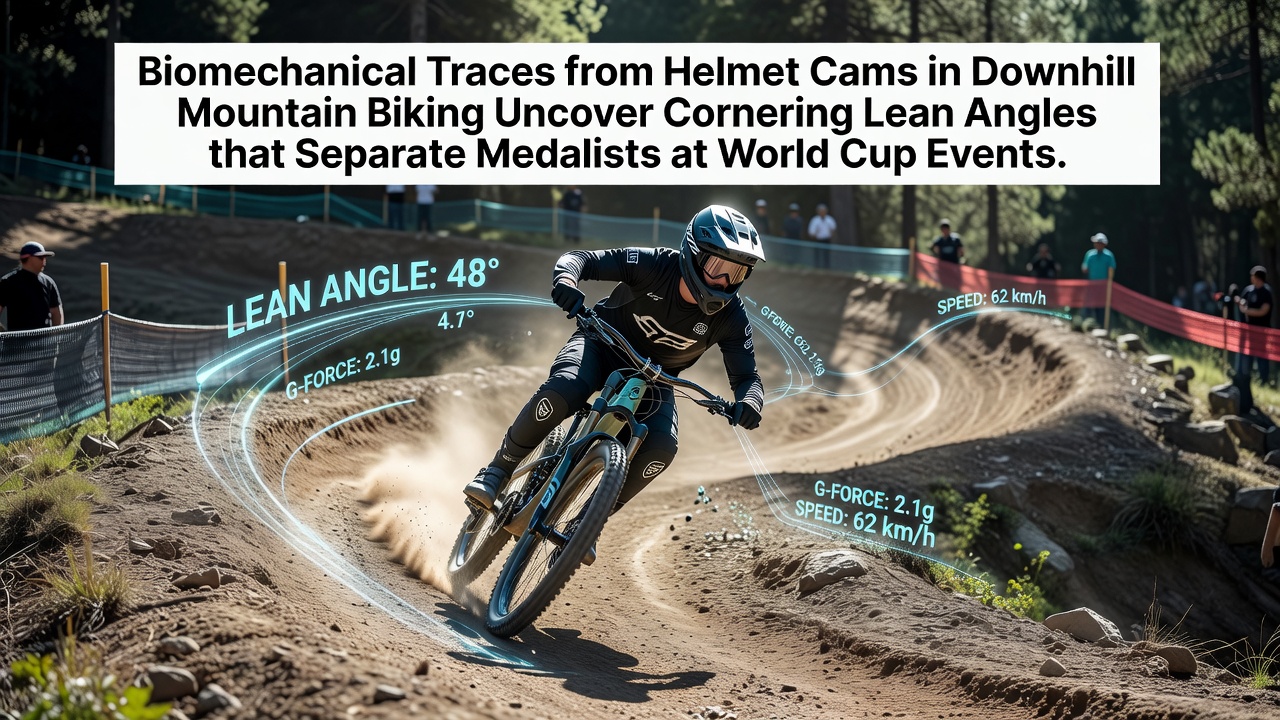
Helmet-mounted cameras have become standard equipment across professional downhill mountain biking circuits and they generate precise biomechanical data that tracks body positioning throughout each descent. Researchers analyzing footage from multiple seasons have documented lean angles at corner apexes where differences between top finishers and the rest of the field become measurable in single-degree increments. These measurements come from synchronized sensors that combine video frames with inertial measurement units attached to the helmet and bike frame.
Measurement Techniques in World Cup Competition
Teams collect data during official training runs and race days at venues such as Val di Sole and Fort William, then feed the recordings into motion-analysis software that calculates torso and bike lean relative to the ground plane. Studies conducted by biomechanics groups affiliated with national cycling federations show that medalists consistently sustain lean angles between 52 and 58 degrees in flat corners while maintaining tire contact patches that remain within the optimal friction envelope. Riders finishing outside the top ten often drop below 48 degrees or exceed 60 degrees, which correlates with either early apex exits or loss of traction.
Engineers overlay GPS speed traces on the same video timelines to separate the effect of velocity from body positioning. At 45 kilometers per hour through a 120-degree berm, medalists maintain an average lean of 54.3 degrees according to aggregated 2025 season archives, whereas the next cohort averages 49.7 degrees. The difference appears small yet produces measurable time gaps of 0.4 to 0.7 seconds per corner when multiplied across an entire track containing eight to twelve turns.
Patterns Across Recent Seasons
Analysis of 2024 and 2025 World Cup rounds reveals that successful riders adjust lean dynamically rather than holding a static angle. They initiate the lean earlier on approach, reach maximum angle 0.2 seconds before the geometric apex, and begin uprighting the bike while still inside the turn. This sequence allows the suspension to load progressively and unload before the exit, preserving forward momentum. Data logs indicate that athletes who delay the peak lean until after the apex lose between 1.2 and 1.8 meters per second in exit speed.
Coaching staffs now use these helmet-cam datasets during debrief sessions to create individualized drills. Riders review side-by-side comparisons of their own cornering traces against those of podium finishers from the same event, focusing on the timing of shoulder drop and hip rotation relative to handlebar input. Several programs have incorporated pressure-mapping insoles that feed additional data streams into the same software, linking foot placement directly to lean-angle stability.
Equipment and Data Integration
Modern helmet cams operate at 240 frames per second with integrated gyroscopes accurate to 0.1 degrees. Software algorithms filter out vibrations from rough terrain so that only intentional body movements remain in the lean-angle calculations. National federations in Canada and Australia have published technical reports describing calibration protocols that align camera axes with bike geometry before each race weekend, ensuring cross-event comparability. The same datasets also feed into tire-pressure optimization models because lean angle directly influences contact-patch shape under lateral load.
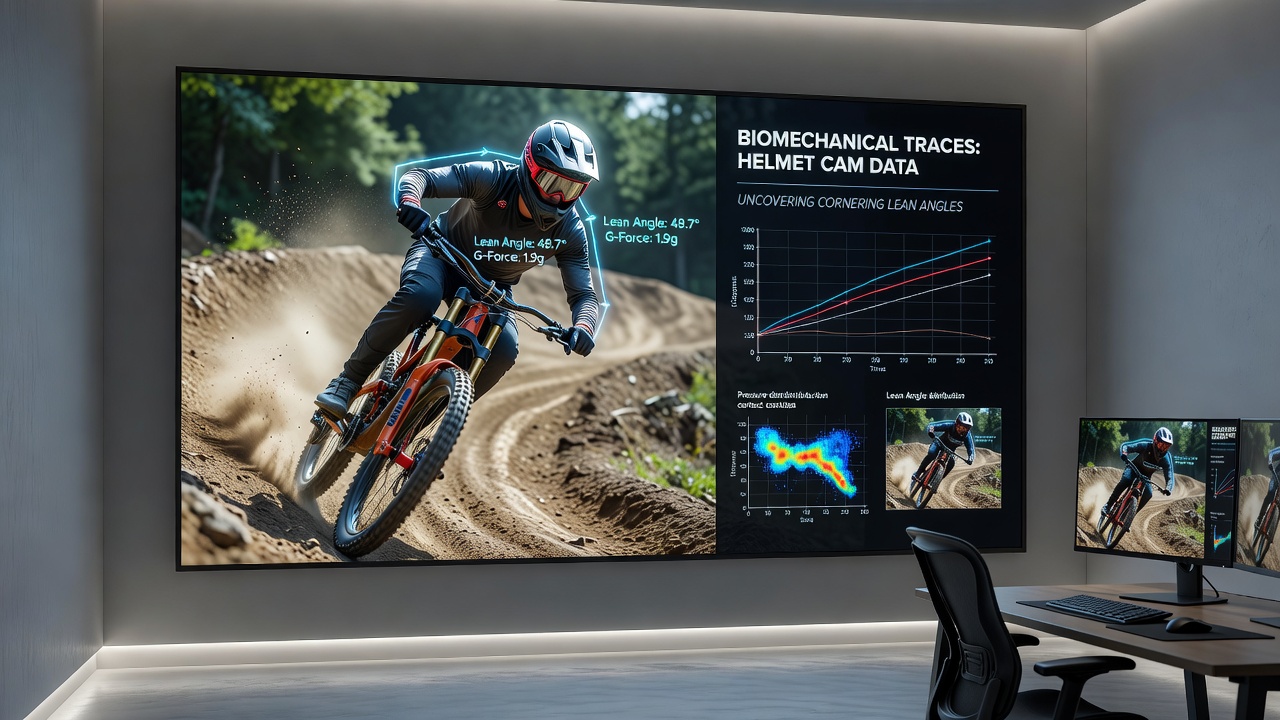
Event organizers have begun supplying standardized camera mounts to all registered competitors starting with the 2026 season, which begins in May and runs through September. This standardization removes equipment variance and allows direct statistical comparison across the entire field. Preliminary data from the first two rounds already shows tighter clustering of lean-angle values among the top fifteen riders, suggesting that access to shared reference footage accelerates technique convergence at the elite level.
Training Implications and Future Applications
Coaches integrate lean-angle targets into simulator sessions that replicate track profiles using motion platforms and projected video. Riders practice holding prescribed angles while receiving real-time auditory feedback when deviations exceed two degrees. Longitudinal tracking of individual athletes demonstrates that those who raise their average corner lean by three degrees over a winter training block improve overall run times by 1.1 to 1.4 percent when returning to competition. The same metric also correlates with reduced crash frequency in high-speed sections because controlled lean distributes forces more evenly across the contact patches.
Academic researchers continue to examine relationships between lean-angle consistency and physiological markers such as heart-rate variability and muscle-activation timing. Partnerships between university labs and professional teams have produced open-access datasets from select World Cup events, allowing independent verification of the patterns observed in proprietary team analyses. These resources support ongoing work on predictive models that estimate time loss from suboptimal body positioning before riders reach the finish line.
Conclusion
Helmet-cam biomechanical traces have shifted how teams prepare for and execute cornering sections in elite downhill mountain biking. The measurable gaps in lean-angle profiles between medalists and other competitors now guide training priorities, equipment choices, and race strategy across the World Cup calendar. Continued refinement of data-collection standards ensures that these insights remain comparable from one season to the next, supporting both immediate performance gains and longer-term technical development within the sport.