Crossover Torque Dynamics Revealed Through Speed Skating Archive Analysis
Written by Anna Albrecht · Jul 25, 2026
Crossover Torque Dynamics Revealed Through Speed Skating Archive Analysis
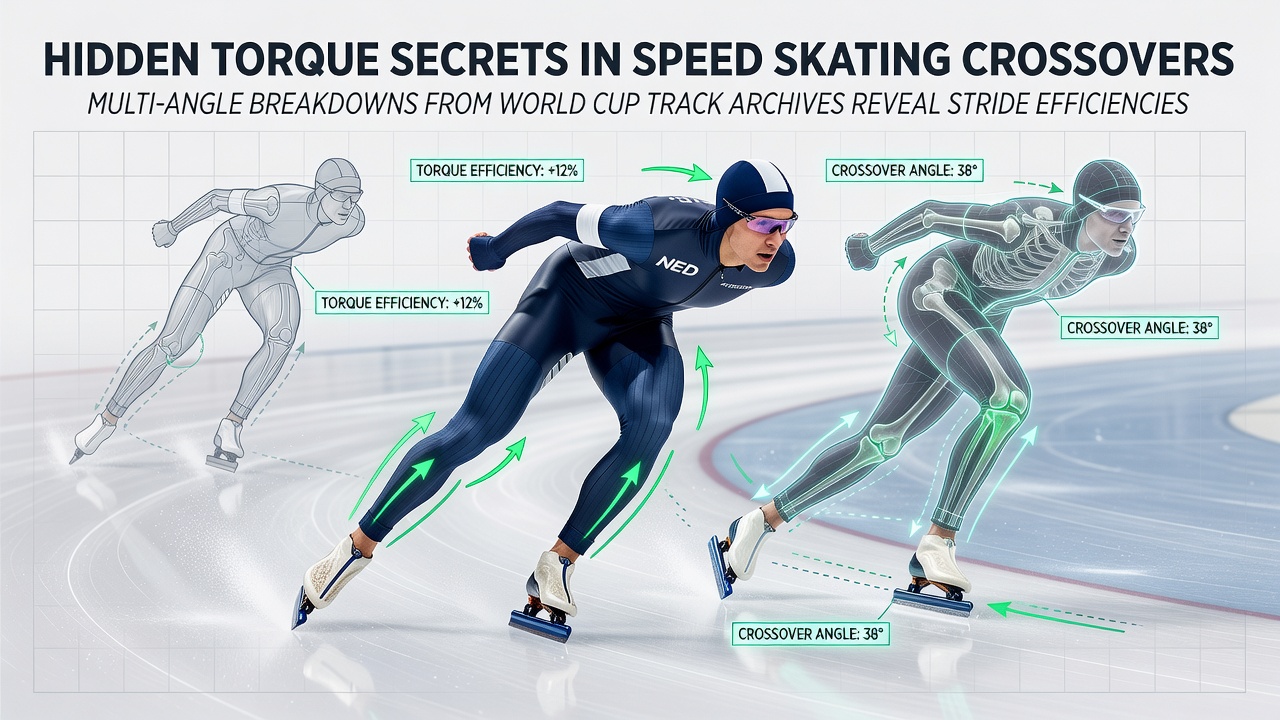
Speed skating crossovers demand precise torque management, and analysts have examined World Cup track archives to map how elite performers generate and transfer rotational forces during lane changes. Footage from multiple camera angles captures hip rotation, skate edge pressure, and upper body counterbalance in sequences that span several seconds per lap, revealing patterns in stride efficiency that vary by track conditions and race distance.
Mechanics of Torque Generation in Crossovers
During a standard crossover, skaters push off the inside edge of the trailing skate while the lead skate plants at an angle that redirects linear momentum into a curved path, and torque arises primarily from the twisting action at the hips combined with downward force through the gluteal and core muscles. Multi-angle studies show that peak torque values occur in the first 200 milliseconds after push-off, when the trailing leg extends and the torso rotates to maintain balance over the new inside edge. Data from championship events indicates that efficient skaters minimize energy loss by aligning shoulder and hip rotations within a narrow range of 15 to 20 degrees relative to the direction of travel.
Video Analysis Methods From World Cup Collections
Researchers have compiled synchronized footage from overhead, side, and rear perspectives across dozens of World Cup meets, then applied motion tracking overlays to quantify joint angles and ground reaction forces frame by frame. These layered breakdowns allow observers to isolate the moment when torque transfers from the lower body to the skate blade, and patterns emerge showing that top performers sustain higher average torque output over repeated crossovers without increasing overall cycle time. In events held during teh 2025 season leading into July 2026 training camps, analysts noted consistent improvements in stride length when skaters adjusted their crossover timing by as little as 30 milliseconds.
Stride Efficiency Patterns Across Distances
Short-track specialists tend to produce sharper torque spikes suited to tight turns, whereas long-track skaters emphasize smoother, sustained rotations that preserve momentum over longer straights before entering the crossover zone. Archive comparisons demonstrate that skaters who reduce vertical oscillation during the crossover phase achieve measurable gains in efficiency, often translating to lower lap times without added physical effort. One documented case from a European World Cup stop highlighted a skater who refined hip alignment and recorded a 2.3 percent reduction in energy expenditure per lap according to onboard sensor data.
Regional Training Approaches and Archive Insights
Coaching groups in Canada and the Netherlands have drawn on these same World Cup archives to adjust crossover drills, focusing on drills that emphasize controlled torso rotation rather than raw power. Studies conducted at institutions such as the University of Calgary have linked specific torque profiles to reduced fatigue in the final laps of 1500-meter races, while data shared through International Skating Union technical reports underscores how track ice temperature influences edge grip and therefore torque transmission. Observers note that skaters from different nations exhibit subtle variations in arm swing timing that correlate with distinct torque curves, yet all efficient performers maintain a consistent base of support width throughout the maneuver.
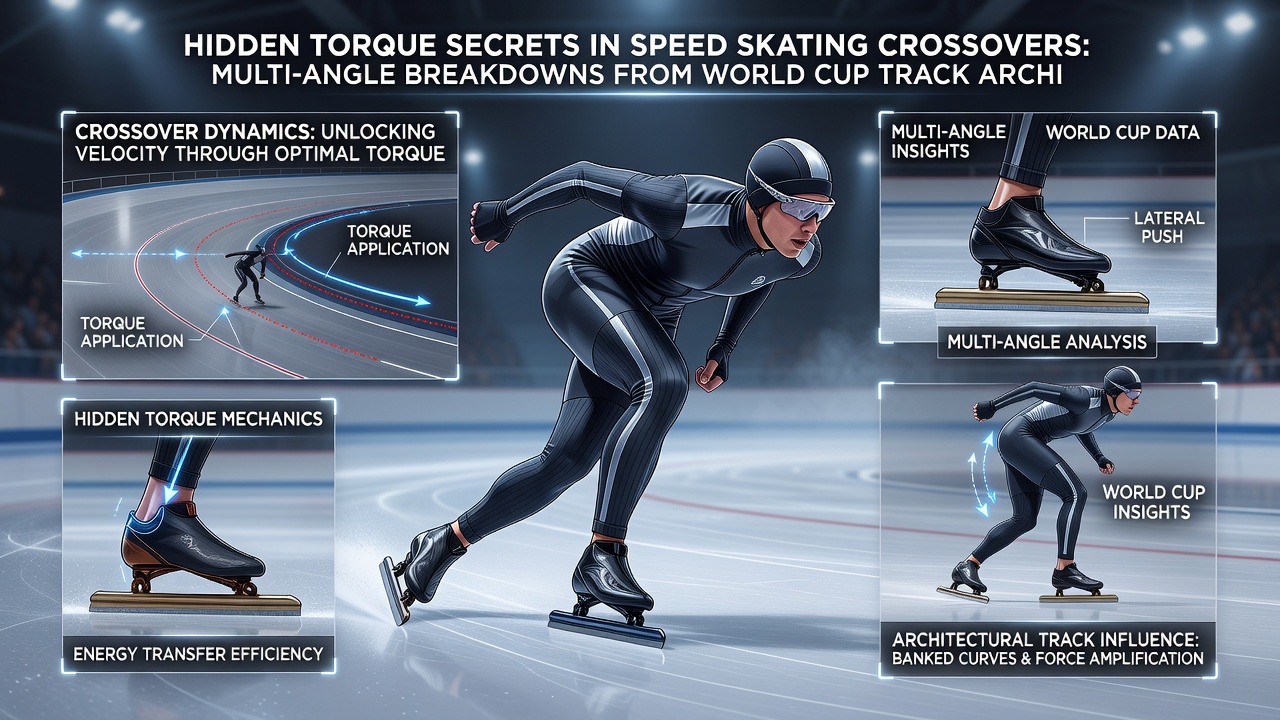
What's notable is the way these archive analyses have informed off-season preparation schedules ahead of the July 2026 international training blocks, where teams review past footage to identify crossover sequences that maximized forward propulsion while minimizing lateral drift. Skaters who incorporated targeted core stability work showed clearer torque application in subsequent video reviews, particularly when transitioning from straightaways into banked turns.
Case Examples From Championship Footage
In one sequence captured at a North American World Cup venue, a skater executed a series of five consecutive crossovers with torque peaks that remained within 5 percent of each other, resulting in uniform stride lengths that preserved speed into the finish. Another example from an Asian championship meet revealed how slight adjustments in knee flexion altered the torque vector, allowing the skater to maintain higher average velocity through successive laps. These instances illustrate how small mechanical refinements, once identified through multi-angle review, can compound across an entire race distance.
Conclusion
Archive-based examinations continue to supply concrete measurements of torque application and stride efficiency in speed skating crossovers, offering teams objective benchmarks drawn directly from competition footage. As preparation intensifies toward July 2026 events, the same multi-angle methods remain central to identifying and replicating the mechanical traits that separate consistent performers from the broader field.