Decoding Volleyball Block Timing: Layered Frame Analysis from International Tournament Archives
Written by Katja Brooks · May 18, 2026
Decoding Volleyball Block Timing: Layered Frame Analysis from International Tournament Archives
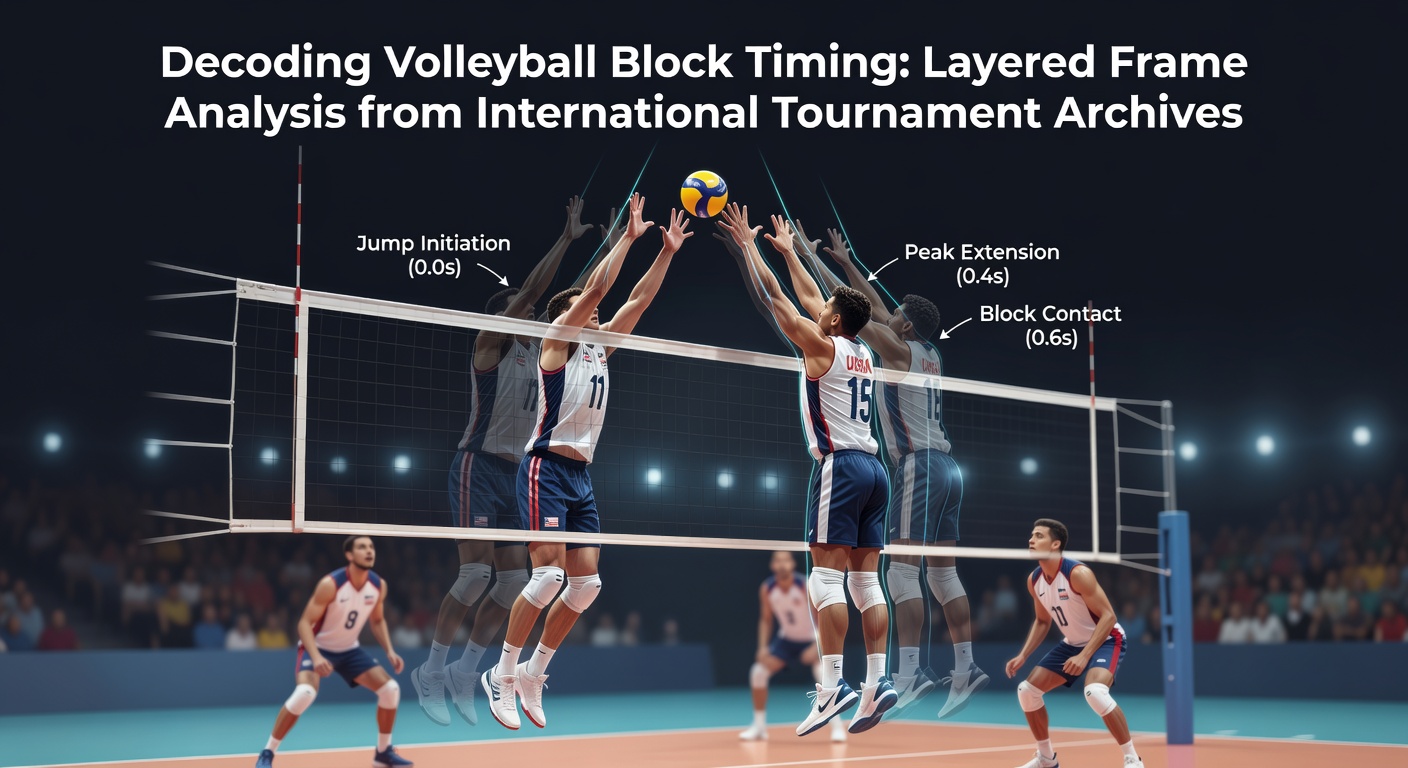
Volleyball blocking demands precise synchronization between multiple athletes, and layered frame analysis from archived tournament footage reveals the mechanical layers that determine success rates across elite competitions. Researchers examining matches from events such as the FIVB Volleyball Nations League have broken down each phase into distinct temporal segments, showing how footwork initiation, arm swing coordination, and hand penetration align within fractions of a second.
Analysts begin by isolating the approach sequence, where players cover the distance from their defensive positions to the net while maintaining visual contact with the opposing setter. Data collected from matches in 2024 and 2025 indicates that elite middle blockers typically complete their final two steps in under 0.8 seconds, allowing them to reach peak jump height just as the attacker commits to contact. This timing window narrows further in high-stakes rallies, where servers deliver balls that force quicker transitions.
Breaking Down the Layers of Block Execution
Frame-by-frame review separates blocking into four primary layers: preparatory stance, lateral movement, vertical explosion, and aerial adjustment. Each layer contains measurable checkpoints that coaches and performance staff use to evaluate athletes during post-match reviews. Preparatory stance involves shoulder positioning and knee flexion angles that set the base for explosive drive, while lateral movement relies on shuffle steps that preserve balance without crossing feet unnecessarily.
Vertical explosion timing shows the clearest correlation with block effectiveness, according to studies conducted by sports biomechanics teams at the Australian Institute of Sport. Athletes who initiate their arm swing 0.15 seconds before toe-off achieve greater hand height at the point of contact, creating a more effective barrier against tips and power attacks. Aerial adjustment then determines whether blockers can redirect their hands laterally once airborne, a skill that separates consistent performers from those who commit early and leave gaps.
Case Studies from Major Tournament Archives
International tournament archives from the 2023 World Championship provide clear examples of how timing variations affect outcomes. One sequence involving the Brazilian men's team demonstrated a 0.12-second delay in middle blocker takeoff that allowed an opposing attacker to score through the middle. Subsequent analysis of the same player's footwork across five matches revealed a consistent pattern of delayed reaction when the setter used a fast-tempo combination play.
In contrast, footage from the Japanese women's team during the 2024 Olympic qualification rounds showed tighter synchronization, with outside blockers initiating their jump within 0.05 seconds of the middle blocker's takeoff. This coordination reduced the available hitting angles for attackers and contributed to higher dig percentages for the back-row defenders positioned behind the block. Observers note that such patterns appear repeatedly in matches where teams maintain consistent blocking schemes across multiple sets.
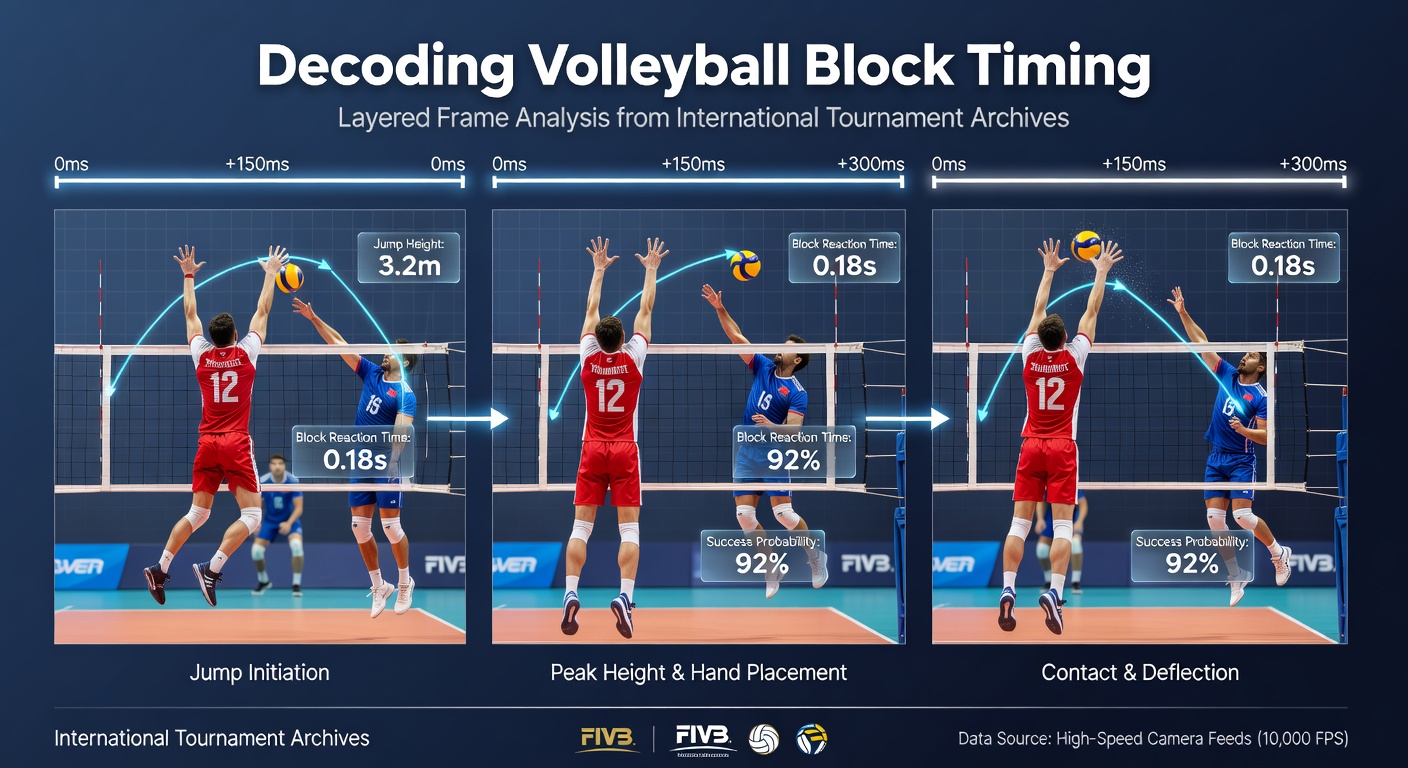
What's interesting about these archived sequences is how small adjustments in one layer ripple through the entire movement. A slight change in knee bend during preparatory stance can shift vertical explosion timing by several milliseconds, which then forces mid-air corrections that reduce overall block coverage. Teams reviewing these frames often adjust training drills to emphasize earlier recognition of setter cues rather than reactive jumping.
Applying Frame Analysis to Training Protocols
Performance staff integrate layered analysis into weekly preparation by comparing current athletes against benchmark data from past tournaments. This approach allows coaches to identify whether a player's timing issues stem from footwork mechanics, decision-making delays, or physical limitations in explosive power. European national teams, including those from Poland and Italy, have incorporated similar review processes ahead of major events scheduled for May 2026, using archived Olympic and Nations League footage to refine blocking schemes against anticipated opponents.
Technology now supports more detailed examination through high-speed cameras operating at 240 frames per second, which capture the precise moment when blockers reach maximum hand penetration above the net. These recordings reveal that successful blocks frequently occur when the defender's hands cross the plane of the net 0.03 seconds before the attacker's hand reaches its highest point. Such margins leave little room for error and underscore why teams invest significant resources in video analysis departments.
But here's the thing: not every timing adjustment translates directly from one tournament level to another. Youth players transitioning to senior competition often require additional layers of analysis because their movement patterns differ in speed and coordination from those documented in elite archives. Researchers continue to expand datasets to include more diverse competition levels, creating comparative models that help bridge these gaps.
Conclusion
Layered frame analysis from international tournament archives provides a structured method for understanding volleyball block timing as a sequence of interconnected decisions rather than a single explosive action. By examining preparatory stance, movement patterns, jump initiation, and aerial adjustments across multiple matches, analysts generate objective benchmarks that teams apply during preparation cycles. As competitions approach in 2026, continued review of these archived sequences supports ongoing refinement of blocking strategies at the highest levels of the sport.