Examining Elite Fencer Movements: Slow-Motion Breakdowns of Tournament Footwork with Timing Overlays
Written by Anna Albrecht · Jun 4, 2026
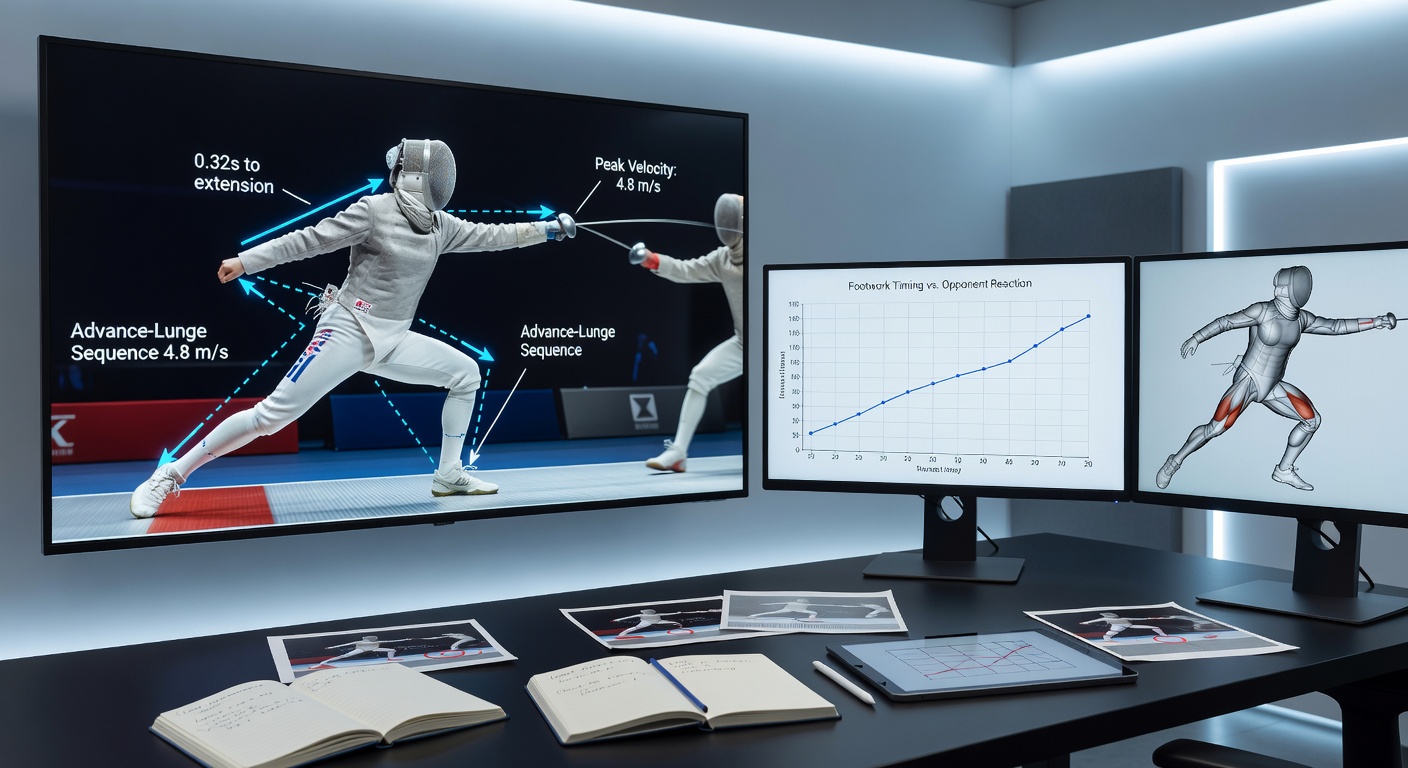
Examining Elite Fencer Movements: Slow-Motion Breakdowns of Tournament Footwork with Timing Overlays
Footwork forms the foundation of competitive fencing, where athletes manage distance and timing through precise steps that set up attacks and defenses across foil, epee, and saber disciplines. Tournament footage from international events reveals consistent patterns in how top performers advance, retreat, and recover, with slow-motion reels exposing the subtle adjustments that separate medalists from the field. Data overlays applied to these reels show split-second measurements of step frequency, lunge extension, and recovery phases that occur during high-stakes bouts.
Core Footwork Patterns Observed in Competition
Elite fencers rely on a sequence of basic movements that include the advance, retreat, and lunge, each executed with variations in speed and length depending on the weapon and opponent. Video analysis from major circuits demonstrates that advances often consist of short, controlled steps that maintain balance while closing distance, whereas retreats involve quicker backward shifts to create separation. Researchers have documented how these patterns shift during counterattacks, with data indicating average step durations of 0.2 to 0.4 seconds in successful sequences at elite levels.
Additional maneuvers such as the appel, ballestra, and fleche appear frequently in saber and foil footage, where explosive forward propulsion combines with directional changes. Timing overlays highlight how these actions align with blade movements, showing that the most effective footwork sequences maintain a rhythm of 120 to 150 steps per minute during active exchanges. Observers note that fencers who adjust their patterns mid-bout based on opponent tendencies achieve higher hit rates, according to aggregated tournament statistics.
Application of Slow-Motion Reels in Pattern Analysis
Slow-motion breakdowns from events like the World Fencing Championships allow detailed examination of weight distribution and foot placement that standard playback obscures. Analysts overlay grid lines and trajectory markers on these reels to track how the lead foot lands and pushes off during advances, revealing that elite performers keep their center of mass low and forward throughout most sequences. This approach has uncovered recurring adjustments in response to right-of-way situations, where fencers alter step cadence to gain priority.
Footage processed with timing data shows precise intervals between steps that correlate with successful touches, particularly in epee where point control depends on maintaining optimal distance. Studies from biomechanics labs indicate that variations in recovery foot placement can reduce vulnerability windows by up to 15 percent, based on frame-by-frame reviews of championship matches. Such methods provide coaches with visual references for training drills that replicate tournament conditions.
Timing Data Overlays and Performance Metrics
Overlays that display millisecond-accurate timestamps on tournament reels quantify elements like lunge duration and return-to-en-garde time, turning raw video into measurable datasets. These tools track parameters such as ground contact time and acceleration peaks, with figures from recent international competitions revealing that top-ranked athletes complete lunges in under 0.6 seconds on average. Integration of motion sensors alongside video has expanded these insights, allowing comparisons across multiple fencers in the same event.
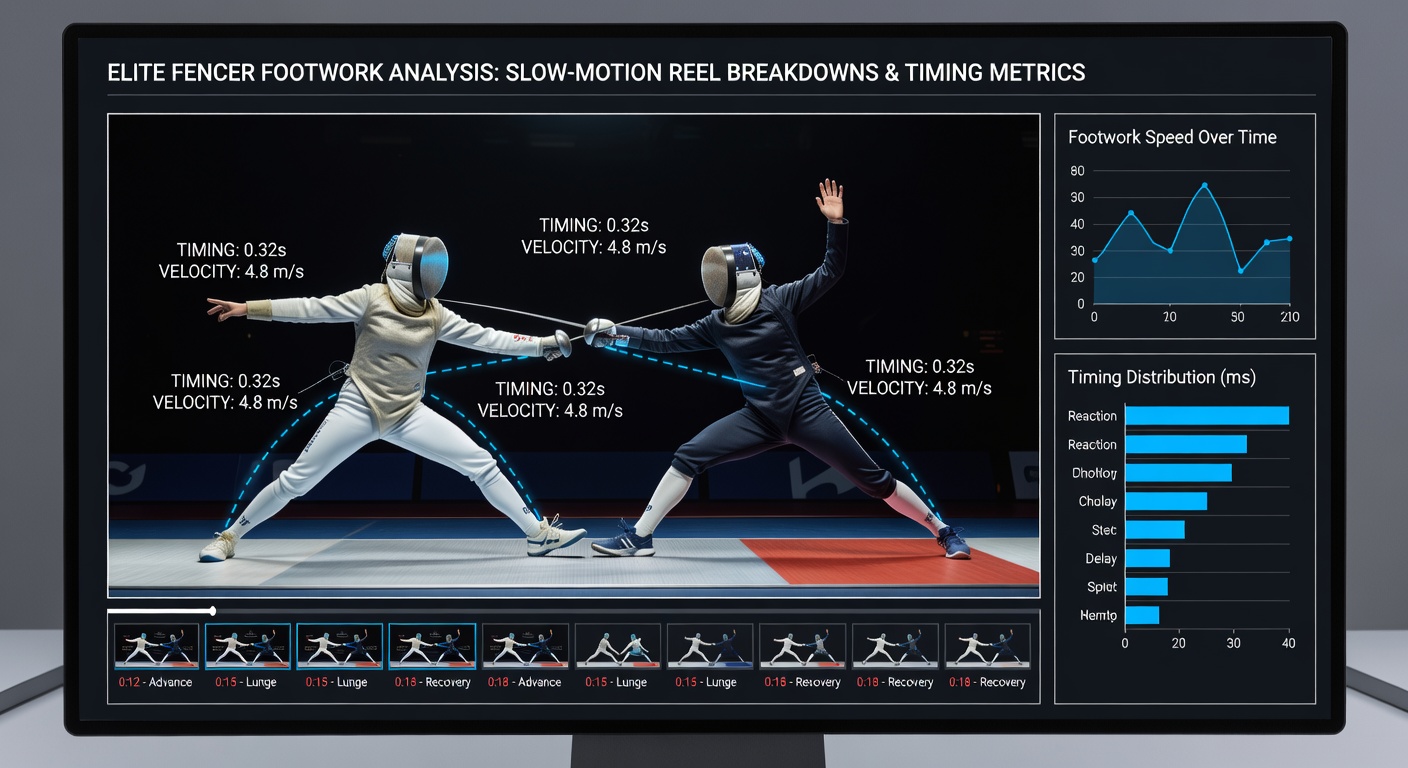
Patterns emerge when data from several bouts is combined, showing that consistent step lengths and directional changes predict higher scoring efficiency in both pool and direct elimination rounds. Sports science teams apply these overlays to identify fatigue effects, noting that step frequency drops in later periods of longer matches. Resources from the International Fencing Federation compile such metrics to support technical development programs worldwide.
Insights from Specific Tournament Footage
Reels from the 2025 World Championships illustrate how left-handed fencers adapt footwork against right-handed opponents through mirrored step patterns and altered angles of approach. Timing overlays on these sequences demonstrate shorter advance lengths early in exchanges that build into extended lunges once distance closes. Similar analysis from European Grand Prix events highlights regional differences, with some athletes favoring more lateral movements to evade linear attacks.
Upcoming schedules include major circuits in June 2026 that will generate fresh footage for continued study, as federations prepare updated training modules based on prior data trends. Comparisons between junior and senior levels show that elite seniors exhibit tighter timing clusters in their footwork, with fewer wasted steps during transitions. Academic reviews from institutions such as the University of Queensland sports science department have cross-referenced these observations with physiological measurements to refine understanding of endurance factors in prolonged bouts.
Conclusion
Analysis of elite fencer footwork through slow-motion tournament reels and timing overlays continues to yield detailed metrics on movement efficiency and tactical adaptation. These methods connect visual patterns directly to performance outcomes across weapons and competition formats. Ongoing collection of data from global events supports technical refinement for athletes at all stages of development.