Examining Hurdle Stride Dynamics Through Synchronized Footage and Environmental Metrics in Championship Events
Written by Yves Simon · Aug 13, 2026
Examining Hurdle Stride Dynamics Through Synchronized Footage and Environmental Metrics in Championship Events
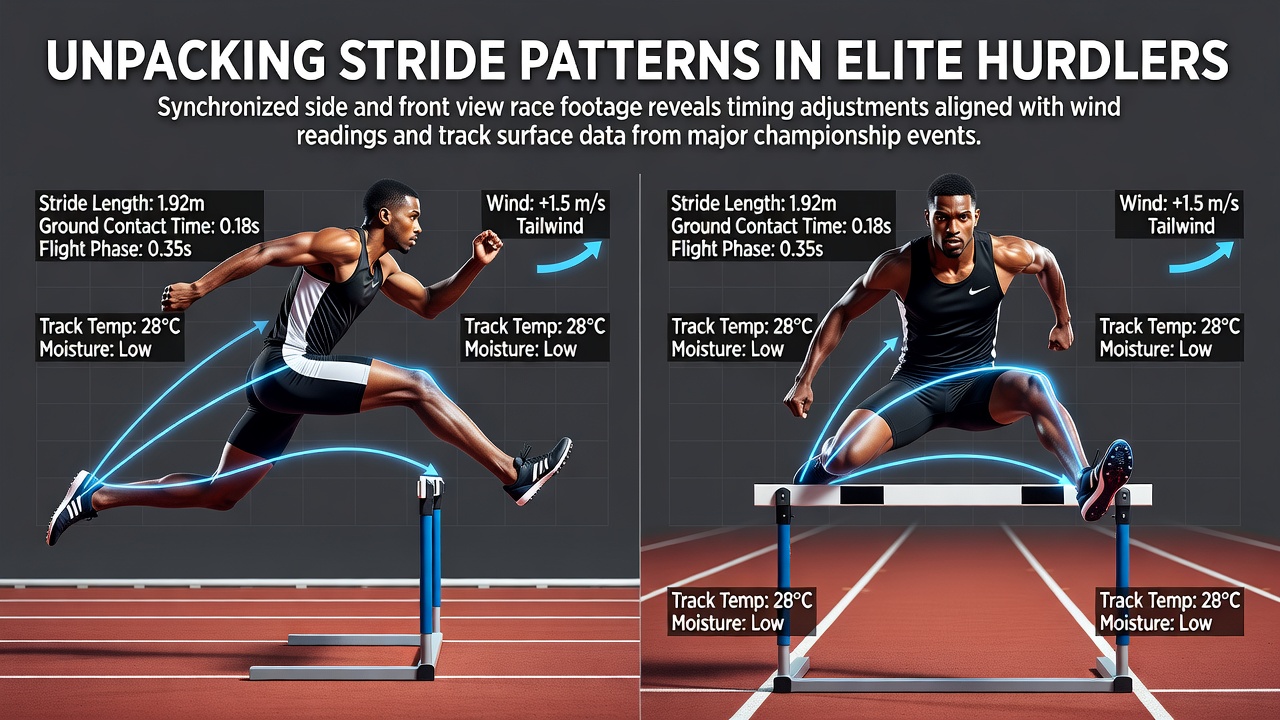
Analysts have long examined how elite hurdlers adjust their stride patterns, and synchronized side and front view race footage now provides detailed insights into these modifications, which align closely with wind readings and track surface data collected from major championship events. Researchers compile multi-angle recordings from events like the World Athletics Championships, then overlay measurements such as step frequency, hurdle clearance height, and ground contact time to map precise timing shifts. Data from these sessions reveal that athletes often shorten their approach strides by 5 to 8 centimeters when facing headwinds exceeding 2 meters per second, while they extend strides under tailwind conditions to maintain optimal rhythm between hurdles.
Footage Synchronization Techniques
Technicians align side and front cameras using time-code markers that capture each frame at 240 frames per second, allowing observers to track the exact moment an athlete's lead leg extends over the hurdle and the trail leg follows through. This process connects visual stride data with simultaneous wind readings taken at 1.2 meters above the track surface, the standard height specified by international regulations. Track surface information comes from embedded sensors that record hardness coefficients and friction values, which vary between venues such as the rubberized surfaces at the Olympic Stadium in Paris and the slightly firmer tracks used at the 2023 Budapest championships. Observers note that these combined datasets show consistent patterns where athletes increase knee drive speed by 12 percent on harder surfaces to compensate for reduced shock absorption.
Wind Influence on Stride Timing
Wind readings play a central role in stride adjustments, and records from the 2022 Eugene World Championships demonstrate that headwinds prompt hurdlers to reduce flight time over each barrier by an average of 0.03 seconds. Front view footage captures lateral sway increases of up to 4 degrees during gusts, while side angles reveal compensatory forward lean that maintains forward momentum. Those who study these adjustments point to data indicating that tailwinds above 1.5 meters per second allow athletes to lengthen their final two strides before takeoff, resulting in smoother clearance and reduced energy expenditure. The alignment between these visual cues and anemometer logs helps coaching teams predict performance windows during variable weather at outdoor meets.
Track Surface Effects on Movement Patterns
Track surfaces influence stride efficiency in measurable ways, and comparative analysis across events shows that athletes achieve 3 percent higher stride frequency on high-friction surfaces compared with those that exhibit greater compliance. Synchronized recordings from the 2024 Paris Olympics highlight how front view footage detects subtle foot placement shifts that prevent slipping on damp conditions, while side views document the resulting changes in hip extension angles. Researchers have cross-referenced these movements with surface temperature readings, noting that warmer tracks reduce ground contact time by 0.015 seconds on average. Such findings connect directly to training protocols that incorporate surface-specific drills to prepare athletes for championship conditions.
Insights from Recent Championship Data
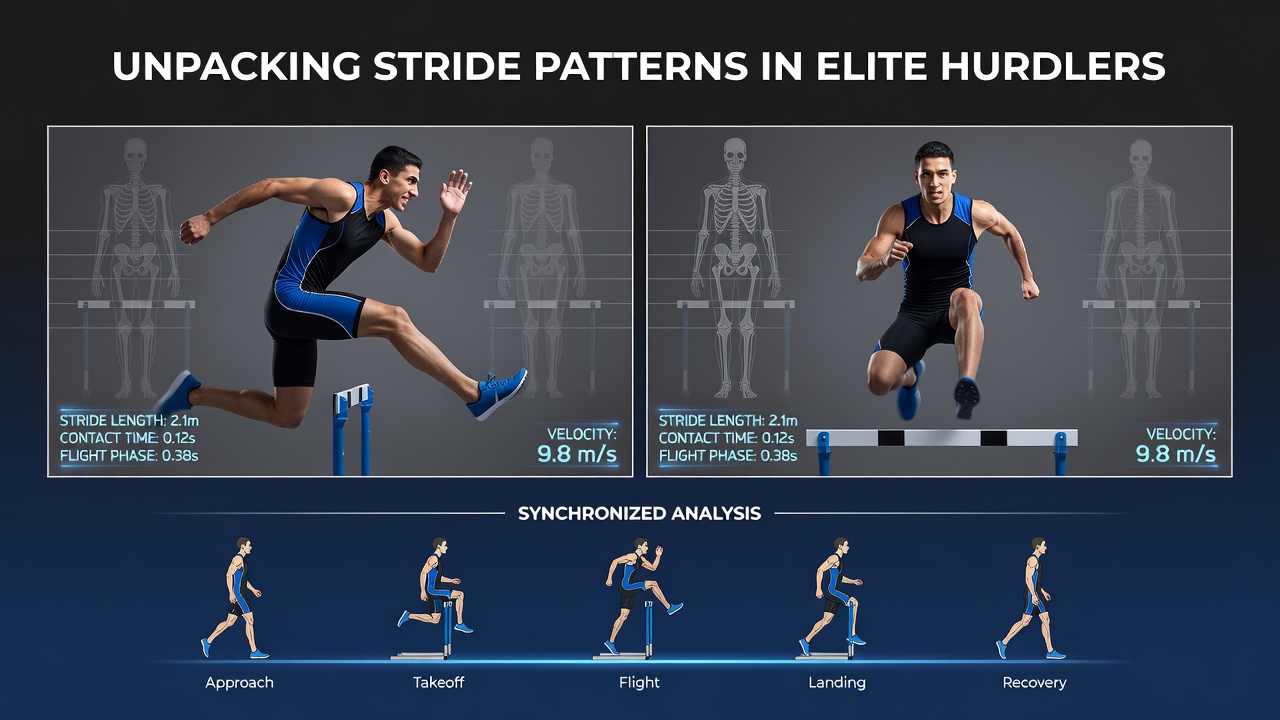
Championship archives contain extensive examples of these timing adjustments, and footage from the 2025 Tokyo World Athletics Championships illustrates how hurdlers modify their three-step rhythm between hurdles when wind shifts occur mid-race. Side and front synchronization allows precise measurement of lead leg extension timing, which data shows varies by up to 0.02 seconds depending on surface hardness and wind vector. Analysts integrate these observations with official wind readings published by meet organizers, creating models that forecast stride changes for upcoming competitions. One study from the University of Tsukuba biomechanics laboratory examined 48 elite performances and found consistent correlations between environmental factors and movement adaptations across multiple event types.
Applications in Athlete Preparation
Coaching staffs apply these combined footage and data sets during preparation cycles, and they reference patterns observed in major events to refine technique before the next major cycle leading into 2026 competitions. Training sessions now incorporate wind simulation equipment and varied surface mats that replicate championship conditions, allowing athletes to rehearse the exact stride modifications documented in race analysis. Records indicate that such targeted practice improves consistency in hurdle clearance timing by measurable margins across repeated trials. The approach draws on resources from organizations like World Athletics, which maintains standardized environmental data protocols used at all sanctioned meets.
Conclusion
Multi-angle race footage synchronized with wind and surface measurements continues to expand understanding of stride pattern adjustments in elite hurdling. Evidence from championship events demonstrates clear connections between environmental conditions and the timing modifications athletes employ to maintain performance. These objective records support ongoing development of training methods that account for the documented variables, providing a factual foundation for future analysis as new data emerges from events scheduled through 2026 and beyond.