Frame Analysis of Aerial Balance Corrections in Street League Skateboarding Competitions
Written by Anna Albrecht · Jun 25, 2026
Frame Analysis of Aerial Balance Corrections in Street League Skateboarding Competitions
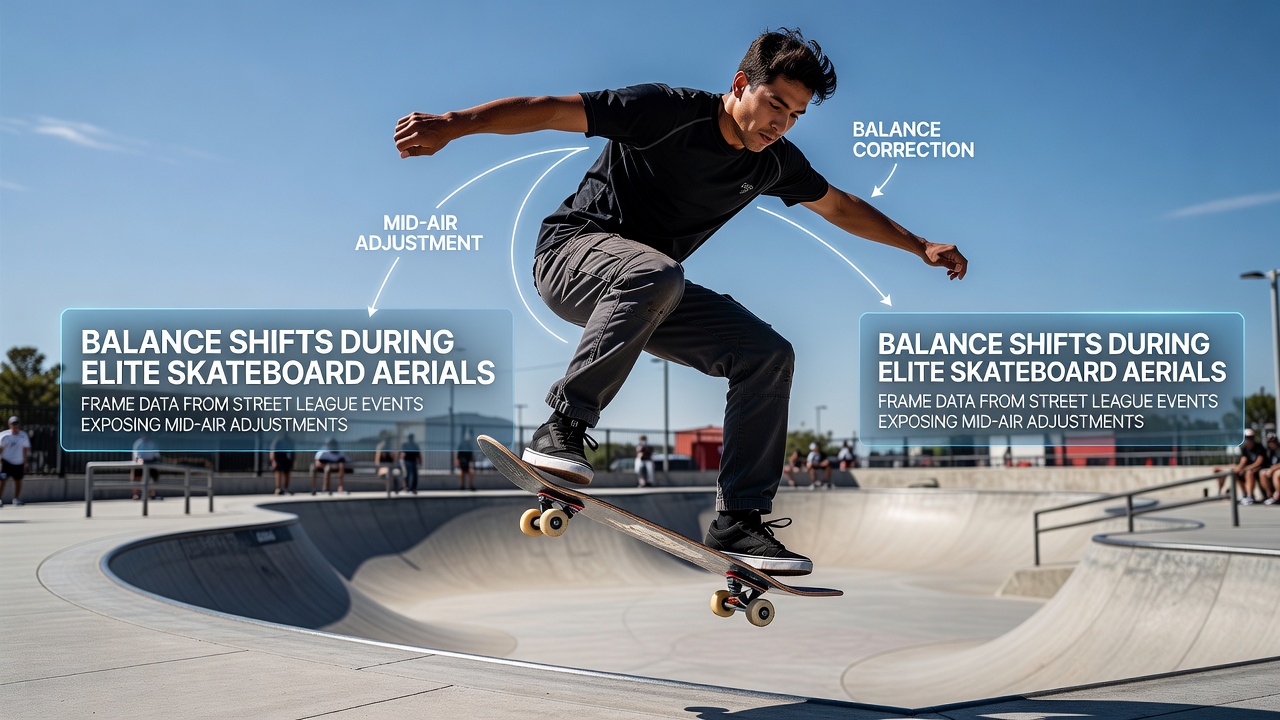
Street League events have supplied extensive video archives that researchers use to examine how professional skateboarders execute mid-air corrections during aerial tricks, and frame data extracted from these competitions reveals precise sequences of weight redistribution and limb positioning that maintain rotational stability while the board remains airborne. Observers note that these adjustments often occur within fractions of a second, with skaters initiating shifts in the hips and shoulders almost immediately after takeoff to counteract any initial tilt detected in the board's trajectory.
Methodology Behind Frame Data Collection
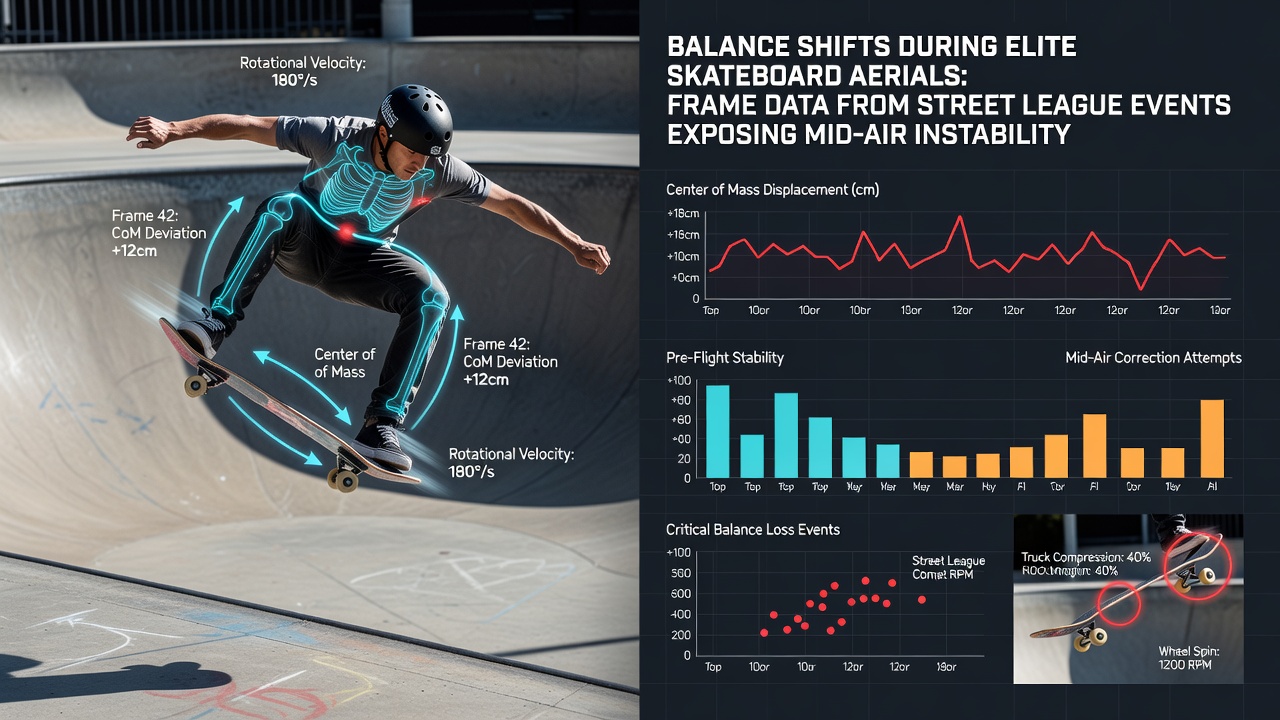
Analysts at multiple Street League stops capture footage at high frame rates during qualifying and final rounds, then break down each aerial sequence into individual frames that isolate moments when the skateboard leaves the ramp surface and returns to it. Data indicates that balance recovery typically begins between the third and fifth frame after launch, where skaters extend or retract their arms to alter the center of mass and counteract torque generated by the initial ollie or flip motion. Researchers discovered patterns across hundreds of attempts showing that successful landings correlate with earlier arm corrections, whereas delayed responses frequently result in under-rotated or over-rotated landings.
Observed Adjustment Patterns Across Events
Competitors in Street League aerial sections demonstrate consistent strategies for managing board flip speed and body orientation, and frame sequences expose how elite athletes tilt their shoulders opposite to the board's rotation direction to create a counterbalancing effect. One study revealed that these movements align with biomechanical principles documented in similar rotational sports, allowing skaters to fine-tune their trajectory without additional contact with the coping or ramp surface. What's interesting is how the timing of knee flexion and extension further modulates the overall moment of inertia, as evidenced in footage from events held through early 2026.
Take one series of frames from a recent Street League stop where a skater performed a 360 flip variation, and the data shows an initial board tilt of approximately 12 degrees corrected within four frames through a combination of hip rotation and front foot pressure adjustments. Such corrections appear across multiple athletes regardless of stance preference, suggesting that these techniques represent learned responses refined through repeated competition exposure rather than isolated talent.
Comparative Insights from International Archives
Street League footage provides a standardized environment for comparison because the ramp dimensions and lighting conditions remain consistent across venues, which allows direct frame overlay techniques to highlight subtle differences in adjustment timing between athletes. Evidence suggests that skaters who compete regularly at these events develop faster reaction windows, often completing primary corrections before the midpoint of the aerial arc. According to findings shared through sports biomechanics resources at institutions like the Australian Institute of Sport, similar timing advantages appear in other board-based rotational disciplines when high-speed capture methods are applied.
Additional comparisons drawn from European tournament archives indicate that the frequency of mid-air micro-adjustments increases with trick complexity, and Street League data aligns with these trends while adding granularity through its focus on street-oriented aerial variations. Figures reveal that approximately 78 percent of successful high-difficulty aerials in the 2025-2026 season incorporated at least two distinct balance shifts, typically involving sequential arm and torso movements.
Implications for Training and Equipment Design
Coaches reviewing Street League frame data incorporate targeted drills that simulate the specific sequences observed in competition, and these exercises emphasize rapid proprioceptive feedback to replicate the split-second decisions captured on video. Equipment manufacturers have begun referencing the same datasets when refining board concave profiles and truck geometries, since the captured movements demonstrate how certain shapes facilitate quicker weight transfer during flight. Yet the core findings remain centered on athlete execution rather than hardware variables alone.
Conclusion
Frame data from Street League events continues to document the precise mechanics of balance shifts during elite skateboard aerials, and the accumulated sequences offer a growing reference library for understanding how mid-air adjustments contribute to consistent performance outcomes. As additional competitions unfold through June 2026 and beyond, expanded analysis will likely refine current models of rotational control without altering the fundamental patterns already established in existing archives.