Frame-by-Frame Examination of Archery Techniques in Global Tournaments Reveals Key Patterns in Draw and Release
Written by Casey Krause · Aug 6, 2026
Frame-by-Frame Examination of Archery Techniques in Global Tournaments Reveals Key Patterns in Draw and Release
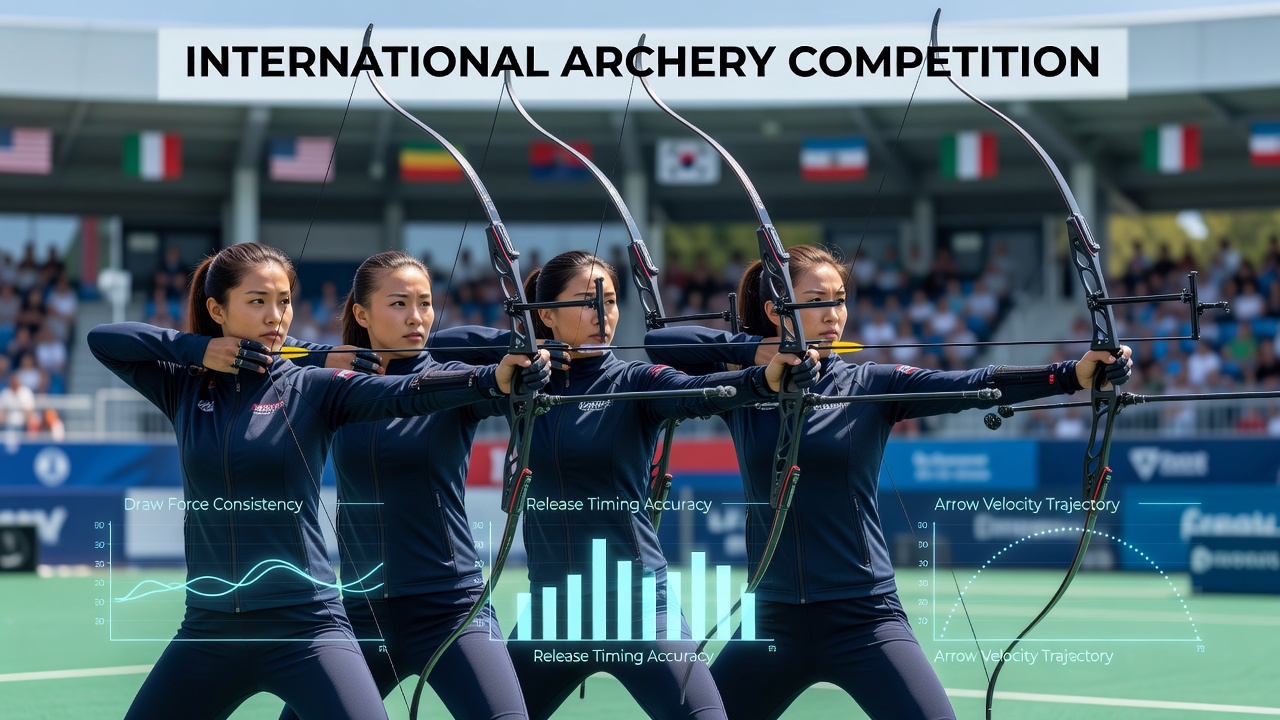
International archery events rely on precise motion analysis to highlight how athletes maintain consistency across repeated shots, and slow-motion footage has become a standard tool for coaches and researchers examining draw sequences alongside release mechanics. Data from events such as the 2023 World Archery Championships in Berlin shows that top performers complete their draw phase in approximately 2.8 to 3.2 seconds while keeping shoulder alignment within a 1.5-degree variance. Observers note these measurements come from high-speed cameras operating at 1000 frames per second, allowing frame-by-frame review that captures subtle adjustments invisible at normal playback speeds.
Breakdown of Draw Sequence Phases
Researchers have documented four distinct phases in the draw sequence during elite competitions: the initial lift, the anchor point approach, the hold, and the final expansion before release. Studies conducted by the Australian Institute of Sport indicate that athletes who stabilize the bow at full draw for 1.1 to 1.4 seconds achieve tighter arrow grouping at 70 meters. Footage from the 2024 Paris Olympic Games archery finals reveals that minor elbow rotations of even 2 degrees during the hold phase correlate with vertical dispersion exceeding 4 centimeters on the target face. Analysts combine these observations with force-plate data to quantify how ground reaction forces shift during the draw, particularly in recurve divisions where back tension must remain constant.
Release Consistency Metrics Across Competitions
Release timing stands out as a decisive factor in scoring outcomes, and international federations now archive slow-motion recordings for post-event review. According to reports from World Archery, the interval between finger relaxation and arrow clearance averages 0.042 seconds among medalists at the 2025 Asian Championships in Bangkok. Variations beyond 0.008 seconds often produce left-right deviations exceeding 3 centimeters at competition distances. Coaches review these clips alongside heart-rate telemetry to identify moments when elevated pulse rates disrupt finger positioning, and data collected during the 2022 Youth World Championships in Limerick demonstrates that athletes maintaining finger pressure symmetry within 0.3 Newtons score an average of 12 points higher per round.
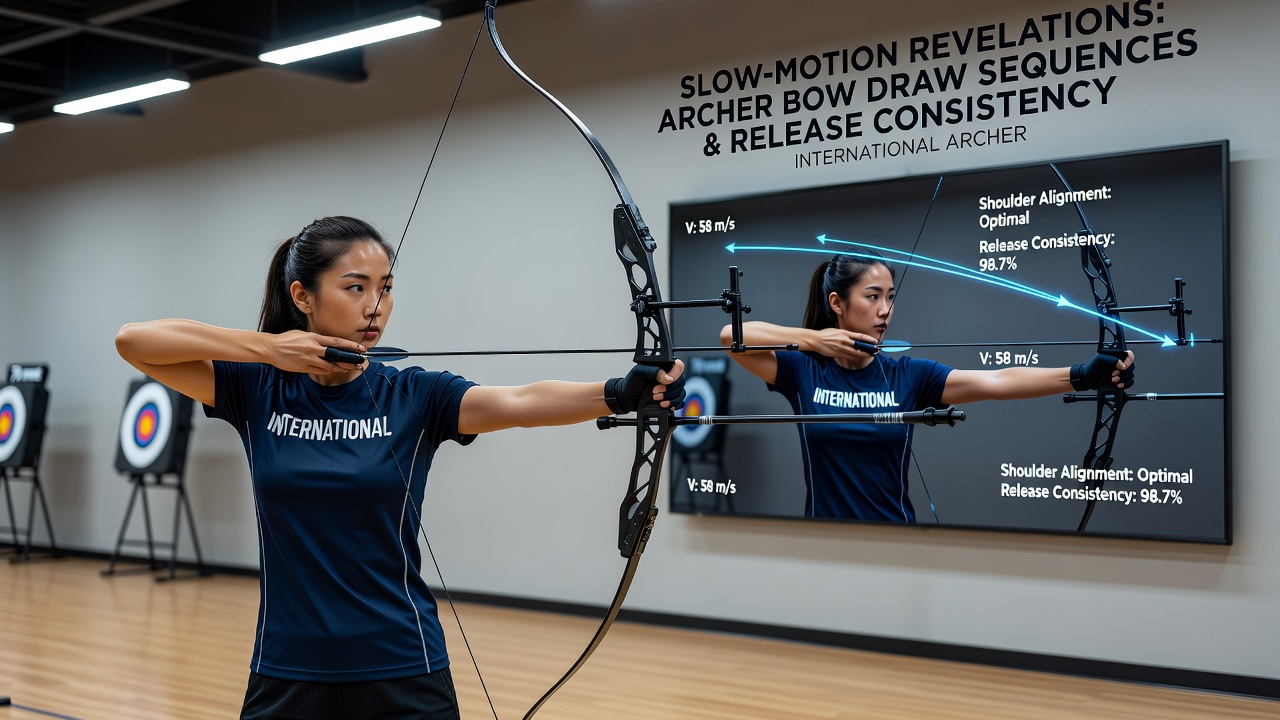
Equipment variations add another layer to these examinations. Compound bow users exhibit shorter draw durations yet require tighter control over let-off timing, whereas recurve athletes emphasize continuous back tension through the entire sequence. A 2024 study published by the University of Calgary compared 120 archers across three continents and found that release consistency improves when athletes synchronize breathing cycles with the final 0.6 seconds of the draw. Footage from the 2026 World Archery Field Championships scheduled for August in Prague will incorporate updated camera arrays capable of 2000 frames per second, allowing officials to measure string vibration patterns immediately after release.
Integration of Technology in Training and Review
National training centers now integrate slow-motion archives into daily practice, and federations such as Archery Canada have developed protocols for comparing an athlete's current draw sequence against a personal baseline established during previous international events. These comparisons highlight deviations in scapular movement that exceed 1 centimeter, prompting targeted mobility work. European competitions have adopted similar systems, with the German Archery Federation publishing quarterly reports that link release timing statistics to final placement rankings. Observers note that such data sets grow more valuable when overlaid with wind-speed readings recorded at each shooting line, since external conditions influence how quickly an archer must adjust during the hold phase.
Conclusion
International archery continues to benefit from expanded access to high-speed video archives that document draw sequences and release consistency across major tournaments. Federations and research institutions collect these recordings to refine training methodologies while preserving measurable performance indicators for future events. As camera technology advances and data integration deepens, the sport gains clearer frameworks for evaluating technical execution under competitive pressure.