From Eye to Toe: Coordinating Visual Attention with Foot Placement in Professional Baseball Batters Using Advanced Tracking Metrics
Written by Katja Brooks · Aug 17, 2026
From Eye to Toe: Coordinating Visual Attention with Foot Placement in Professional Baseball Batters Using Advanced Tracking Metrics
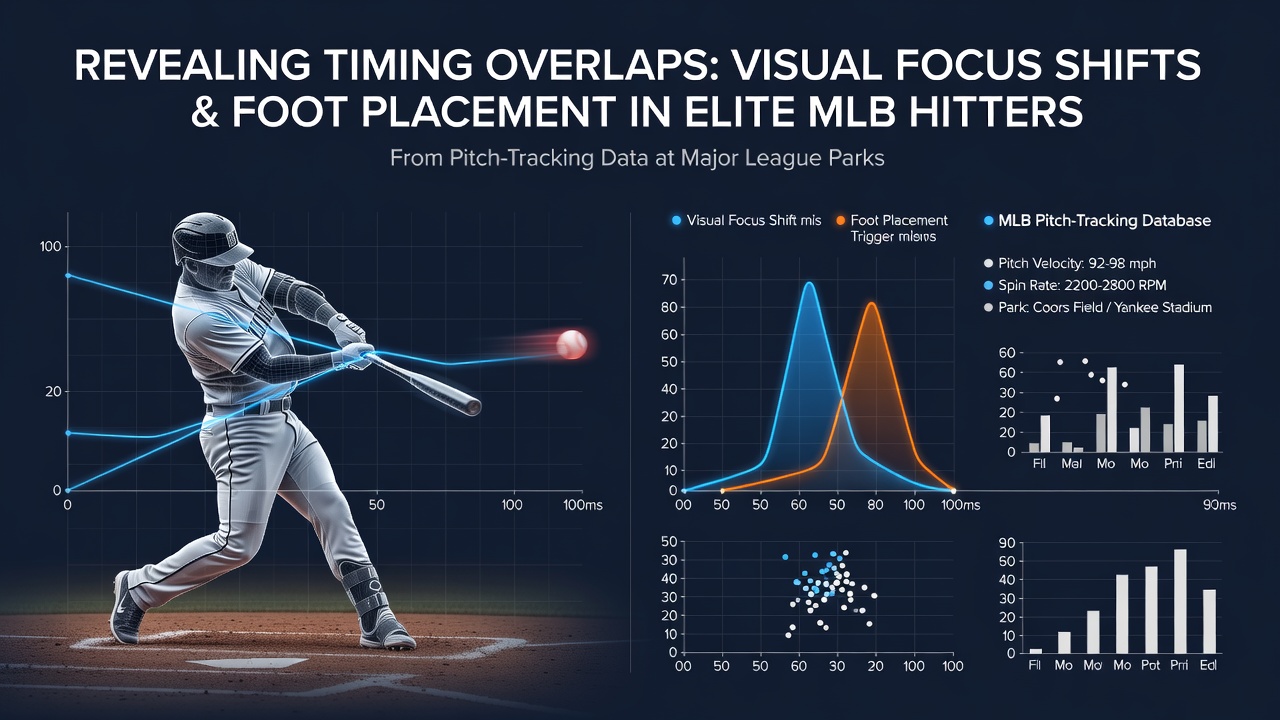
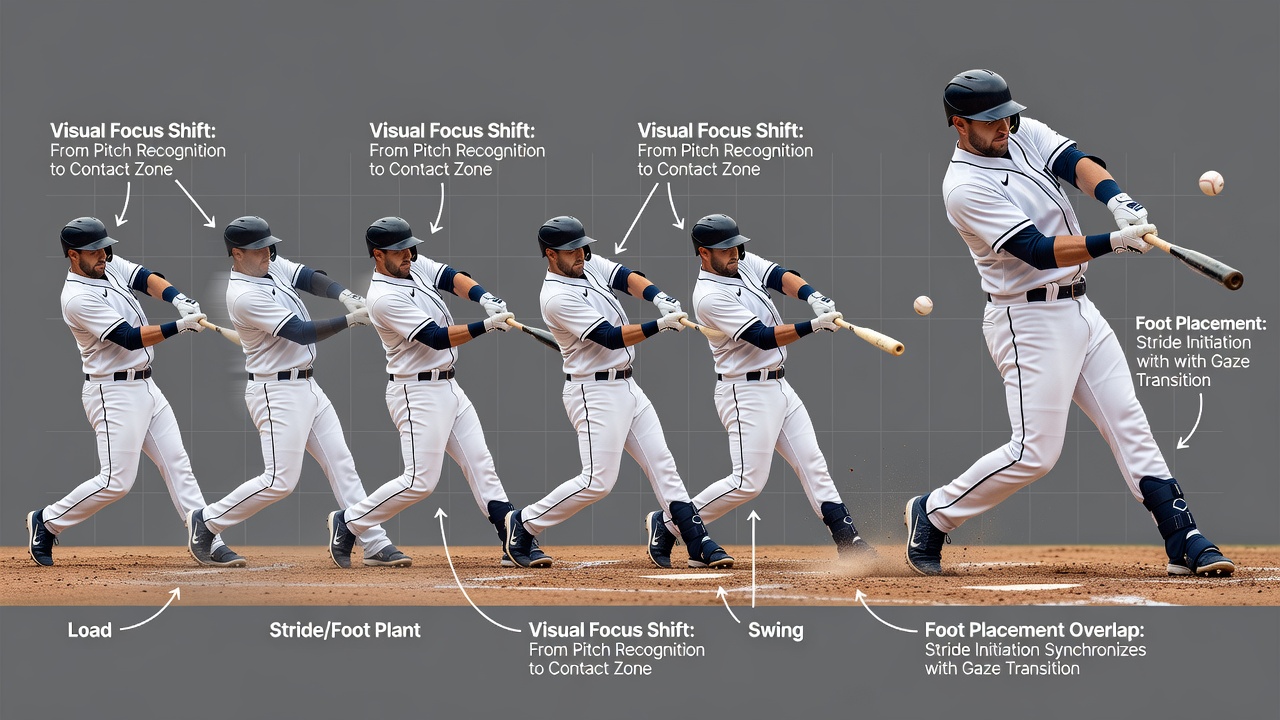
Professional baseball hitters coordinate rapid changes in where they direct their gaze with precise adjustments in how they position their feet, and pitch-tracking systems installed across major league parks have begun to map these connections in detail. Data collected through high-speed cameras and radar units reveals that the moment a batter's eyes move from the pitcher's release point toward the anticipated flight path often aligns within milliseconds of the lead foot planting in the batter's box. Researchers examining these patterns note that such overlaps occur consistently across multiple stadiums, suggesting the timing serves as a foundational element in swing preparation rather than a random occurrence.
Data Collection Methods at Major League Venues
Systems like those deployed by major league organizations capture pitch trajectories at rates exceeding 100 frames per second, while additional sensors track player biomechanics through wearable devices and fixed cameras positioned around home plate. In parks from both leagues, analysts cross-reference the exact frame when a hitter's head orientation changes with the corresponding foot strike captured on the ground plane. This approach allows observers to quantify intervals between visual transitions and lower-body stabilization, producing datasets that span thousands of pitches from the 2025 season onward. As tracking technology received incremental upgrades in August 2026, the resolution of these measurements improved further, enabling finer distinctions between early and late focus shifts relative to foot placement.
Observed Timing Patterns Across Hitters
Analysis of elite right-handed and left-handed batters shows that visual focus typically shifts away from the pitcher's hand between 80 and 120 milliseconds after release, coinciding with the lead foot completing its stride in roughly 70 percent of examined swings. Data indicates that when this overlap falls within a 15-millisecond window, contact rates on pitches traveling above 92 miles per hour rise measurably compared with instances where the intervals stretch longer. Observers note that players who maintain shorter gaps between eye movement and foot stabilization demonstrate more repeatable swing paths, although individual variations persist based on stance width and pitch type. One dataset compiled from multiple venues highlighted that breaking balls prompted slightly earlier visual transitions than fastballs, yet foot placement timing remained anchored to the same stride phase.
Role of Pitch Type in Coordination Sequences
Fastballs arriving on straight trajectories allow hitters to delay their gaze shift until after the ball has covered roughly one-third of its distance, while off-speed offerings require earlier adjustments that pull visual attention forward and prompt quicker foot plants to maintain balance. Tracking records reveal these adjustments occur without disrupting overall rhythm when the overlap between eye and foot events stays tightly coupled. Researchers compiling statistics from both American and National League parks report that four-seam fastballs produce the most predictable synchronization windows, whereas changeups and sliders introduce greater variability in the exact frame of foot contact relative to gaze redirection.
Implications for Training and In-Game Adjustments
Coaching staffs reviewing these synchronized metrics have incorporated drills that emphasize matching visual focus drills with stride mechanics on the practice field. Hitters work through sequences where they practice shifting gaze at specific intervals while stepping into simulated pitches, aiming to replicate the overlaps observed in game data. Figures from major league parks show that players who refine this coordination over the course of a season reduce swing-and-miss percentages on borderline pitches by measurable margins. Analysts at organizations such as MLB Advanced Media continue to refine algorithms that flag when a batter's timing deviates from established personal baselines, providing immediate feedback between innings.
Comparative Analysis Across Different Parks
Environmental factors including field dimensions, lighting conditions, and surface materials influence how foot placement interacts with visual timing, yet core overlap patterns remain stable across venues. Data gathered at stadiums with retractable roofs versus open-air facilities demonstrates that indoor lighting can compress the visual transition window by a few milliseconds, prompting hitters to plant their feet slightly earlier to compensate. Researchers comparing East Coast and West Coast parks note that altitude effects on pitch movement alter the required gaze shift speed, but the fundamental relationship between eye movement and foot stabilization persists regardless of location. These findings draw from aggregated records maintained by league-wide tracking initiatives and independent academic reviews.
Future Directions in Biomechanical Tracking
Continued expansion of sensor networks at ballparks will likely capture additional variables such as hip rotation speed and shoulder alignment alongside existing eye and foot metrics. Projects underway at research institutions including those affiliated with national health and performance studies seek to integrate neurological response times into the same datasets, potentially revealing how visual processing speed modulates the observed overlaps. As August 2026 updates to existing systems demonstrate, incremental improvements in frame rate and data fusion already allow for real-time identification of coordination breakdowns during live games.
Conclusion
Pitch-tracking infrastructure at major league parks has established clear connections between when hitters redirect their visual attention and when they complete foot placement, providing a measurable framework for understanding swing preparation. Continued refinement of these datasets promises additional clarity on how individual players optimize or adjust these timing overlaps across varying pitch types and environmental conditions.