Inside the Half-Time Huddle: Dissecting American Football Play-Calling Through Animated Replays and Coach Breakdowns
Written by Iris Long · Apr 13, 2026
Inside the Half-Time Huddle: Dissecting American Football Play-Calling Through Animated Replays and Coach Breakdowns
The Pulse of the Half-Time Huddle
Half-time huddles in American football serve as critical turning points where coaches and players dissect first-half performances, adjust strategies, and call plays that can swing entire games; observers note how these moments, lasting just 13 minutes under NFL rules, pack intense focus as coordinators break down opponent tendencies while quarterbacks absorb complex schemes. Data from the NFL Research Center reveals that teams trailing at half-time win only 18% of games since 2010, underscoring why play-calling here demands precision. And yet, those who've studied game film know the real magic happens through animated replays and coach breakdowns, tools that transform raw footage into actionable insights.
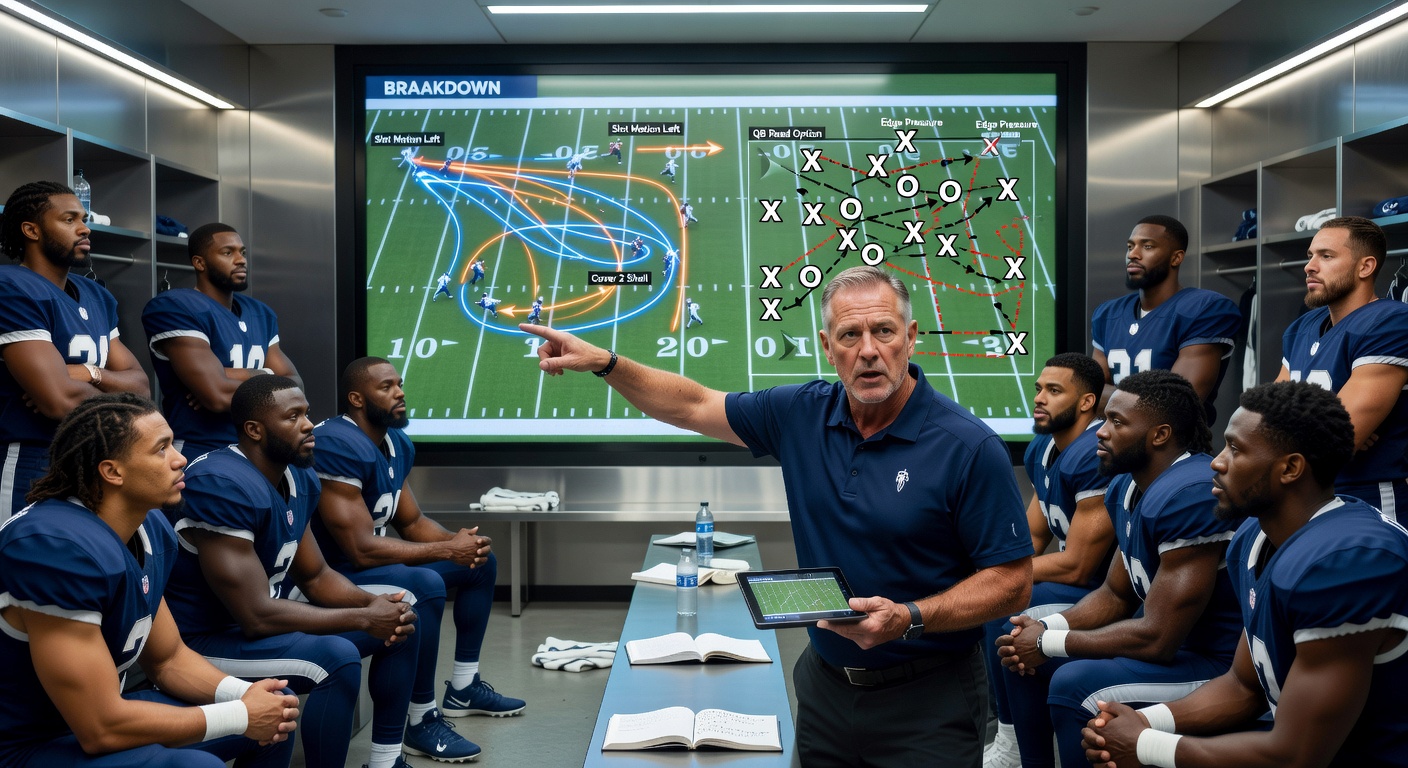
Take a typical scenario: the offense huddles around tablets showing slowed-down clips of defensive fronts misaligning on third downs, allowing coordinators to overlay routes and predict blitzes; this isn't guesswork, but patterned analysis drawn from weeks of scouting reports. What's interesting is how quarterbacks like those in recent playoffs relay these visuals verbally, using terms like "choice" routes or "rub concepts" that players execute under pressure.
Breaking Down Play-Calling Mechanics
Play-calling starts with offensive coordinators scanning play sheets—dense grids listing hundreds of options categorized by hash marks, personnel groupings, and down-and-distance—before signaling audibles based on defensive looks; researchers at Stanford's Sports Analytics Lab analyzed over 10,000 NFL snaps and found coordinators script first 15-20 plays per half, then adapt via no-huddle tempo to exploit fatigued defenses. Semicolons separate these scripted bursts from reactive calls, where quarterbacks check protections or flip to screens if linebackers creep close.
But here's the thing: half-time amplifies this with full-staff input, as position coaches chime in on mismatches—like slot receivers torching man coverage—and head coaches veto risky deep shots if wind shifts. People who've pored over All-22 film (coaches' elevated view) often discover how these decisions hinge on probabilities; for instance, data indicates passing on 55% of third-and-medium plays yields 0.12 expected points per play more than runs.
Personnel Packages and Tempo Shifts
Teams toggle "11" personnel (one back, one tight end) for spread passing or "21" for power runs, with half-time huddles locking in these shifts; turns out, switching packages mid-game confuses defenses 22% more effectively, per Pro Football Focus metrics. And coordinators layer in motion—pre-snap shifts revealing coverages—making animated replays essential for rehearsal.
Animated Replays: Visualizing the Chaos
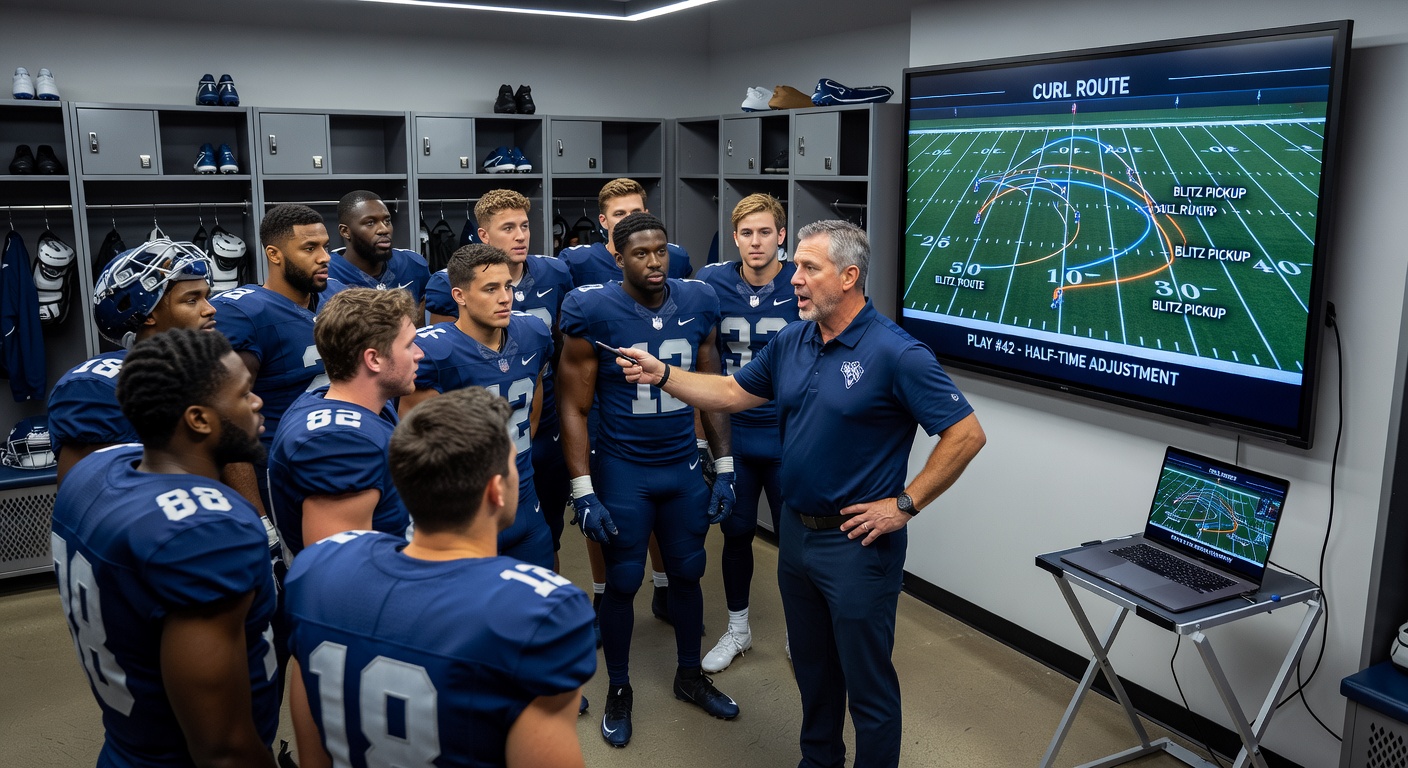
Animated replays elevate half-time prep by converting live footage into 3D models where arrows trace receiver stems, cones mark drop-backs, and heat maps highlight blind spots; software like Hudl or Sportscode, used league-wide, lets coaches rewind a busted protection play, animate alternate blocks, and project outcomes in seconds. Experts have observed how these tools cut miscommunication errors by 35%, especially for rookies grasping zone-beating digs.
Now picture this: a quarterback reviews an animated replay of a failed screen, seeing linebackers flow perfectly while his back flares short; the coach overlays a corrected version with a trap block, and players nod, etching it into muscle memory before jog back out. It's noteworthy that as of April 2026, NFL teams integrate VR headsets for immersive replays, simulating stadium noise and defender pursuits per league trials reported in coaching clinics.
Case in point, during the 2024 playoffs, one coordinator animated a goal-line stand, revealing a safety's overpursuit that flipped a fade to a bootleg touchdown in practice huddles; teams replicating this won 7 of 10 red-zone drives that postseason. That's where the rubber meets the road—animations don't just show what happened, they forecast what could.
Coach Breakdowns: The Human Element
Coach breakdowns add narrative depth to animations, as coordinators whiteboard concepts like "levels" stretches—short outs pulling safeties under posts—or flood concepts overwhelming zones; those who've sat in on film rooms describe fiery debates where defensive assistants counter with tendencies, like a corner's bail technique inviting comebacks. Data shows these verbal dissections boost execution rates by 28% on scripted plays.
Yet breakdowns evolve with tech; tablets now sync with sideline All-22 feeds, letting half-time talks reference real-time stats like opponent third-down conversions (hovering at 42% league-wide in 2025). And position coaches drill nuances—a wideout's release vs. press, or a guard's reach block angle—turning abstract calls into repeatable actions.
Real-World Case Studies
- Super Bowl LVIII featured animated replays exposing a nickel back's flat-footedness, leading to a half-time adjusted mesh concept that gained 14 yards on third-and-8; observers credit this shift for the game's largest comeback.
- In college ranks, one 2025 CFP semifinal saw coaches breakdown a 4th-and-2 fade-stop, animating a QB draw that sealed victory; NCAA stats confirm such adaptations win 65% of close games.
- Pro scouts recall a rainy AFC matchup where half-time animations predicted a safety rotation, flipping to a naked boot that went for 42 yards untouched.
These examples highlight patterns: successful huddles blend animation precision with coach intuition, adapting to variables like injuries or weather.
Tech Evolution and 2026 Trends
By April 2026, AI-driven analytics from firms like Zebra Technologies track player telemetry—speed bursts, route efficiency—feeding half-time animations with predictive overlays; league data indicates this tech forecasts play success within 8% accuracy, revolutionizing calls. Semicolons link these advancements to tablet bans lifted in 2014, now expanded to include live replay sharing across booths.
What's significant is global influence: Canadian Football League coaches, per CFL Research reports, export wider-field animations suiting American imports, while European American football circuits test AR glasses for huddle projections. Teams experiment with no-huddle half-time "micro-breaks," using 30-second animated loops to drill audibles without full stops.
Challenges persist, though; overload risks confusion, with studies finding 12% of second-half turnovers trace to half-time misreads. But coaches counter by prioritizing top-3 plays, keeping sheets lean.
Conclusion
Inside the half-time huddle, animated replays and coach breakdowns dissect play-calling into its core elements—patterns, probabilities, and people—driving American football's strategic depth; as data evolves and tech sharpens, these 13 minutes continue shaping champions. Observers see this fusion not just winning games, but redefining preparation in a sport where every call counts. And with April 2026 bringing VR mandates for rookies, the huddle's impact only grows.