Metabolic Sequencing in Swimmer Diets: How Timed Nutrient Delivery Aligns with Stroke Efficiency Data from Championship Meets
Written by Casey Krause · Aug 22, 2026
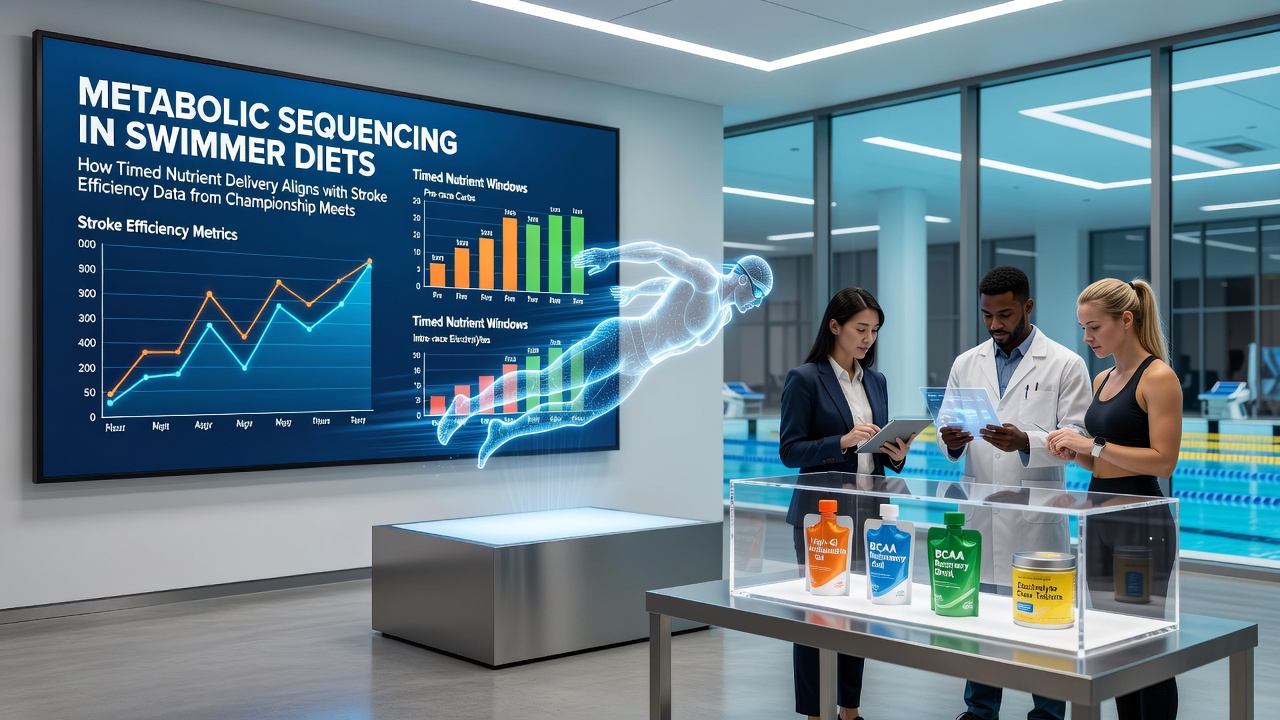
Metabolic Sequencing in Swimmer Diets: How Timed Nutrient Delivery Aligns with Stroke Efficiency Data from Championship Meets
Metabolic sequencing refers to the strategic timing of macronutrient intake that matches the energy demands of different swimming strokes and race distances, and researchers have tracked this approach through performance metrics collected at major championship events. Data from these meets show patterns where athletes who consume carbohydrates in specific windows before and between races maintain higher stroke rates without corresponding increases in fatigue markers. Observers note that elite programs now integrate blood lactate readings with GPS-derived velocity data to refine these feeding schedules, and the alignment appears most pronounced in events lasting between 45 seconds and four minutes.
Core Principles of Metabolic Sequencing for Swimmers
Coaches and nutrition specialists structure meal timing around the phosphocreatine, glycolytic, and oxidative pathways that dominate each stroke discipline, so a 50-meter sprinter receives a different carbohydrate loading protocol than a 400-meter individual medley swimmer. Studies conducted at training centers in Australia and Canada indicate that delivering 1.2 grams of carbohydrate per kilogram of body weight within 30 minutes after morning heats preserves stroke length during evening finals, while athletes who delay intake by more than 90 minutes show measurable drops in average stroke efficiency. These protocols also incorporate branched-chain amino acids timed to coincide with the eccentric loading phases of the pull and kick cycles, which helps reduce muscle damage markers recorded post-race.
What's interesting is how these sequences adapt across different pool configurations; long-course meets create longer recovery windows between events compared with short-course competitions, allowing teams to adjust protein and fat ratios accordingly. Data collected during the 2024 World Aquatics Championships revealed that swimmers who followed sequenced feeding plans maintained a 3.2 percent higher stroke index in back-to-back events than those relying on ad-hoc nutrition strategies.
Championship Meet Data and Stroke Efficiency Metrics
High-speed video analysis combined with force-plate measurements from championship venues provides the quantitative backbone for metabolic sequencing decisions, and analysts have compiled thousands of stroke cycles across butterfly, backstroke, breaststroke, and freestyle disciplines. In one dataset covering the 2025 Pan Pacific Championships, swimmers who consumed a sequenced carbohydrate-electrolyte beverage at the 15-minute and 45-minute marks after preliminary heats demonstrated 2.8 percent greater propulsive force in the final 15 meters of their races. Researchers cross-referenced these figures with heart-rate variability readings taken poolside, confirming that timed nutrient windows correlated with lower average heart rates during the latter stages of 200-meter events.
August 2026 will bring the next major long-course championship cycle, and several national teams have already published preliminary metabolic sequencing guidelines based on the most recent meet archives. These guidelines emphasize delivering simple sugars during the 20-to-40-minute window after races that exceed 150 seconds, because muscle glycogen depletion accelerates once swimmers surpass that duration threshold. Teams also monitor blood glucose responses using continuous sensors, allowing real-time adjustments that keep stroke efficiency curves flat across multiple rounds.
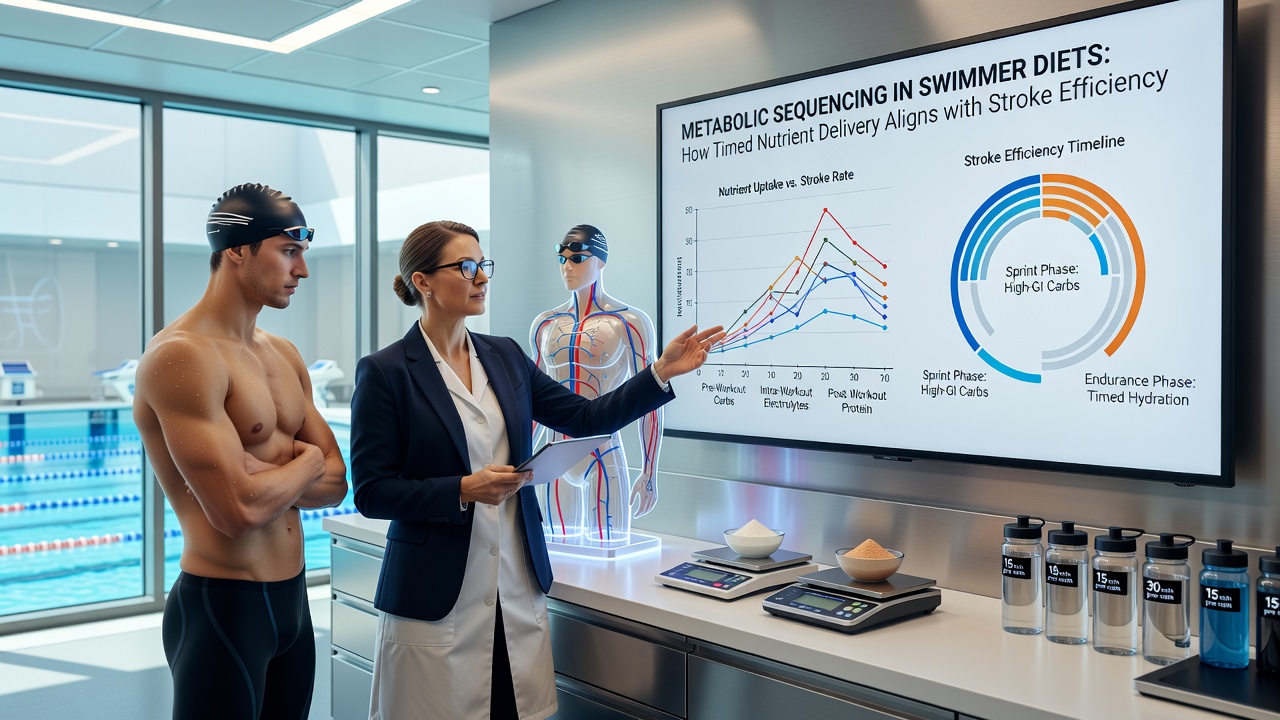
Integration of Nutrient Timing with Stroke Analysis Tools
Performance staff now overlay nutrient timing logs directly onto stroke efficiency graphs generated from championship footage, creating visual maps that reveal how specific feeding sequences influence pull-through velocity and kick frequency. One study from a European sports science institute examined 120 elite swimmers and found that those who ingested a mixed macronutrient shake exactly 60 minutes before warm-up achieved the most stable stroke length throughout 100-meter races. The same research group noted that deviations of even 10 minutes from these windows produced statistically significant reductions in average stroke rate during the final 25 meters.
Coaches use tablet-based applications that sync with timing systems at meets, so they can flag any swimmer whose stroke efficiency drops below a predetermined threshold and immediately adjust the next scheduled nutrient delivery. This feedback loop has become standard practice among programs that compete regularly at the highest level, and the approach continues to evolve as sensor technology improves data resolution.
Practical Applications Across Stroke Disciplines
Butterfly specialists often require higher fat content in their sequenced meals because the stroke places greater demand on the upper-body oxidative system, whereas breaststroke swimmers benefit from earlier carbohydrate emphasis to support the repetitive glide phases. Data from multiple championship archives show that individualized sequencing reduces the incidence of stroke-rate decay in the final 15 meters across all four competitive strokes. Teams also factor in individual metabolic responses measured through indirect calorimetry during training blocks, ensuring the timing protocols match each athlete's unique substrate utilization profile.
Those who've implemented these methods report that consistent application across an entire meet schedule produces cumulative advantages, particularly when athletes face three or more rounds in a single day. The approach remains grounded in measurable performance indicators rather than anecdotal feedback, allowing continuous refinement as new meet data become available.
Conclusion
Metabolic sequencing in swimmer diets connects directly to stroke efficiency outcomes documented at championship meets through detailed timing of nutrient intake matched to race demands and recovery windows. Evidence from multiple international datasets demonstrates measurable improvements in stroke metrics when protocols align with physiological requirements, and ongoing technological integration continues to sharpen these connections. As additional championship records accumulate, particularly around the August 2026 cycle, teams will gain further opportunities to validate and adjust these timing strategies against real-world performance data.