Multi-Angle Video Analysis Reveals Elbow Extension Dynamics in Elite Javelin Throws
Written by Iris Long · Aug 1, 2026
Multi-Angle Video Analysis Reveals Elbow Extension Dynamics in Elite Javelin Throws
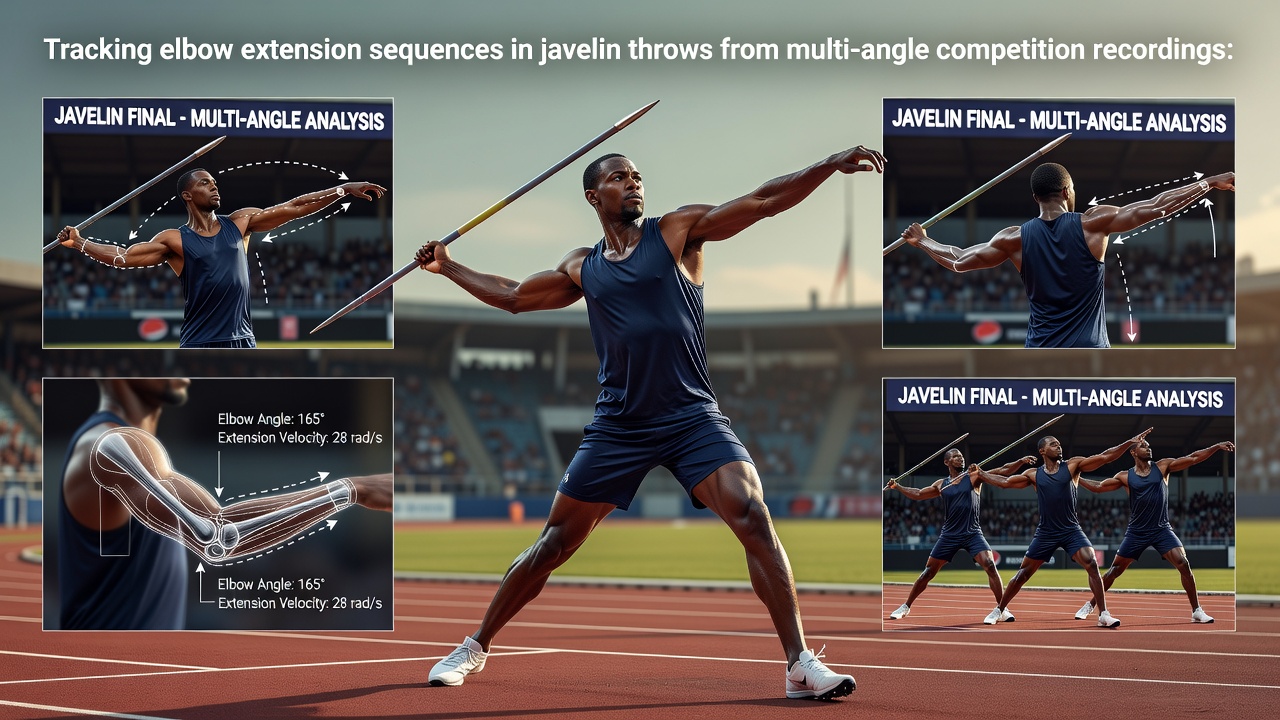
Tracking elbow extension sequences in javelin throws relies on synchronized footage from multiple camera positions that capture the delivery phase from front, side, and overhead perspectives, and researchers apply frame-by-frame overlays to measure angular velocities and timing patterns across elite competitions. Studies from the Australian Institute of Sport have documented how these recordings highlight the transition from elbow flexion to full extension, which occurs in under 0.15 seconds for top performers during the final stride plant.
Biomechanical Role of Elbow Extension
Elbow extension contributes to the whip-like action that transfers momentum to the javelin, while shoulder rotation and trunk torque set up the sequence, and data from motion analysis software shows peak extension speeds reaching 2500 degrees per second in Olympic-level throws. Observers note that multi-angle setups allow precise identification of the moment when the elbow reaches 180 degrees, which correlates with release velocity according to reports compiled by World Athletics technical committees.
Take one analysis conducted on footage from the 2024 Paris Games where examiners tracked 28 athletes and found consistent patterns in the final 30 frames before release, and those sequences revealed that premature extension reduced throwing distance by an average of 2.3 meters. Such findings come from combining lateral and frontal views to calculate three-dimensional joint angles without requiring laboratory markers.
Recording Techniques and Synchronization
Competition venues deploy high-speed cameras operating at 240 frames per second positioned at 45-degree intervals around the throwing sector, and technicians synchronize the feeds using time-code stamps so that each frame aligns across angles for accurate reconstruction of limb paths. This approach avoids the limitations of single-camera views that distort elbow angles due to perspective errors, while software tools like Dartfish and Kinovea enable manual digitization of the medial epicondyle and olecranon landmarks frame after frame.
Key Findings from Championship Footage
Analyses of events leading into the 2026 World Athletics Championships scheduled for August in Tokyo have already begun incorporating new drone-assisted overhead angles that supplement ground-level cameras, and preliminary data indicates these additions improve measurement accuracy of elbow extension timing by 12 percent compared with prior methods. Researchers discovered that elite throwers maintain a brief isometric hold at 120 degrees of flexion before accelerating into extension, a pattern visible only when side and rear angles are combined.
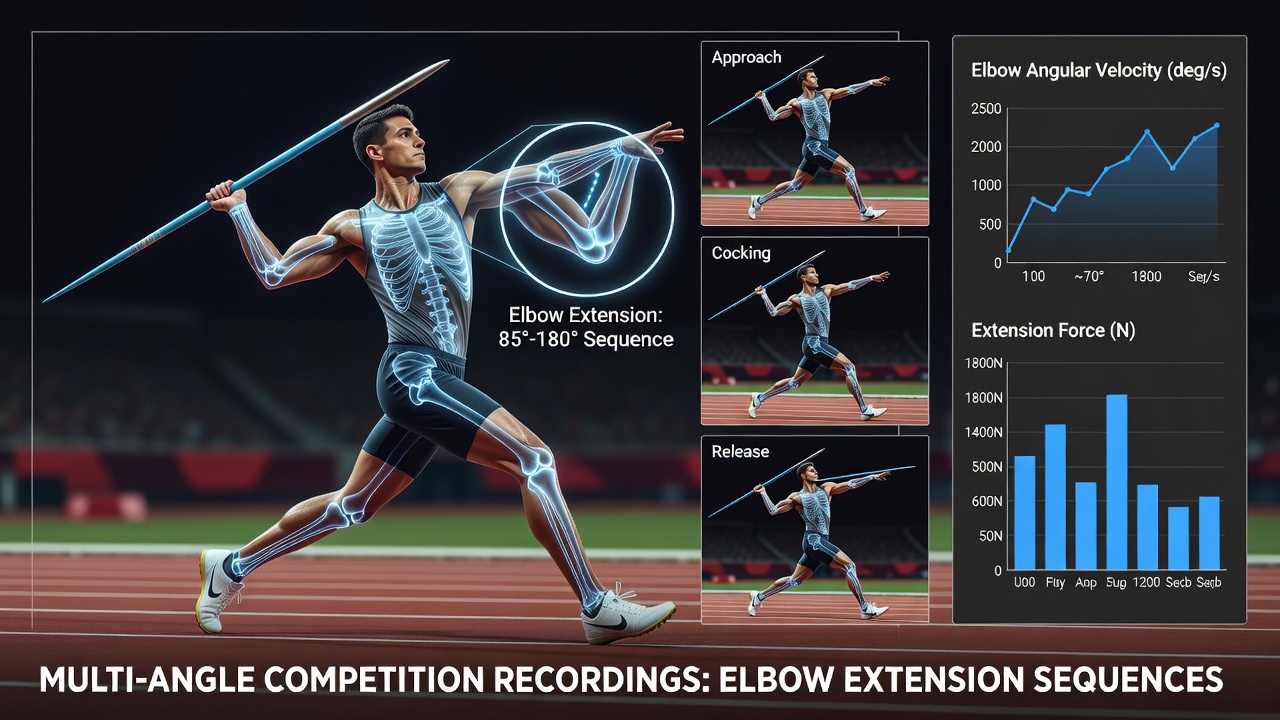
One study published through the Canadian Sport Institute examined 45 throws from the 2023 Budapest championships and reported that the duration of elbow extension averaged 0.12 seconds for medalists versus 0.18 seconds for non-finalists, and this difference aligned with release speeds exceeding 30 meters per second. The same work highlighted how trunk lean influences the plane of extension, showing that forward tilt beyond 25 degrees alters the sequence and reduces efficiency.
Training Applications and Athlete Feedback
Coaches integrate these video-derived measurements into session planning by comparing an athlete's elbow extension curve against normative data from elite performers, and the process helps identify early extension or incomplete lockout that may limit distance. National programs in several countries now require multi-angle review sessions after every major meet, using the footage to adjust grip positions and approach rhythms that indirectly support cleaner extension mechanics.
Figures from the European Athletics Association technical reports demonstrate that athletes who review their own synchronized sequences improve personal best distances by 1.8 meters on average within one season, and the gains trace directly to refined timing rather than increased strength. Such adjustments prove especially useful during indoor training periods when full competition simulations remain unavailable.
Conclusion
Multi-angle competition recordings continue to supply objective data on elbow extension sequences that drive performance improvements across javelin events, and ongoing refinements in camera placement and synchronization promise even greater precision for future analyses. Athletes and support staff rely on these factual measurements to refine technique without speculation, and the approach remains central to preparation for events like the August 2026 championships.