Nutrition Patterns and Agility Tracking in Basketball Through Archived Footage Analysis
Written by Anna Albrecht · Aug 15, 2026
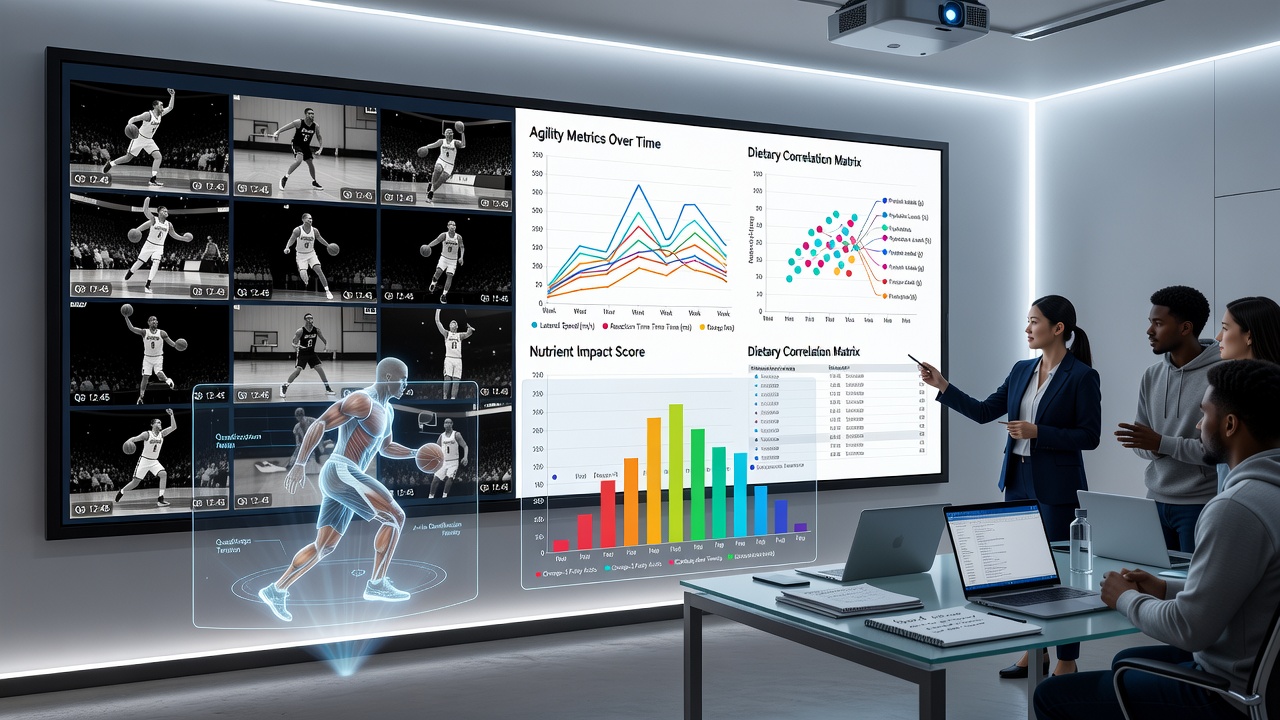
Nutrition Patterns and Agility Tracking in Basketball Through Archived Footage Analysis
Researchers have examined connections between dietary intake and agility metrics in basketball by combining archived game videos with detailed performance records from multiple seasons. Teams compile footage from league matches while cross-referencing player nutrition logs, training diaries, and biometric data to identify measurable shifts in movement efficiency, acceleration bursts, and change-of-direction speed. Analysts track specific actions such as defensive slides, crossover dribbles, and transition sprints frame by frame, then align those observations with reported carbohydrate, protein, and micronutrient consumption patterns over corresponding periods.
Video-Based Agility Measurement Techniques
Archived recordings allow precise quantification of agility elements because high-definition cameras capture every lateral shuffle, pivot, and explosive first step at consistent frame rates. Software overlays time-stamped markers on player positions to calculate split times between key points on the court, while performance databases supply matching heart-rate and GPS-derived velocity figures. Observers note that players who maintained steady energy availability through balanced meal timing showed shorter deceleration phases before cuts, and those patterns emerge clearly when video segments from different dietary phases are compared side by side.
Linking Dietary Records to Movement Data
Performance staff collect daily food logs alongside weekly video reviews, then apply statistical models that correlate nutrient timing with agility outputs. Evidence from multiple programs indicates that higher pre-game carbohydrate intake corresponds with improved lateral quickness during second-quarter possessions, while inadequate recovery nutrition after evening practices aligns with slower reaction steps in subsequent games. Researchers at institutions across North America and Europe have mapped these relationships using large datasets that span several years, revealing consistent associations without claiming direct causation.
Case Examples from League Archives
One mid-season stretch in a professional league demonstrated how players adjusted protein distribution across meals and subsequently displayed tighter turning radii during defensive rotations captured on film. Another dataset from collegiate competitions showed that athletes who increased omega-3 intake over an eight-week window reduced the number of false steps visible in transition defense clips. These observations rely on synchronized timelines where video timestamps match nutritional logs, allowing analysts to isolate variables such as sleep duration and training load that might otherwise confound results.

Data compiled through August 2026 continues to expand these archives as more clubs adopt automated tagging systems that flag agility sequences for later dietary correlation. International federations have begun sharing standardized video protocols, which helps researchers align metrics across different leagues and competition levels. Studies published through the National Center for Biotechnology Information illustrate how micronutrient status, particularly magnesium and vitamin D levels, tracks with reduced ground-contact times during vertical leaps that follow lateral movements.
Analytical Tools and Cross-Validation
Modern pipelines combine computer-vision algorithms with manual verification to ensure accuracy when extracting agility variables from older footage recorded at varying resolutions. Teams validate findings by repeating measurements on the same clips with independent raters, then compare outcomes against on-court testing batteries conducted during the same periods. This multi-source approach strengthens the reliability of observed links between dietary variables and movement quality, especially when hydration status and overall caloric balance are factored into the models.
Coaches and sports scientists review summarized reports that highlight periods when players altered meal composition and subsequently displayed measurable agility gains or plateaus. The process avoids speculation by focusing strictly on recorded values: grams of carbohydrate per kilogram of body weight, timing relative to tip-off, and corresponding agility metrics such as total lateral displacement per possession. External organizations including the Australian Institute of Sport have contributed reference frameworks for standardizing these dietary tracking methods across basketball programs.
Conclusion
Archived game videos paired with performance and nutrition datasets provide a practical route for mapping dietary influences on basketball agility. Analysts continue to refine extraction techniques and expand sample sizes, producing objective records that link nutrient intake timelines to measurable movement patterns. Ongoing work through 2026 and beyond will add further granularity as more clubs integrate real-time logging with historical footage reviews.