Overhead Perspectives on Elite Speed Skaters' Cornering Mastery in World Cup Competitions
Written by Katja Brooks · Jul 30, 2026
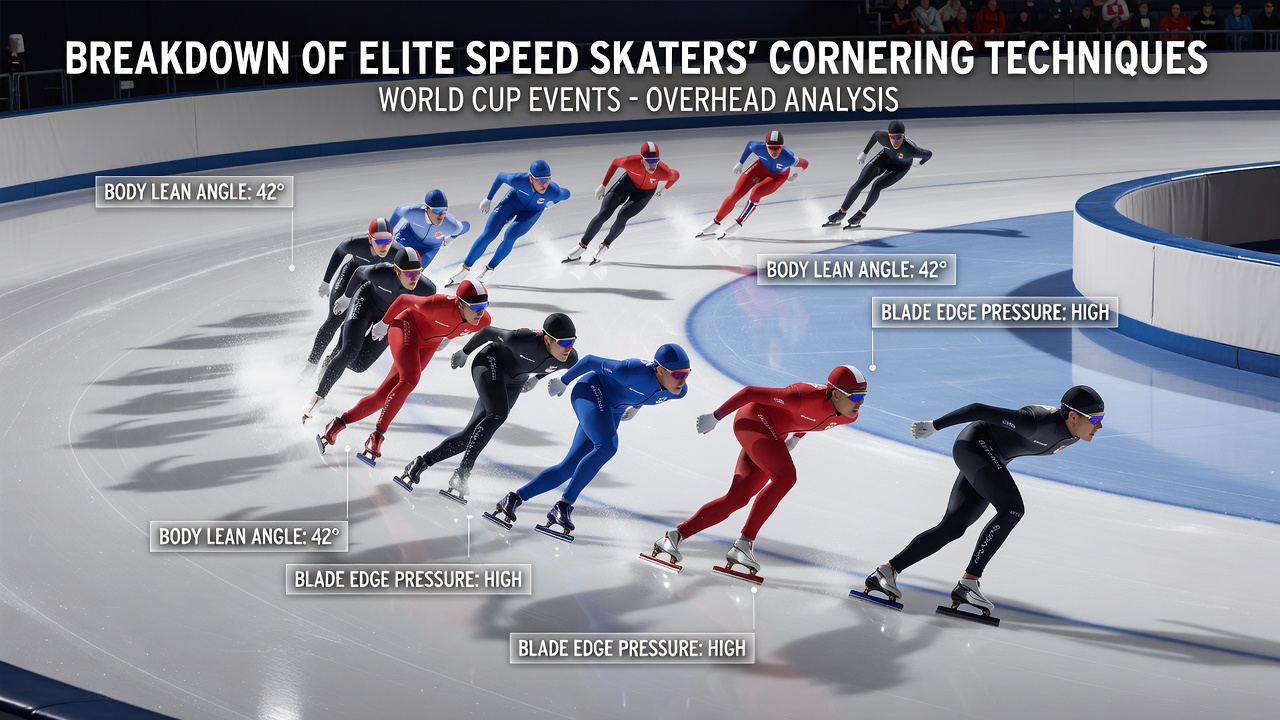
Overhead Perspectives on Elite Speed Skaters' Cornering Mastery in World Cup Competitions
World Cup speed skating events feature overhead camera setups that capture cornering sequences in detail, allowing observers to examine weight shifts, blade angles, and stride timing across multiple laps. Data from these recordings indicate that elite athletes maintain consistent lean angles between 35 and 45 degrees while entering curves, which helps preserve momentum without excessive friction loss on the ice surface.
Core Elements of Cornering Technique
Overhead footage from recent World Cup meets reveals several recurring patterns in how top performers handle turns. Skaters position their inside leg closer to the body during the initial lean, while the outside leg extends further for balance; this configuration distributes force evenly across both blades and reduces the risk of catching an edge. Researchers at the International Skating Union have documented these movements through synchronized video systems, noting that successful corner exits depend on a smooth transition back to upright posture within 0.8 seconds after the apex.
Stride frequency increases slightly on the curve compared to straightaways, yet contact time per push remains shorter because athletes apply pressure at a sharper angle relative to the direction of travel. Observers note that the most efficient skaters avoid over-rotation of the torso, keeping shoulders aligned with the hips to minimize air resistance that overhead views make visible as subtle body wobbles.
Insights from Specific World Cup Events
Analysis of footage from the 2025 World Cup series in Calgary and Heerenveen shows measurable differences between medalists and mid-pack finishers. The leading group typically completes the curve with an average radius of 8.2 meters, whereas others drift wider by up to 0.6 meters, resulting in longer overall path lengths. Those who've studied the recordings point out that the tighter line correlates with better use of the banked ice surface, where skaters can convert gravitational potential into forward speed on exit.
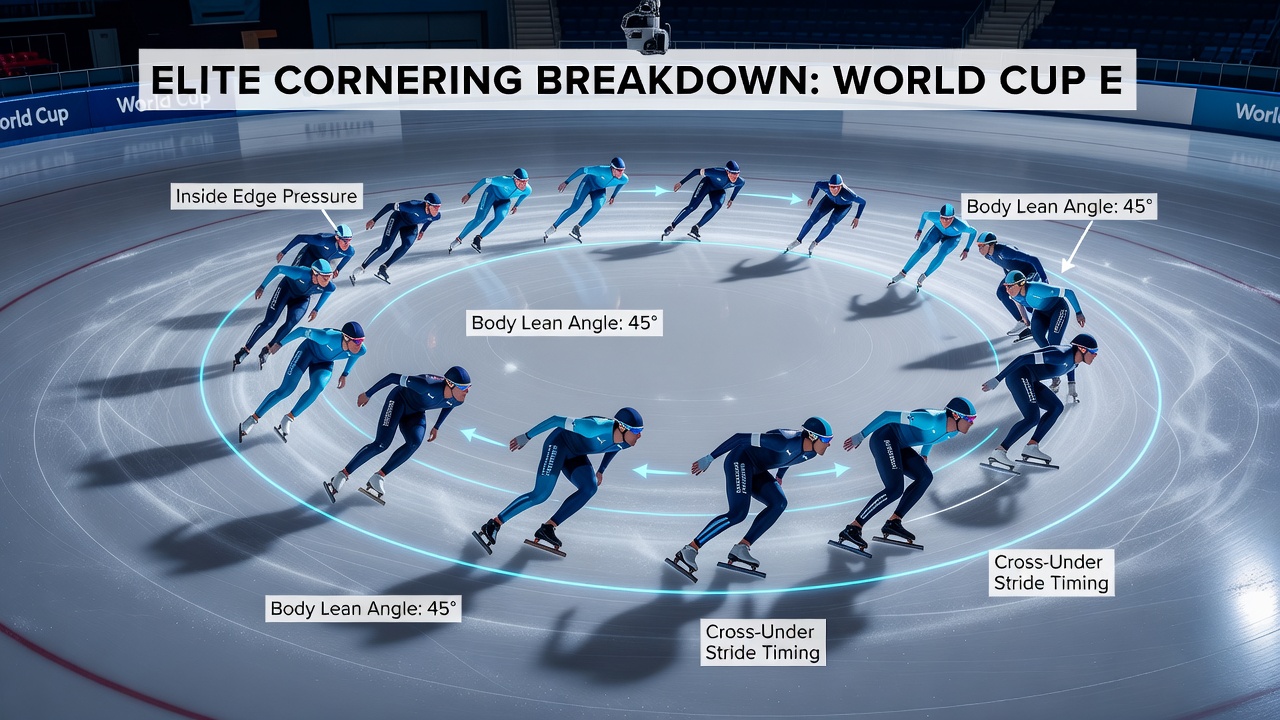
Frame-by-frame breakdowns further highlight how blade placement changes throughout the turn. Elite athletes plant the right blade (in counterclockwise curves) at a 22-degree attack angle on entry, then gradually reduce it to 12 degrees by the midpoint before increasing again for propulsion out of the corner. This progression appears consistently across multiple nationalities and distances, according to compiled statistics from the International Skating Union technical reports.
Comparative Data Across Distances
Longer events such as the 5000-meter and 10000-meter races place greater emphasis on energy conservation during corners, while sprint distances reward sharper acceleration out of each turn. Overhead recordings from the same skaters competing in both formats demonstrate that cornering efficiency accounts for roughly 18 percent of total race time variation in middle-distance events and up to 27 percent in the 500-meter sprint, based on timing data collected at World Cup venues.
Coaching staffs use these visuals to adjust training drills that replicate the exact lean and push sequences seen in competition. Sessions often incorporate mirror setups or harness systems to reinforce the body positions identified in the overhead analysis.
Conclusion
Overhead camera angles from World Cup events continue to supply precise, measurable information about how elite speed skaters manage corners. The patterns extracted from these recordings—consistent lean angles, optimized stride timing, and controlled blade placement—provide clear reference points for technical refinement across all competitive levels. As additional events unfold, including preparations leading into the 2026 season, the accumulated footage offers an expanding dataset for ongoing study of cornering dynamics.