Paddle Rhythm Analysis in Kayak Sprints: Insights from Championship Video Archives
Written by Iris Long · May 30, 2026
Paddle Rhythm Analysis in Kayak Sprints: Insights from Championship Video Archives
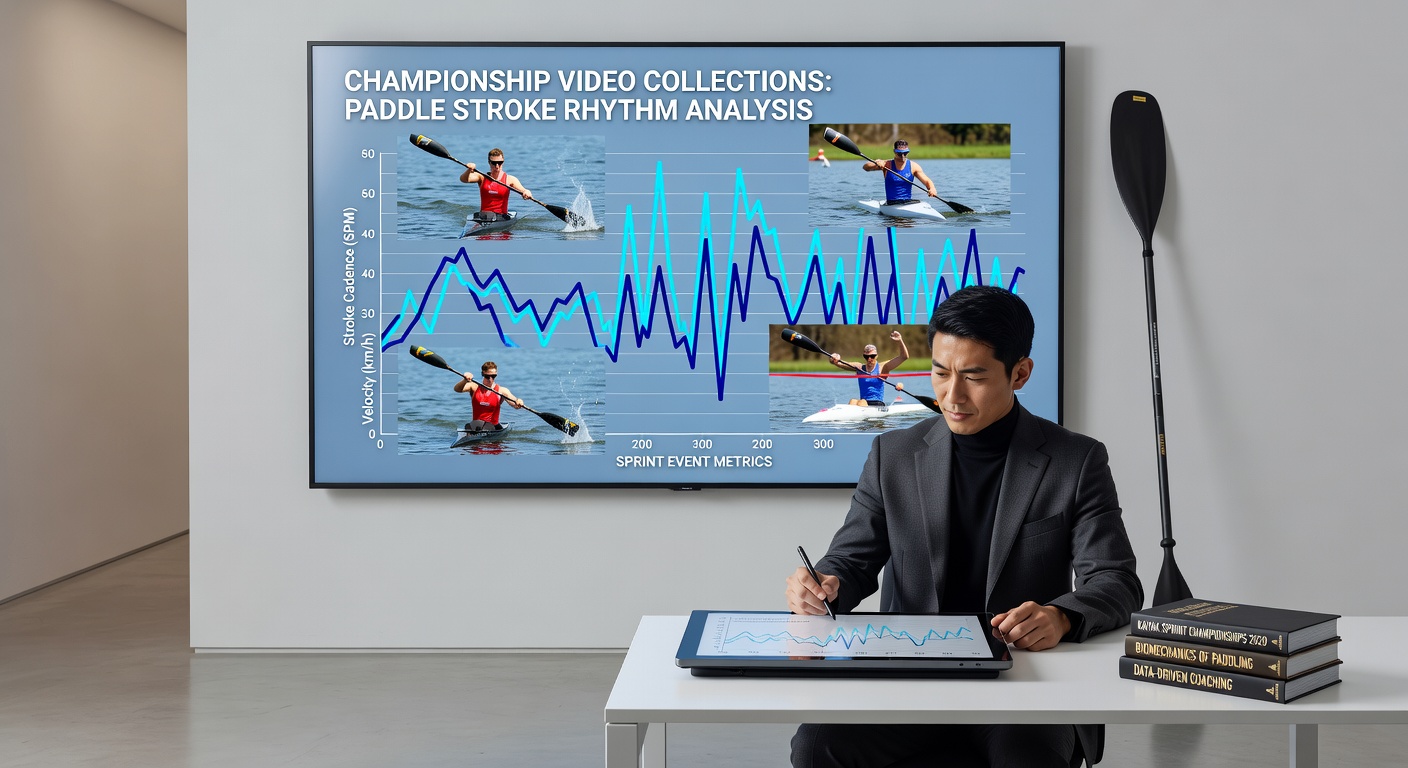
Championship video collections provide detailed records of paddle stroke rhythms in kayak sprint events, allowing researchers to break down timing, force application, and recovery phases across elite competitions. Analysts examine frame-by-frame footage from events such as the ICF Canoe Sprint World Championships to map stroke frequency, stroke length, and coordination patterns that distinguish top performers.
Methods for Extracting Rhythm Data from Footage
Video analysis tools track paddle entry and exit points while measuring intervals between strokes, and observers note how athletes adjust cadence during different race segments. Software overlays synchronize multiple camera angles, which reveals subtle variations in blade angle and torso rotation that affect overall propulsion efficiency. Data sets compiled from recent international meets show consistent stroke rates of 80 to 120 strokes per minute in the opening 100 meters, followed by adjustments as fatigue sets in.
Key Patterns Identified in Elite Performances
Studies of archived footage indicate that medalists maintain a smoother transition between pull and recovery phases compared with mid-pack competitors, and this smoothness correlates with lower energy expenditure over 200-meter and 500-meter distances. One dataset from the 2024 Paris Olympics highlighted how certain athletes reduce stroke length by 5 to 8 centimeters in the final 50 meters while increasing rate to sustain boat speed. Those who've reviewed thousands of frames observe that successful rhythm adjustments often coincide with slight changes in seating position and hip rotation timing.
Researchers at institutions focused on aquatic sports have cross-referenced video metrics with onboard sensor data where available, confirming that visual rhythm charts accurately predict peak velocity zones. The approach avoids reliance on single-race anomalies by aggregating data across multiple events and weather conditions.
Comparative Analysis Across Events and Athletes
Championship collections from European, Asian, and Pan American regattas allow side-by-side comparisons of stroke profiles under varying wind and water conditions. Footage from the 2025 ICF World Cup series, for instance, demonstrates that athletes from different national programs exhibit distinct recovery-phase durations even when overall race times remain similar. Observers note that crews in K2 and K4 events coordinate stroke rhythms more tightly than solo paddlers, with timing deviations rarely exceeding 20 milliseconds between teammates.
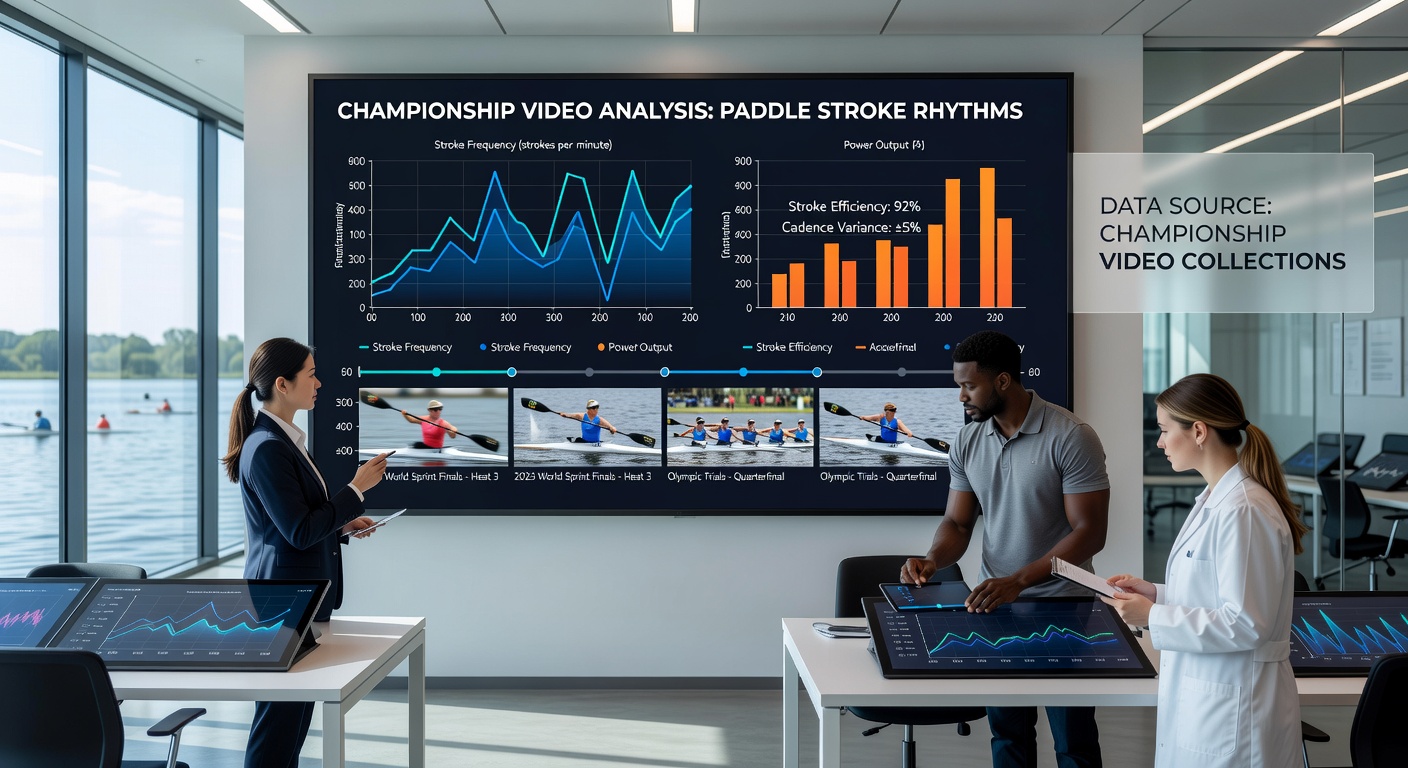
Training programs increasingly incorporate these video-derived charts to replicate championship conditions during practice sessions. Athletes review their own stroke sequences against those of previous winners, focusing on how rhythm shifts align with changes in boat acceleration curves recorded during the races. Data from the Australian Institute of Sport illustrates measurable improvements in stroke consistency after athletes complete targeted video review cycles.
Integration with Performance Tracking Systems
Modern analysis platforms combine championship video with GPS and accelerometer readings to produce comprehensive rhythm maps. These integrated records help identify when an athlete's stroke rate begins to drift outside optimal ranges, and coaches use the information to prescribe specific drills that reinforce desired timing. Figures released by the International Canoe Federation show growing adoption of such combined methods ahead of the 2026 season, with several national teams scheduling dedicated video workshops in May 2026 to prepare for upcoming continental qualifiers.
Longitudinal studies drawing on video archives spanning more than a decade reveal gradual evolution in stroke techniques, including earlier blade exit and refined recovery arcs that reduce drag. Analysts continue to refine algorithms that automatically flag rhythm disruptions, which speeds up review processes for large collections of championship material.
Conclusion
Video-based charting of paddle stroke rhythms supplies objective measurements that support technique refinement in kayak sprint events. By drawing on extensive championship footage, analysts generate reliable benchmarks that reflect real competitive conditions. Continued expansion of digital archives and analysis tools promises more precise mapping of the timing variables that influence race outcomes across distances and boat classes.