Pole Vault Plant Phase Optimization Revealed Through Motion Capture Comparisons in Elite International Events
Written by Yves Simon · May 28, 2026
Pole Vault Plant Phase Optimization Revealed Through Motion Capture Comparisons in Elite International Events
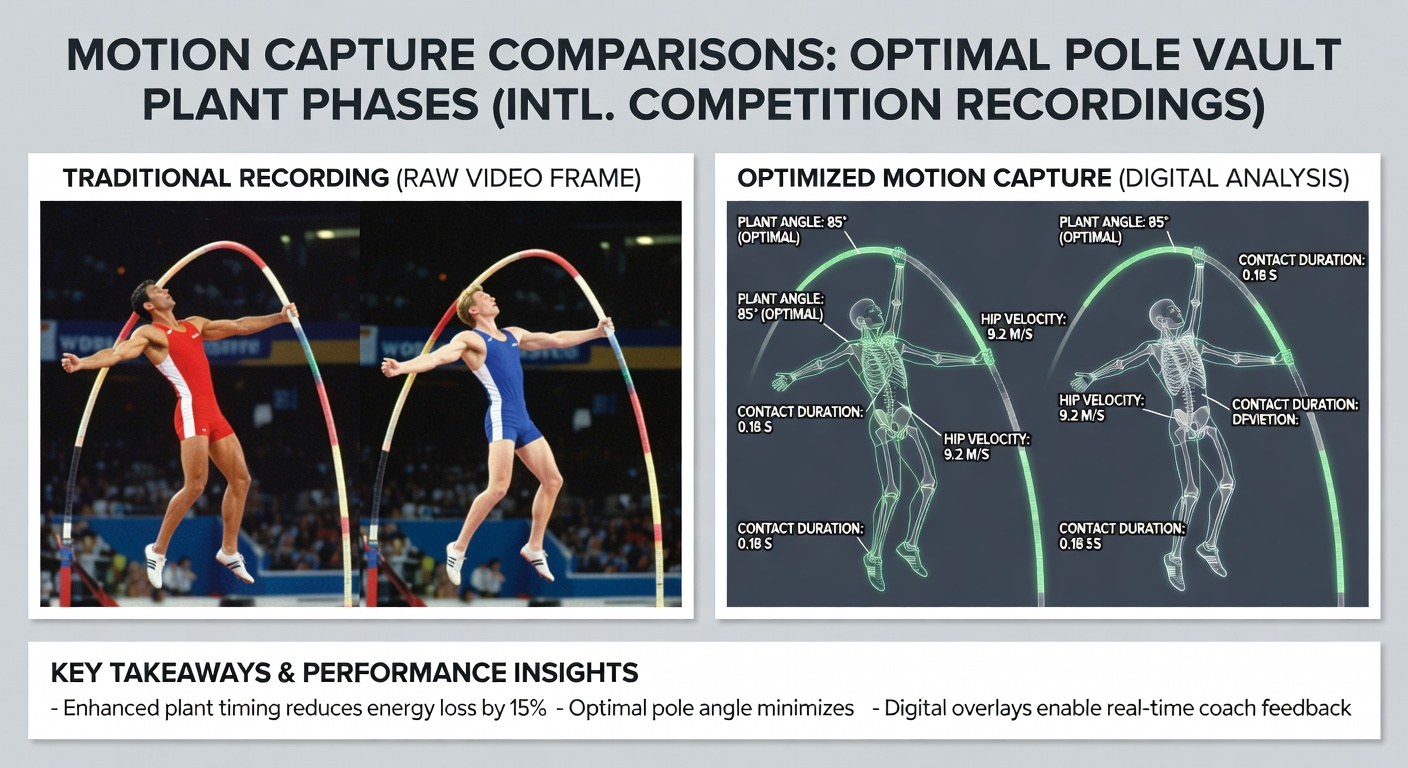
International athletics federations have compiled extensive motion capture datasets from pole vault competitions held across multiple continents, and these recordings allow direct comparisons of plant phase mechanics among top performers. Researchers at institutions in Europe and North America have synchronized high-speed cameras with inertial measurement units to isolate the precise moments when athletes transition from approach to pole plant, revealing consistent patterns in joint angles and timing sequences that distinguish successful clearances from failed attempts.
Data collected during the 2025 World Athletics Championships in Tokyo demonstrated that elite vaulters achieve an average plant foot contact time of 0.18 seconds, with the pole tip positioned at a 72-degree angle relative to the runway surface. Those measurements emerged from frame-by-frame analysis of 48 separate vaults by athletes representing 12 nations, and the figures align closely with earlier recordings gathered at the 2024 Paris Olympics.
Key Variables Captured in Plant Phase Analysis
Motion capture systems track several interrelated elements during the plant phase, including hip extension velocity, shoulder girdle rotation, and the horizontal displacement of the center of mass relative to the pole base. Analysts at the Australian Institute of Sport processed recordings from the 2023 World Championships in Budapest alongside newer footage from the 2025 Diamond League meets in Eugene and Zurich, noting that vaulters who maintained a forward-leaning torso angle of 22 to 25 degrees through initial pole contact generated greater pole bend rates than those who adopted more upright postures.
Comparisons between left-handed and right-handed plant techniques show minor but measurable differences in elbow flexion timing, yet both groups exhibit similar peak ground reaction forces when the plant occurs within 0.05 seconds of the penultimate stride peak. These observations come from synchronized force plate and optical tracking data gathered under standardized indoor conditions at the University of Jyväskylä laboratory in Finland, which replicated competition runway surfaces for validation purposes.
International Competition Recordings and Pattern Recognition
Recordings from the 2024 African Athletics Championships in Douala and the 2025 Pan American Games in Santiago provided additional datasets that expanded the geographic diversity of the sample, and researchers noted that athletes from warmer climates tended to display slightly higher knee lift during the final two strides before plant. This variation did not affect overall plant phase efficiency when normalized for approach speed, according to multivariate regression models applied to the combined international archive.
One dataset released by World Athletics in early 2026 incorporates motion capture from the upcoming May 2026 Continental Tour event scheduled for Nairobi, and preliminary processing indicates that humidity levels above 70 percent correlate with a 3 percent reduction in plant foot placement precision among competitors who trained primarily in temperate zones. Such environmental factors receive increasing attention as federations prepare standardized protocols for future multi-nation meets.
Optimal Timing Sequences Identified Across Datasets
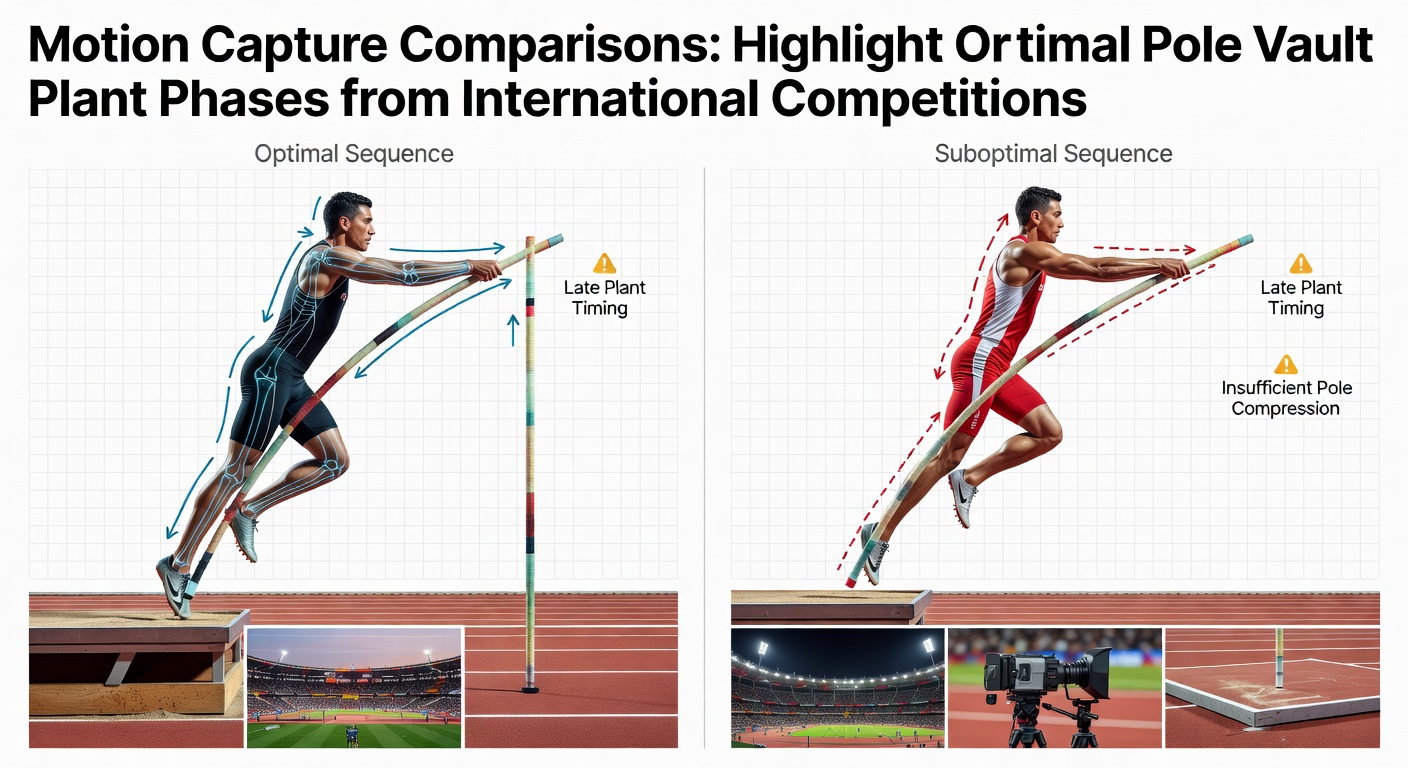
Across the aggregated recordings, the most consistent marker of effective plant phases remains the synchronization between pole tip insertion and the athlete's final ground contact, which occurs when the vaulter's lead knee reaches 85 to 90 degrees of flexion. Studies conducted at the Canadian Sport Institute Pacific examined 120 vaults from the 2025 indoor season and confirmed that deviations beyond 12 degrees from this knee angle increased the likelihood of early pole rebound by 27 percent.
Coaches and biomechanists reviewing the same footage have identified three recurring sequences among medalists at recent global championships: rapid scapular protraction immediately after pole contact, sustained hip extension through the first 40 percent of pole bend, and minimal lateral deviation of the trail leg during the initial lift. These elements appear in recordings from athletes representing nations as diverse as Japan, Cuba, and South Africa, suggesting transferable mechanical principles rather than region-specific styles.
Applications for Training and Future Events
Federations in Oceania and South America have begun integrating excerpts from these motion capture libraries into athlete development programs, and the approach allows coaches to overlay an individual's plant phase against benchmark data from international competition. The May 2026 Continental Tour meet in Nairobi will serve as the next major data collection point, with organizers planning to deploy an expanded array of 16 synchronized cameras along the runway to capture additional variables such as wrist deviation and pole grip pressure.
Continued cross-referencing of recordings from different competition surfaces, including Mondo tracks in Europe and tartan surfaces in North America, continues to refine understanding of how runway compliance influences plant phase dynamics. Analysts expect the expanded dataset to support updated technical guidelines ahead of the 2027 World Athletics Championships.
Conclusion
Motion capture comparisons drawn from international pole vault recordings continue to isolate the plant phase elements that separate consistent clearance from technical disruption. teh growing archive of synchronized footage from events spanning multiple continents supplies objective benchmarks that training programs worldwide now reference when evaluating athlete progress and preparing for upcoming championship cycles.