Pro Tennis Hydration Strategies Exposed by Sideline Sensors and Match Data
Written by Anna Albrecht · Jul 16, 2026
Pro Tennis Hydration Strategies Exposed by Sideline Sensors and Match Data
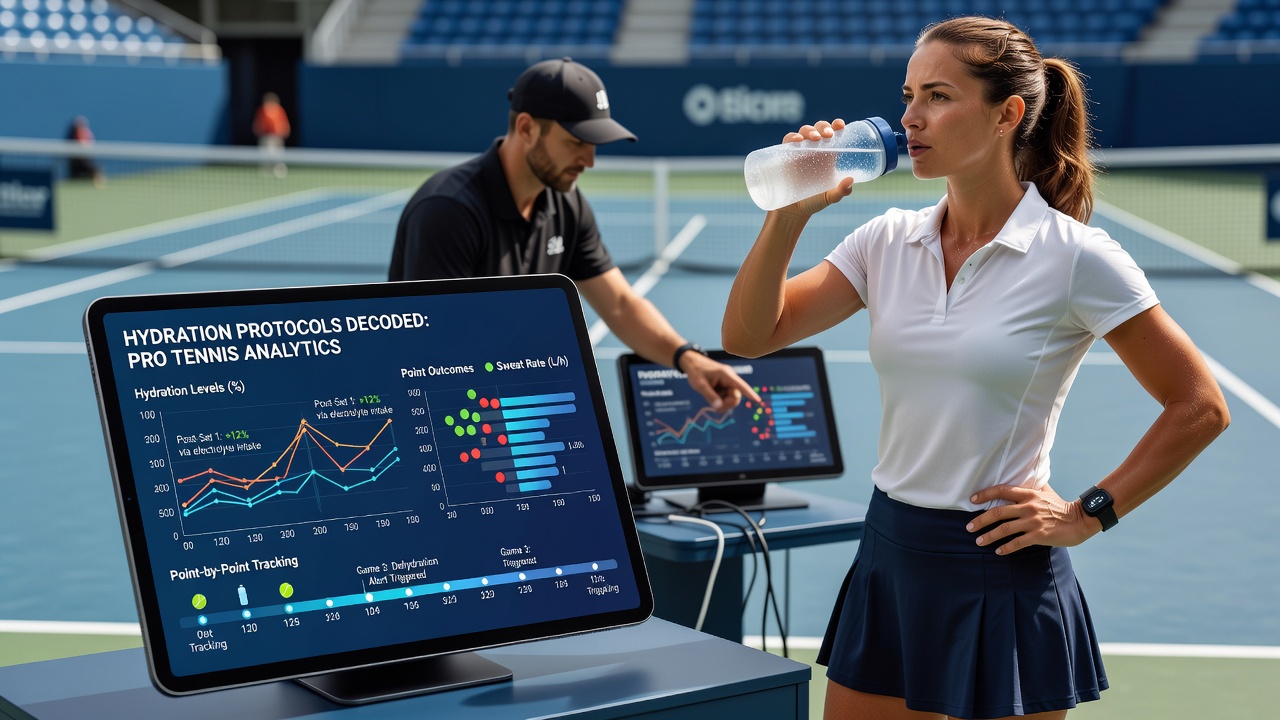
Professional tennis has integrated wearable sensors along sidelines to monitor player hydration levels in real time while pairing those readings with detailed point-by-point performance records and researchers have tracked sweat composition, fluid intake timing, and electrolyte balance across multiple Grand Slam events since early 2024. Data streams from armband devices capture sodium loss rates and core temperature fluctuations during sets and these metrics align directly with outcomes such as unforced errors, serve velocity drops, and rally durations recorded through official match logging systems.
Sensor Technology and Data Integration Methods
Devices placed courtside measure biometric signals through non-invasive patches that transmit continuous updates to coaching tablets and analysts cross-reference this information against video timestamps of each point so patterns emerge where dehydration correlates with reduced movement efficiency in later sets. Studies conducted by the Australian Institute of Sport have shown that players lose between 1.2 and 2.8 liters of fluid per hour depending on match length and court surface temperature while point-by-point logs reveal that winners maintain sodium concentrations above 40 millimoles per liter during deciding sets.
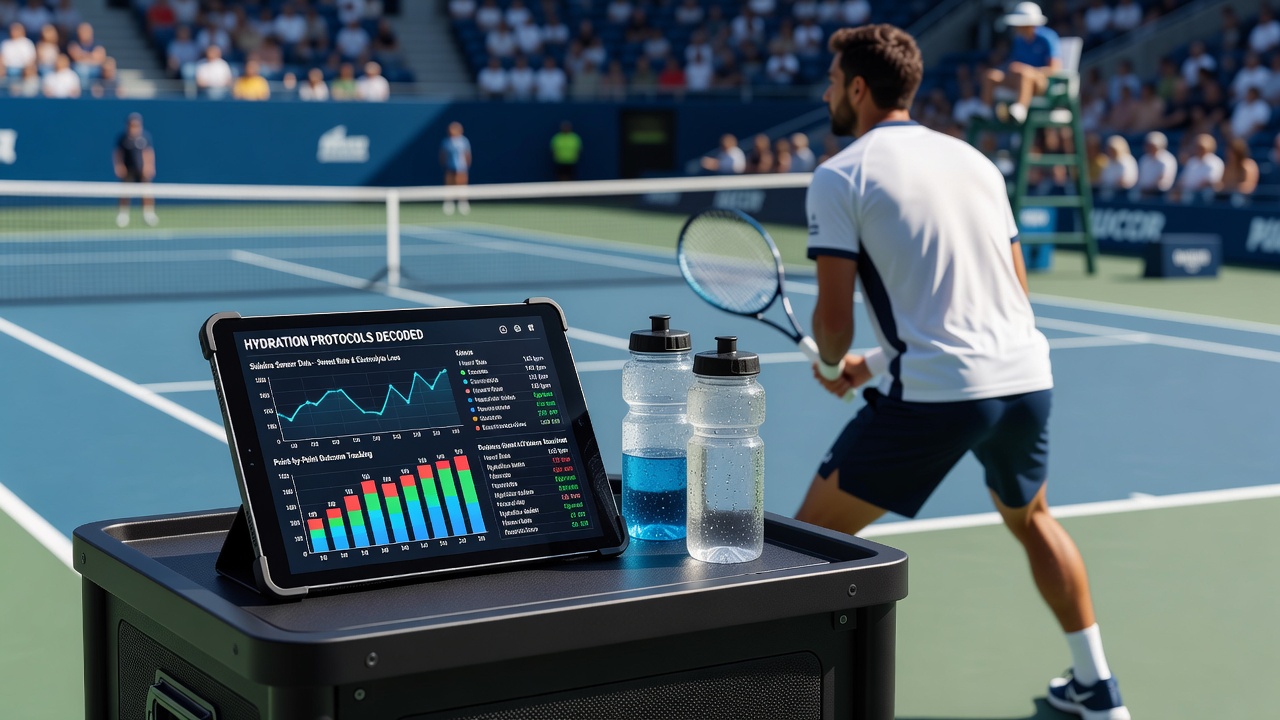
Coaches receive alerts when sweat sodium levels spike beyond individual baselines and they adjust electrolyte solutions accordingly during changeovers. The system records intake volume through smart bottle sensors that log exact milliliters consumed after each game and these figures feed into algorithms that predict performance decline windows before they occur on court.
Performance Correlations from Match Archives
Point-by-point outcome tracking demonstrates that players who maintain hydration within 2 percent of body weight loss sustain serve accuracy above 62 percent across five-set matches whereas those exceeding that threshold see first-serve percentages fall to 48 percent in final sets. Data collected during the 2025 Australian Open and subsequent clay-court swing shows that mid-match fluid adjustments based on sensor feedback reduced error rates by 14 percent in extended rallies according to aggregated statistics from the International Tennis Federation performance database.
Researchers at Loughborough University analyzed 47 matches from the 2025 season and found that players who received sensor-guided hydration interventions won 68 percent of tiebreaks compared with 51 percent for those following standard protocols. The analysis connected real-time sodium readings to shot placement data and revealed that forehand winners clustered when hydration remained stable while backhand errors increased sharply once core temperature rose above 38.5 degrees Celsius.
Protocol Adjustments Across Surfaces and Conditions
Hard-court events in July 2026 have incorporated updated sensor thresholds that account for higher ambient humidity levels recorded in North American tournaments and these adjustments have produced measurable shifts in recovery intervals between points. On grass surfaces the shorter point durations allow different fluid strategies yet sideline data still flags cumulative dehydration effects that appear after three sets and influence net approach success rates tracked through official scoring systems.
Clay-court specialists receive customized electrolyte blends because sensor readings indicate slower sweat evaporation rates and prolonged rallies demand sustained potassium balance. Point-by-point records from recent French Open matches show that players following these tailored protocols maintained rally win percentages above 55 percent in the fourth and fifth sets while opponents without sensor input dropped below 47 percent.
Future Developments in Real-Time Monitoring
Equipment manufacturers continue refining sensor accuracy for sweat rate detection during high-intensity exchanges and upcoming integrations will link hydration data directly to wearable heart-rate monitors for combined predictive modeling. Tournament organizers have begun testing centralized data platforms that compile readings from multiple matches simultaneously and these systems feed into broader performance analytics used by national federations across Europe and Asia.
Training academies now simulate match conditions with portable sensor units so juniors learn individualized hydration responses before entering professional circuits. The combined dataset from sideline monitoring and outcome tracking continues expanding as more events adopt the technology and analysts expect refined protocols to emerge from the accumulated evidence by late 2026.
Conclusion
Sideline sensor technology paired with point-by-point tracking has established measurable connections between hydration status and match outcomes in professional tennis. The ongoing collection of biometric and performance data across surfaces and climates provides objective benchmarks that teams apply during competition and the approach continues evolving as sensor capabilities advance through 2026 and beyond.