Rhythm Coordination in Artistic Swimming Ensembles: Insights from Underwater Video at Championship Events
Written by Iris Long · Jun 8, 2026
Rhythm Coordination in Artistic Swimming Ensembles: Insights from Underwater Video at Championship Events
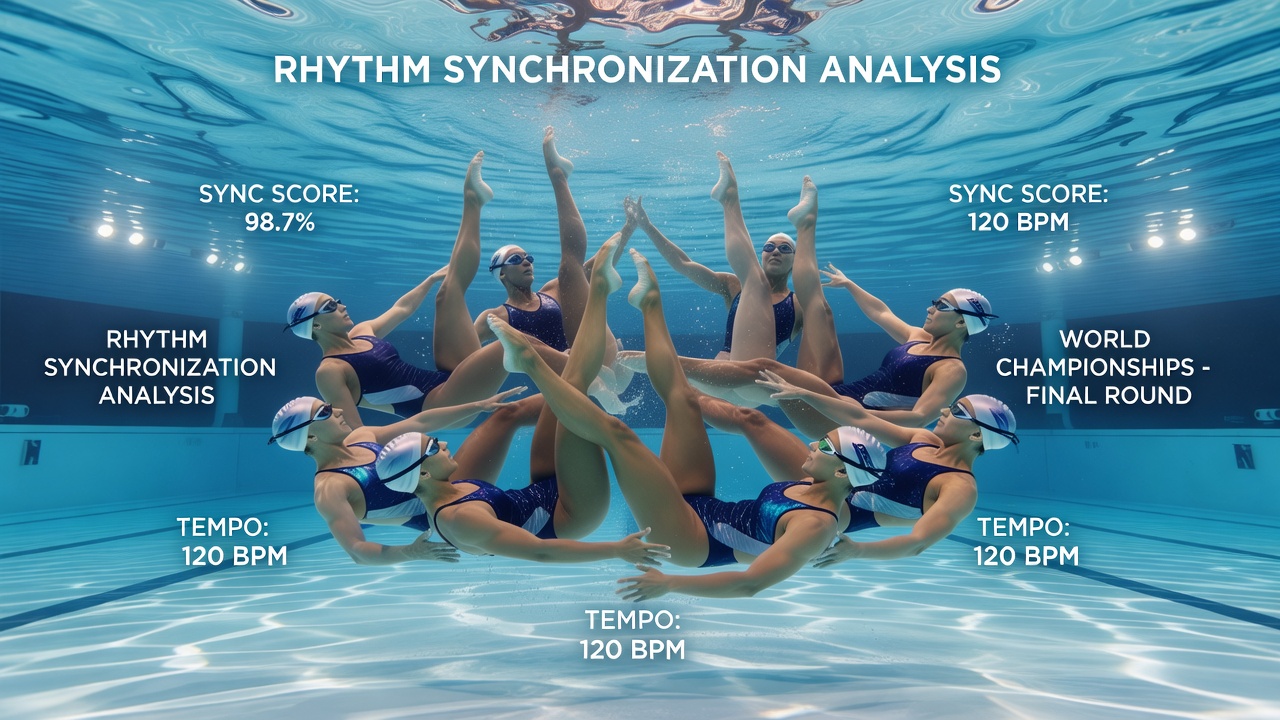
Underwater video synchronization has become a standard tool for examining rhythm coordination in artistic swimming team routines at major international events, and data from recent world championships demonstrate how frame-by-frame analysis reveals precise timing patterns across eight or ten swimmers moving as one unit. Observers note that these recordings allow coaches and analysts to measure millisecond-level differences in arm extensions, leg beats, and torso rotations that define successful performances according to World Aquatics scoring criteria.
Championship footage typically deploys multiple synchronized cameras positioned at varying depths and angles, which creates composite timelines that align every swimmer's movements against a shared reference clock. Researchers have applied this method to study how teams maintain collective pulse during hybrid figures that combine elements of ballet, gymnastics, and swimming propulsion, and the resulting datasets show consistent correlations between tight rhythm alignment and higher execution scores.
Technical Setup for Championship Video Capture
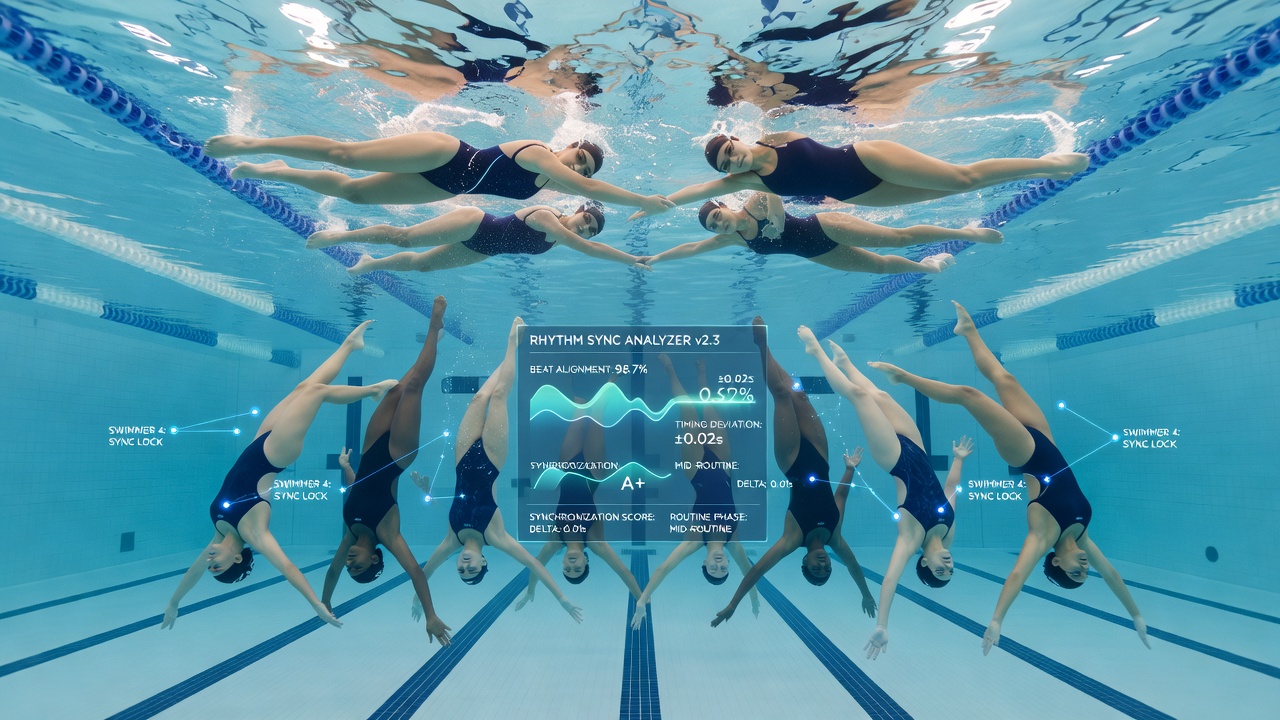
World championship venues install waterproof camera arrays along pool floors and side walls, with additional overhead units that feed into central synchronization software. This configuration records at frame rates exceeding 120 per second, enabling analysts to isolate individual stroke cycles and compare them across the entire team formation. Data indicates that such high-resolution capture reduces timing measurement error to under 10 milliseconds, a threshold that separates medal contenders from lower-ranked ensembles.
Software platforms then overlay beat markers derived from music tracks used in the routines, allowing direct comparison between intended rhythmic structure and actual swimmer execution. Teams from nations including Canada, Japan, and Spain have incorporated these overlays into pre-competition reviews, and figures from past events reveal measurable improvements in synchronization scores after targeted video feedback sessions.
Core Elements of Rhythm Synchronization
Team routines demand simultaneous initiation of propulsion phases, breath holds, and transitional sculls, all while preserving geometric formations. Underwater analysis highlights how lead swimmers establish the base tempo that others mirror through visual and proprioceptive cues, and studies of championship performances show that deviations as small as 50 milliseconds in leg kick timing can disrupt the visual harmony judges evaluate.
Breathing patterns represent another focal point, because staggered inhalation breaks the illusion of fluid unity. Analysts track chest expansion timing across multiple swimmers and correlate these moments with overall routine flow, revealing that elite teams compress breathing windows into narrow synchronized intervals that minimize surface disturbance. Evidence from archived footage demonstrates that routines achieving sub-30-millisecond breathing alignment consistently receive higher artistic impression marks.
Findings from Recent Championship Archives
Video reviews of events leading into the 2025 cycle and preparations for gatherings expected around mid-2026 illustrate progressive refinement in rhythm precision. One study of team technical routines found that medal-winning squads maintained average intra-team timing variance below 25 milliseconds across full four-minute performances, whereas non-finalist groups averaged variances exceeding 80 milliseconds during comparable sections.
Transitions between vertical and horizontal planes provide particularly rich data points. Underwater recordings capture how swimmers adjust kick amplitude and sculling force to stay level with teammates, and researchers have documented that successful teams use micro-adjustments occurring within 15-millisecond windows to correct positional drift before it becomes visible above water. These adjustments appear most frequently during the final third of routines when fatigue begins to affect motor control.
Integration with Training Protocols
National programs now embed underwater synchronization review into weekly training cycles, using portable camera systems that replicate championship conditions. Athletes review paired footage showing their individual movements alongside the collective team output, which accelerates learning of the subtle timing cues required for seamless integration. Data from training logs indicate that squads incorporating daily video synchronization sessions reduce timing errors by approximately 40 percent over an eight-week preparation block.
Coaches cross-reference these sessions with physiological monitoring to understand how heart rate and oxygen debt influence rhythm stability, and the combined datasets help identify segments where fatigue most threatens coordination. Such integrated approaches have been adopted by federations across Europe, North America, and the Asia-Pacific region according to reports from international governing bodies.
Conclusion
Underwater video synchronization continues to supply objective metrics that support both performance evaluation and targeted training interventions in artistic swimming team events. As technology advances and more championship archives become available, analysts expect finer granularity in rhythm measurements that will further distinguish elite execution from technically proficient but less cohesive performances. Teams preparing for future cycles, including events anticipated around 2026, rely on these analytical methods to refine collective timing at the level demanded by contemporary judging standards.