Scrum Engagement Insights from Rugby Tournament Overheads and Biomechanical Force Data
Written by Casey Krause · Jul 13, 2026
Scrum Engagement Insights from Rugby Tournament Overheads and Biomechanical Force Data
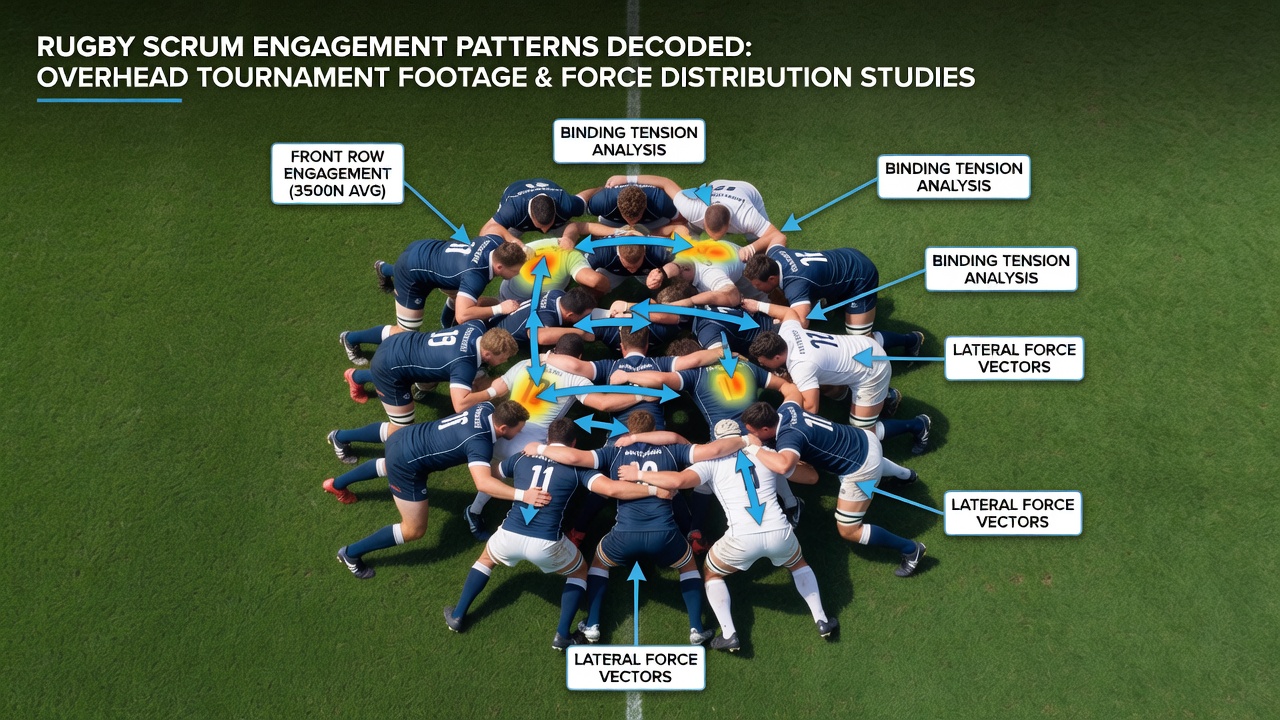
Overhead tournament footage combined with force distribution studies has opened new windows into rugby scrum mechanics, where teams coordinate eight forwards to contest possession at set pieces. Analysts examine these sequences frame by frame to track timing, body angles, and pressure points across elite competitions.
Research from multiple international events shows that engagement patterns vary by competition level and regional playing styles. Data collected during major tournaments reveals consistent trends in how front rows bind and drive, while force sensors placed on scrum machines and player equipment quantify the loads transferred through shoulders and hips.
Overhead Footage Breakdowns Reveal Timing Nuances
High-angle cameras positioned above the pitch capture the precise sequence of binds, crouches, and drives that define modern scrum engagements. Observers note that successful packs often synchronize their hit within a 0.3-second window after the referee issues the "set" command, according to timing overlays applied to tournament archives. These recordings highlight how loosehead and tighthead props adjust their foot placement based on opposing numbers, while hookers scan for gaps in the opposition's drive line.
Studies conducted across European and Southern Hemisphere leagues indicate that teams using a staggered engagement approach generate more consistent forward momentum than those relying on simultaneous impact. Footage from championship matches demonstrates that packs maintaining lower body heights during the initial drive phase transfer force more efficiently to the opposition's resistance point.
Force Distribution Measurements Quantify Load Patterns
Force distribution studies employ pressure-mapping technology and wearable sensors to record the magnitude and direction of forces during live and simulated scrums. Findings from these investigations show peak compressive forces often exceed 16 kilonewtons per side in professional contests, with the majority concentrated through the left shoulder of the tighthead prop. Researchers at the Australian Institute of Sport have documented how small adjustments in binding height alter load distribution across the entire front row unit.
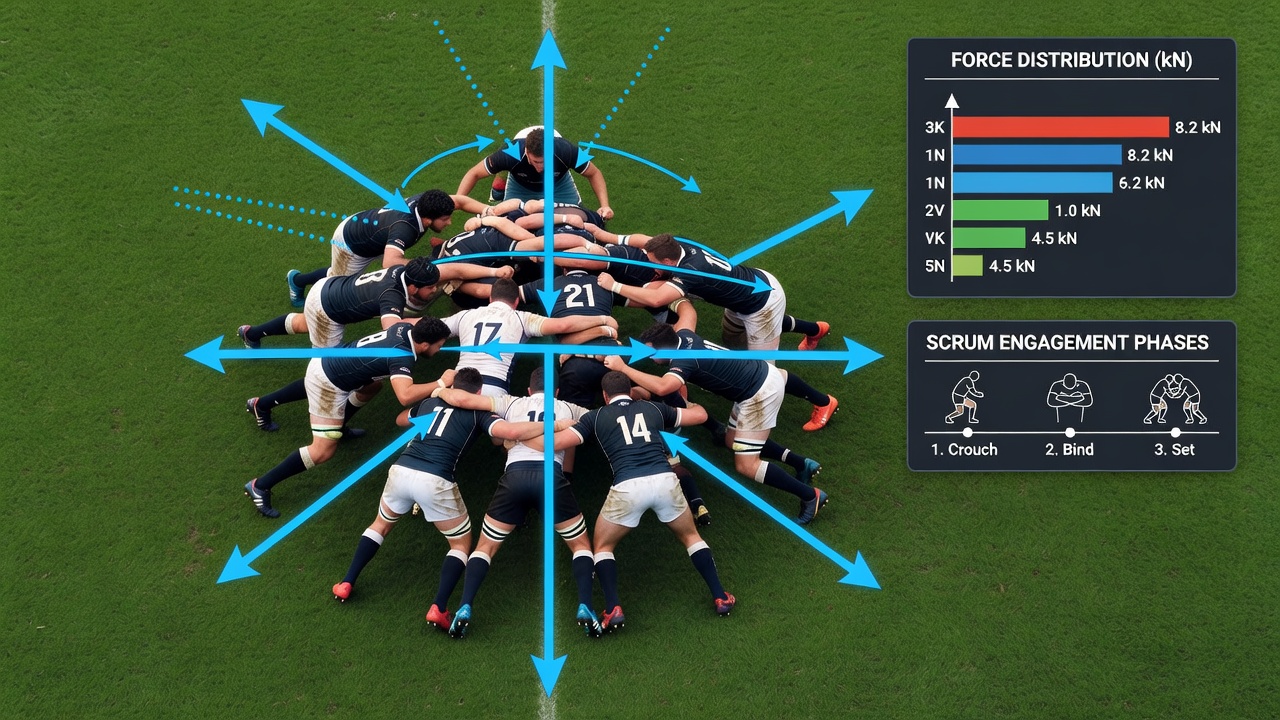
Additional data from New Zealand performance centers indicates that second-row forwards contribute up to 35 percent of total drive force when their binding angles align with the primary push vector. These measurements help coaching staffs identify imbalances where one side of the scrum absorbs disproportionate strain, increasing injury risk during prolonged contests.
Observed Patterns Across Recent Tournaments
Analysis of footage from events leading into the 2026 international calendar demonstrates that northern hemisphere packs tend toward more upright engagement postures, whereas southern hemisphere teams favor deeper crouches that lower their center of gravity. Force studies corroborate these differences, revealing higher horizontal force components in teams that maintain lower body positions throughout the drive phase.
One documented case from a 2025 test series showed a team adjusting its engagement cadence after reviewing overhead data, resulting in a 12 percent reduction in opposing scrum penalties over subsequent matches. Similar adjustments have appeared in Super Rugby Pacific and Premiership competitions, where analysts overlay force graphs onto match footage to pinpoint exact moments of collapse or dominance.
World Rugby technical reports note that referee interpretations of engagement commands influence these patterns, with variations in timing cues leading to measurable differences in force onset across different officiating crews. World Rugby laws continue to evolve based on such aggregated data from multiple competitions.
Integration of Video and Sensor Data in Training
Coaching groups now combine overhead analysis with force readings to design targeted drills that replicate competition demands. These sessions focus on replicating the 0.3-second synchronization window observed in tournament footage while monitoring individual force contributions through instrumented scrum machines. Canadian rugby development programs have adopted similar protocols, integrating GPS and accelerometer data to track fatigue effects on engagement consistency during match simulations.
Longitudinal tracking shows that packs incorporating weekly video-force reviews maintain steadier drive patterns across multiple games, reducing variability in scrum outcomes. Such approaches rely on objective metrics rather than subjective assessment, allowing precise identification of technical adjustments needed at each position.
Conclusion
Overhead tournament footage and force distribution studies together provide detailed mapping of rugby scrum engagement patterns, highlighting timing windows, load concentrations, and regional stylistic differences. Continued collection of these datasets across future competitions will support ongoing refinement of training methods and law interpretations.