Sequential Video Breakdowns Expose Elbow Alignment Patterns That Boost Javelin Distance in Olympic Qualifiers
Written by Yves Simon · Aug 3, 2026
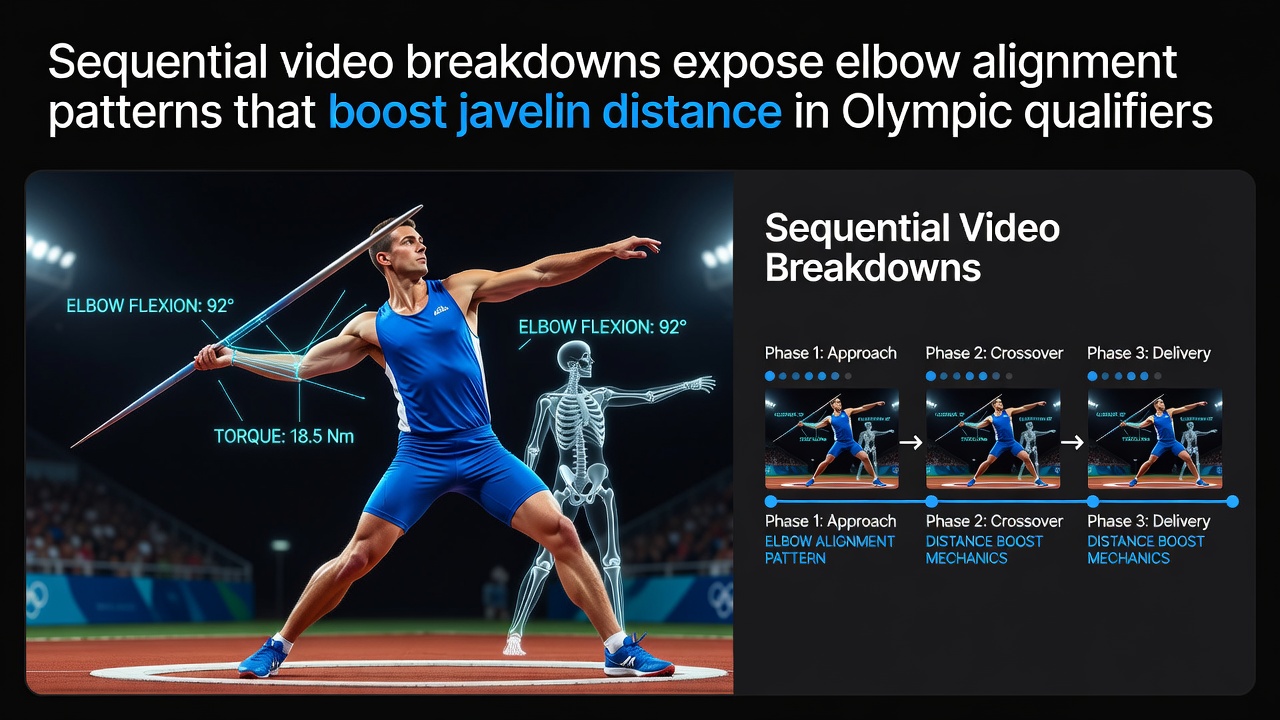
Sequential Video Breakdowns Expose Elbow Alignment Patterns That Boost Javelin Distance in Olympic Qualifiers
Sequential video analysis has become a standard tool for examining elbow positioning in javelin events, and researchers from multiple national training centers have documented consistent patterns that correlate with increased throwing distances during Olympic qualification rounds. Studies conducted by the Australian Institute of Sport and the German Athletics Federation indicate that athletes maintain a specific elbow height relative to the shoulder axis throughout the final three strides before release, which data shows contributes to greater force transfer along the kinetic chain.
Frame-by-Frame Examination of Elbow Mechanics
Coaches and biomechanists review high-speed footage captured at 240 frames per second during qualification meets held in 2025, and they isolate moments where the throwing elbow aligns within 10 to 15 degrees of the horizontal plane at the point of maximum shoulder external rotation. This positioning appears across multiple athletes from different countries, while footage from the European Athletics Championships reveals that deviations beyond 20 degrees often coincide with reduced release velocities recorded on radar systems. Observers note that the pattern emerges most clearly when analysts overlay joint markers on sequential frames, allowing direct comparison between successful throws exceeding 82 meters and shorter attempts in the same session.
Patterns Identified Across Qualification Events
Data compiled from Olympic qualifier tournaments shows that throwers who sustain elbow alignment through the crossover step achieve average distance gains of 1.8 meters compared with those whose elbows drop early in teh delivery phase. The World Athletics biomechanical reports from events in 2024 and early 2025 highlight similar trends in both men's and women's categories, and the figures reveal that elite performers adjust elbow trajectory based on wind conditions measured at each stadium. Analysts cross-reference these adjustments with GPS-derived approach speeds, which demonstrates how the alignment supports efficient energy transfer without requiring changes to overall run-up velocity.
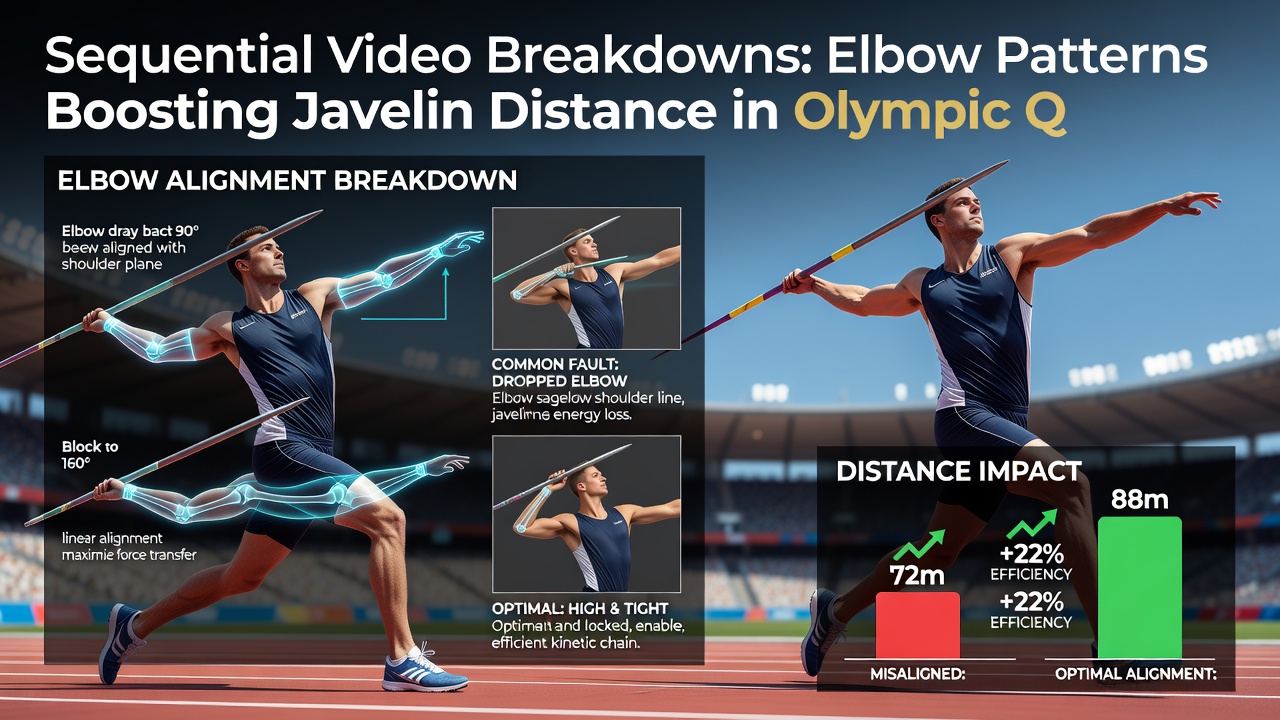
Training programs in Canada and Japan have incorporated these video-derived insights into daily sessions, where athletes review their own footage alongside reference clips from top qualifiers. The Canadian Sport Institute published findings in 2025 that link sustained elbow height to improved javelin flight stability, measured through post-throw trajectory tracking, while Japanese researchers documented reduced medial elbow stress when alignment stays within the identified range. These observations come from synchronized camera setups positioned at multiple angles around the throwing sector, which capture both lateral and overhead views for comprehensive joint angle calculations.
Application in Preparation for August 2026 Events
Qualification pathways leading into the August 2026 international calendar feature additional scrutiny on these elbow patterns, as governing bodies prepare updated technical guidelines based on accumulated video archives. National federations now require coaches to submit motion analysis summaries alongside performance results for certain ranking events, and this process draws on standardized protocols developed through collaboration between the International Olympic Committee medical commission and regional sports science labs. Athletes who participated in 2025 qualifiers report structured review sessions that focus on the transition from plant foot contact to release, where elbow positioning directly influences the angle of attack at javelin departure.
Further examination of archived footage from North American and Oceanian trials indicates that minor variations in elbow path during the penultimate stride can shift release height by several centimeters, which in turn affects overall distance according to projectile motion models used by performance analysts. Teams integrate these measurements with force plate data collected at training facilities, creating composite profiles that track consistency across multiple sessions rather than isolated throws.
Conclusion
Video-based identification of elbow alignment continues to shape preparation strategies ahead of major qualification windows, with research institutions across continents contributing comparative datasets that refine existing technical models. The integration of sequential breakdowns into routine analysis supports measurable improvements in distance outcomes during Olympic qualifying competitions, as evidenced by performance records maintained by World Athletics and affiliated national bodies.