Shoulder Alignment Insights from Rear-View Footage at Global Archery Tournaments
Written by Anna Albrecht · Aug 22, 2026
Shoulder Alignment Insights from Rear-View Footage at Global Archery Tournaments
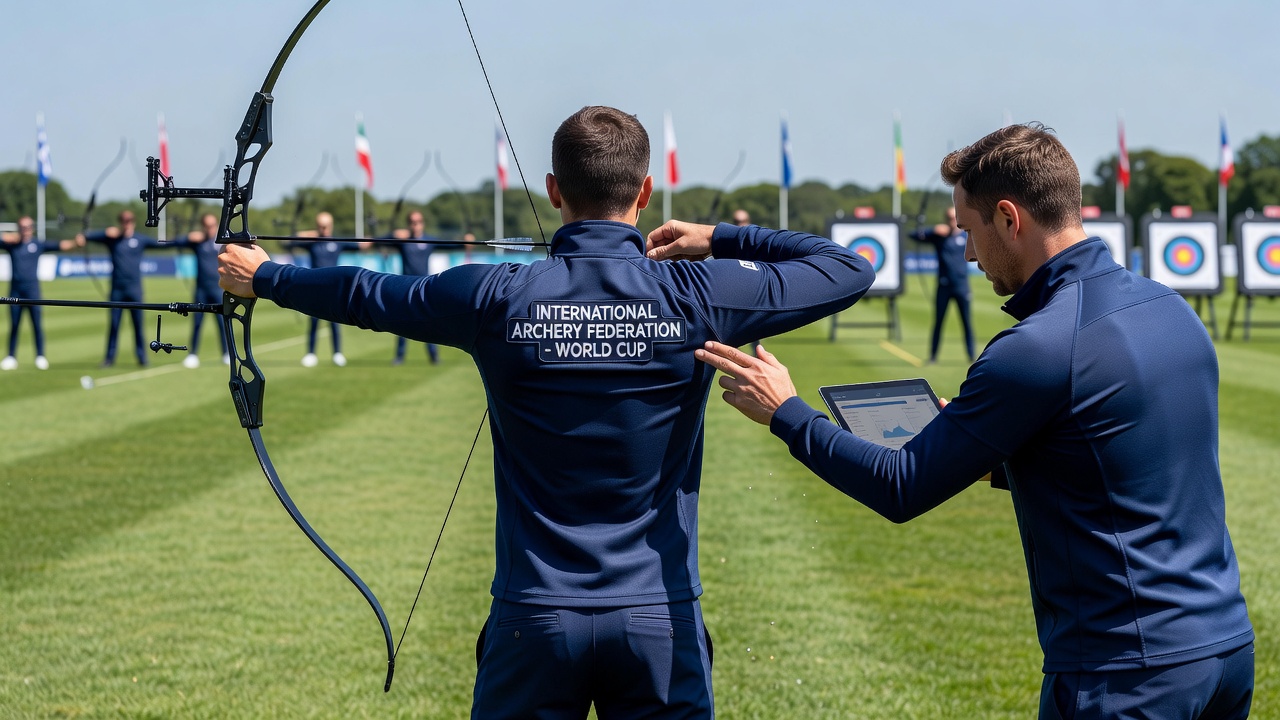
Competitive archery relies on precise biomechanics where shoulder alignment determines shot consistency and accuracy across distances, and rear-view footage from international tournaments provides detailed records of how athletes adjust their posture mid-competition. These recordings, often captured by fixed cameras positioned behind the shooting line, reveal subtle corrections that occur between arrows or during the draw phase, allowing coaches and analysts to study movement patterns without interrupting the flow of events.
How Rear-View Systems Operate in Major Events
International tournaments sanctioned by governing bodies install rear-view setups that record at high frame rates, capturing the back and shoulder regions of competitors as they prepare and release arrows. Data from these systems shows athletes frequently make micro-adjustments to scapular positioning after an initial draw, particularly when wind or fatigue begins to affect stability. Observers note that such footage from events like the 2025 World Archery Championships highlighted patterns where elite performers realigned their shoulders by rotating the elbow slightly outward before settling into anchor position.
August 2026 preparations for upcoming continental qualifiers have already incorporated similar camera placements to generate baseline comparisons ahead of the next Olympic cycle. Analysts review sequences frame by frame to identify when shoulder elevation occurs too early in the draw, which can lead to inconsistent arrow flight, and they document these instances alongside timing data from electronic scoring systems.
Common Alignment Corrections Documented on Film
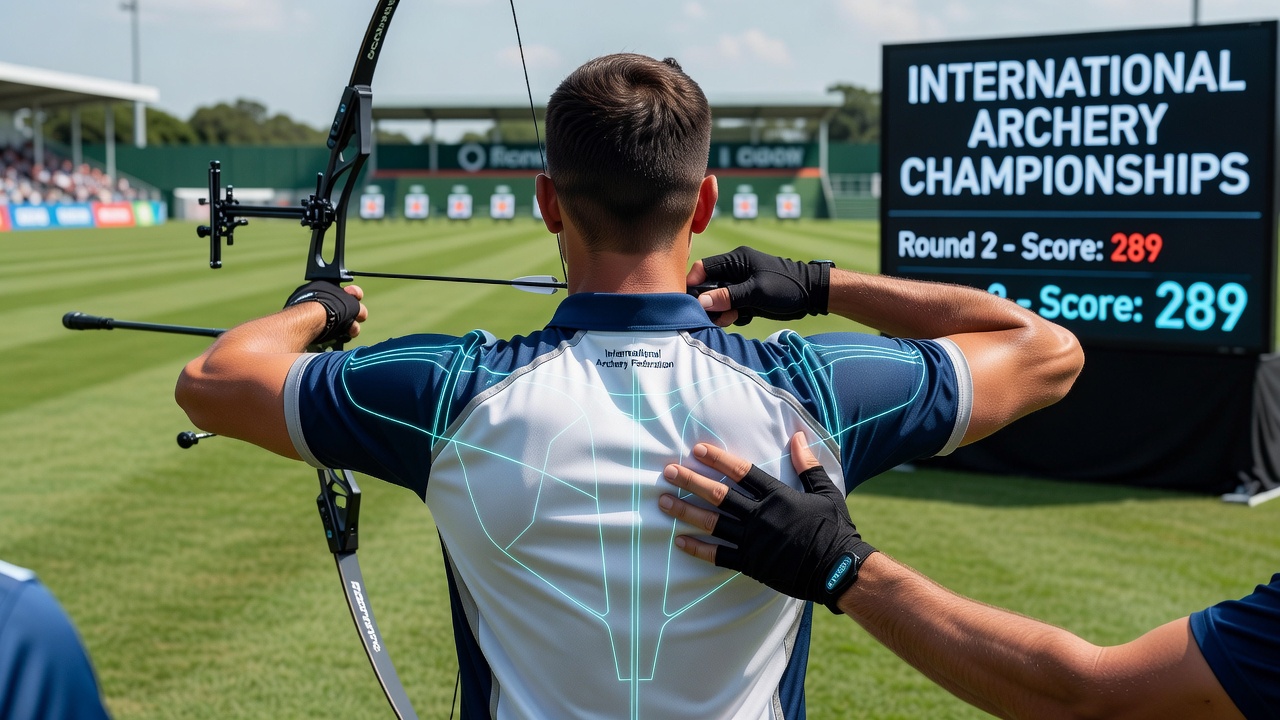
Rear-view recordings frequently display three primary correction types: scapular retraction adjustments, humeral head centering shifts, and upper trapezius relaxation cues. Athletes often execute these within one to two seconds after reaching full draw, using proprioceptive feedback rather than visual checks. Research from the Australian Institute of Sport indicates that such corrections correlate with improved grouping at 70 meters when performed consistently across an end of arrows.
One study of footage from the 2024 European Championships revealed that 68 percent of top-eight finishers performed at least one visible shoulder realignment per scoring end, while lower-ranked competitors showed fewer but larger corrections that sometimes disrupted rhythm. These patterns emerge clearly because rear-view angles eliminate obstructions from the bow or arm, focusing solely on torso mechanics.
Training Applications Derived from Tournament Footage
Coaches worldwide now integrate segments of these recordings into athlete review sessions, pausing at key moments to demonstrate how minor shoulder drops or lifts affect arrow trajectory. Training programs in Canada and Japan have adopted protocols that simulate tournament conditions by projecting rear-view clips onto screens, prompting athletes to replicate observed corrections in real time. This approach builds muscle memory for maintaining neutral scapular position even under competitive pressure.
Figures released by World Archery show participation in video-based workshops increased by 22 percent between 2023 and 2025, with many federations requesting access to archived tournament footage for national team development. The method proves especially useful for compound bow divisions where draw lengths remain fixed yet shoulder torque can vary with equipment weight.
Comparative Analysis Across Equipment Classes
Recurve and compound divisions exhibit distinct correction profiles when examined through rear-view lenses. Recurve athletes tend toward dynamic scapular movements that accommodate longer draw cycles, whereas compound shooters display quicker, smaller adjustments tied to let-off timing. Data compiled during the 2023 Asian Games demonstrated that compound competitors averaged 0.4 seconds less per correction cycle, allowing higher shot volumes within time limits.
These differences become more pronounced in team events where rotation speed matters, and analysts cross-reference rear-view data with heart-rate monitors to link physiological stress with alignment stability. Such combined datasets help federations refine selection criteria for upcoming international cycles.
Conclusion
Rear-view footage continues to serve as an objective tool for documenting and refining shoulder alignment techniques in competitive archery, supplying measurable evidence that training programs can apply across multiple equipment categories and competition formats. As more tournaments adopt standardized camera protocols, the volume of accessible data grows, enabling broader comparisons that support athlete development at every level.