Spin Rate Data Reveals Rally Reset Patterns in Table Tennis Asian Championships
Written by Casey Krause · Jul 11, 2026
Spin Rate Data Reveals Rally Reset Patterns in Table Tennis Asian Championships
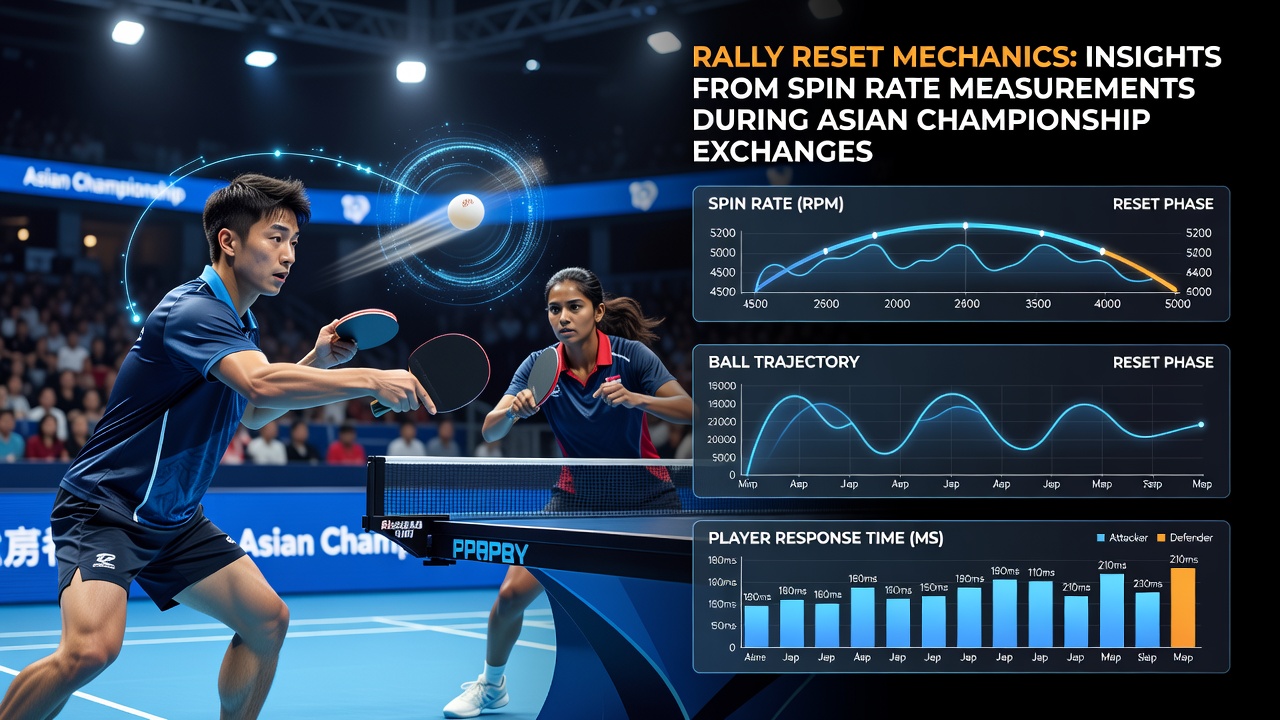
Table tennis rallies in major Asian competitions demonstrate distinct reset phases where players transition between points, and spin rate measurements provide quantitative details on how these sequences unfold. Data collected during exchanges at recent Asian Championships show that spin values fluctuate sharply after each point concludes, reflecting adjustments in racket angle, ball contact timing, and preparatory movements before the next serve initiates.
Researchers tracking elite competitors note that average spin rates during active rallies often reach between 80 and 150 revolutions per second, yet these figures drop noticeably in the brief intervals that follow point completion. The reset period involves a measurable reduction in rotational velocity as athletes reposition their feet, shift grip pressure, and recalibrate stance for the subsequent exchange. Video analysis from championship venues confirms that these transitions last between 2.5 and 4 seconds on average, allowing sufficient time for spin dissipation before fresh acceleration begins.
Measurement Techniques Applied in Championship Settings
High-speed cameras operating at 1000 frames per second combined with Doppler radar sensors capture the precise spin characteristics of each ball trajectory throughout extended rallies. Technicians position equipment along the sidelines and above the table to record both topspin and backspin variations that emerge during serve returns and counter-loops. According to studies published by the International Table Tennis Federation, such instrumentation reveals consistent patterns where players from different Asian national teams exhibit unique reset signatures tied to their preferred playing styles.
One analysis of matches from the 2024 championships indicated that Chinese competitors typically maintain higher residual spin during resets compared with athletes from Japan or South Korea, a difference attributed to variations in racket rubber composition and follow-through mechanics. These measurements help coaches identify when a player initiates the next rally with insufficient spin recovery, leading to predictable errors on opening serves.
Patterns Observed Across Multiple Exchanges
Spin data collected across dozens of rallies shows that reset mechanics follow a repeatable sequence: initial deceleration after ball contact with the table, followed by a stabilization phase where spin hovers near zero, then rapid re-acceleration as the serve motion commences. Observers note that longer rallies produce more pronounced spin decay during resets because cumulative fatigue affects wrist snap and forearm rotation on subsequent points. In contrast, shorter exchanges allow quicker spin recovery and sharper resets.

Additional findings from the same datasets highlight regional differences in reset timing. Athletes representing Southeast Asian federations tend to extend the stabilization window by an extra half-second, which correlates with slightly lower peak spin on the ensuing serve. European research groups working with similar sensor arrays have corroborated these observations while studying cross-continental training exchanges, confirming that environmental factors such as humidity and table surface friction also influence spin retention during resets.
Implications for Training and Competition Preparation
Coaching staffs at national centers use spin rate profiles to design drills that simulate championship reset conditions. Players practice rapid spin regeneration through targeted wrist and elbow exercises that replicate the acceleration curves measured in actual tournament footage. Data from the Asian Table Tennis Union indicates that incorporating these sensor-informed sessions has produced measurable improvements in serve consistency across multiple age groups during preparatory camps.
Upcoming events scheduled for July 2026 in Bangkok will likely feature expanded sensor deployment, allowing further refinement of reset mechanics analysis. Federations plan to integrate real-time spin feedback systems that display values on courtside monitors, giving athletes immediate information about their transition efficiency between points.
Conclusion
Spin rate measurements collected during Asian Championship exchanges establish a factual foundation for understanding rally reset mechanics in table tennis. The documented patterns of deceleration, stabilization, and re-acceleration provide coaches and players with objective benchmarks that guide technical adjustments and competition strategy. Continued data collection at future events will expand the available evidence base and support ongoing refinements in training methodologies across the sport.