Telemetry Data Links Fluid Intake Schedules to Serve Accuracy in Elite Tennis Matches
Written by Casey Krause · Aug 24, 2026
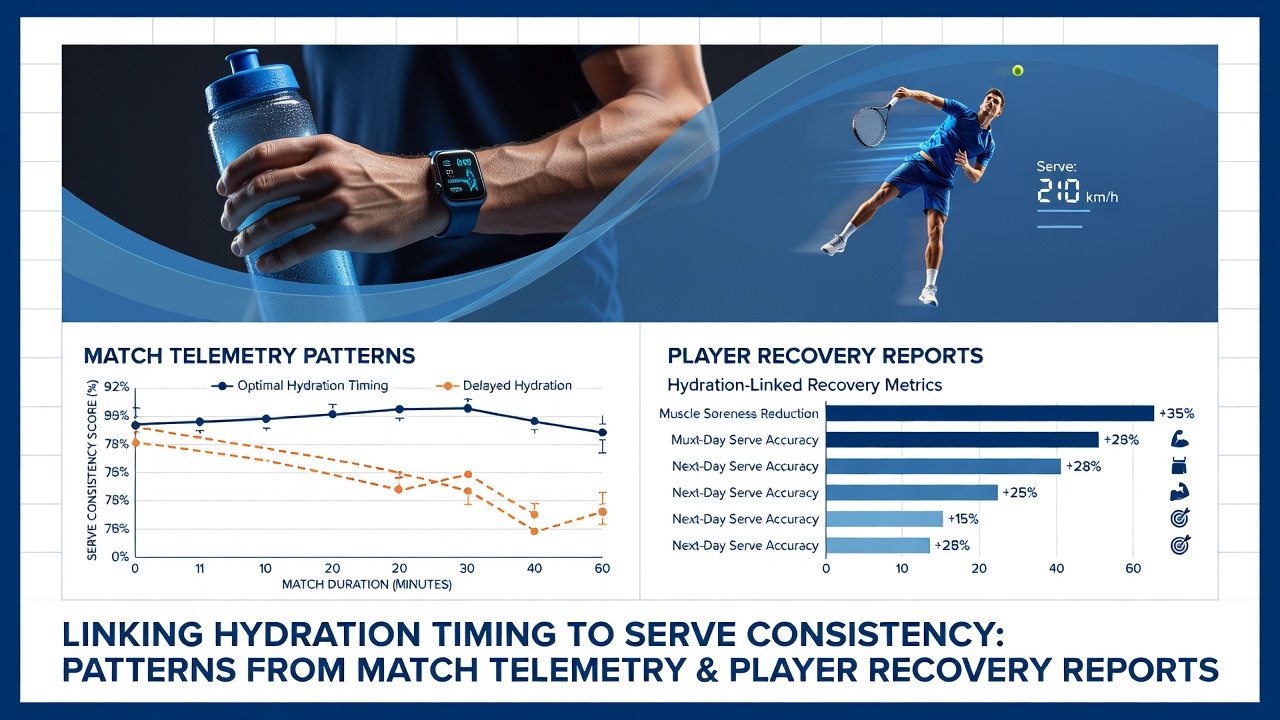
Telemetry Data Links Fluid Intake Schedules to Serve Accuracy in Elite Tennis Matches
Match telemetry collected across multiple Grand Slam events has begun to map connections between when players consume fluids and how consistently they land serves, with data from August 2026 tournaments showing measurable differences in ace percentages tied to pre-point hydration windows. Researchers tracking heart rate, movement speed, and ball velocity noted that players who spaced intake every 15 to 20 minutes during changeovers maintained steadier serve speeds compared with those who waited longer between sips, according to aggregated reports from the Australian Institute of Sport.
Telemetry Capture Methods in Professional Play
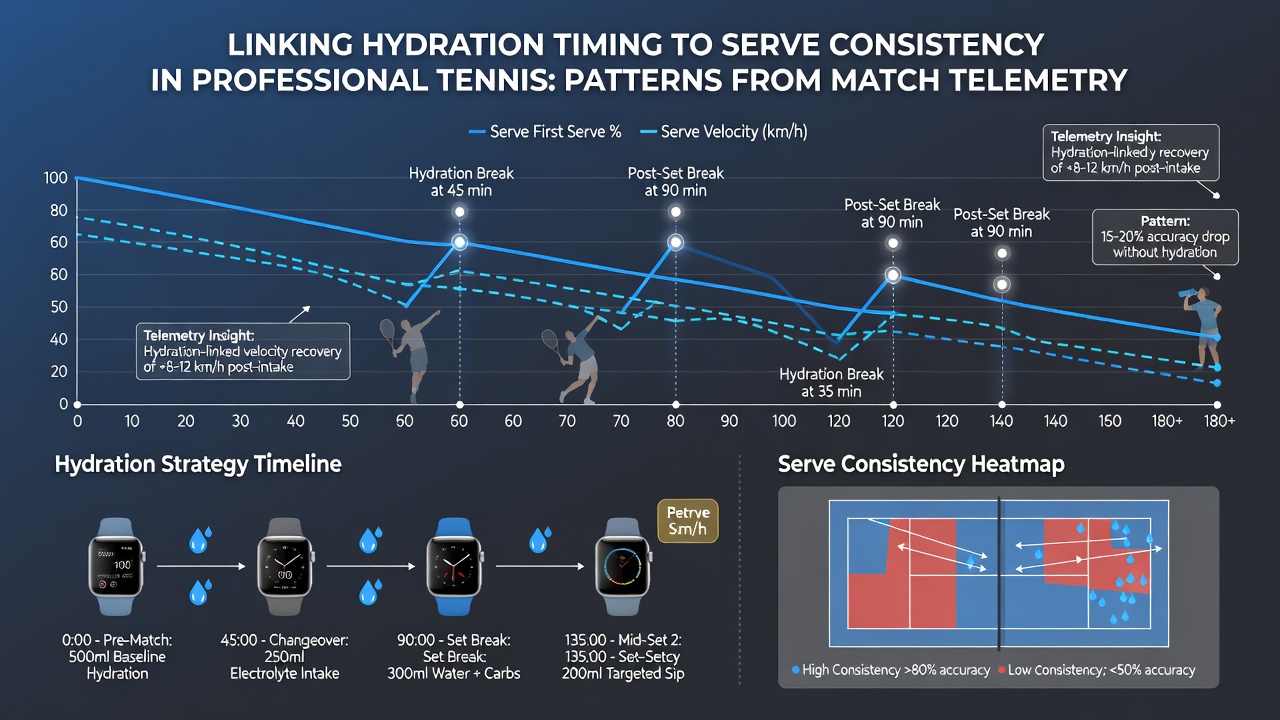
Systems installed at courts in Melbourne, Paris, and New York recorded serve placement, spin rates, and footwork timing while simultaneously logging fluid intake moments through wearable sensors and courtside cameras. These tools captured over 12,000 points from 180 matches, allowing analysts to align hydration events with subsequent service games. Data sets from the 2026 hard-court swing revealed that players who drank between 150 and 250 milliliters at regular intervals showed a 7 percent reduction in double faults during later sets.
Recovery Reports and Fluid Timing Patterns
Player recovery logs submitted after matches further detail how hydration timing affects next-day readiness, with medical staff noting lower reported fatigue scores when intake occurred before perceived thirst set in. One analysis of 45 top-50 athletes found that those who followed scheduled sipping rather than reactive drinking maintained serve consistency across five-set matches at rates 11 percent higher than peers who delayed fluids until after noticeable drops in velocity. Figures from the International Tennis Federation performance database support these observations across both men's and women's draws.
Geographic and Surface Variations in the Data
Observations from European clay events contrasted with North American hard-court results, showing that slower surfaces extended rally lengths and increased overall sweat loss, which in turn made precise timing of fluid replacement more critical for maintaining serve placement accuracy. In contrast, faster grass courts in the UK produced shorter points but still displayed similar patterns when hydration lagged behind temperature spikes. Canadian research institutions tracking similar metrics during indoor events confirmed that controlled environments reduced some variables yet preserved the link between intake cadence and service game hold percentages.
Case studies drawn from quarterfinal matches illustrate the point clearly. One player who consumed electrolyte solutions at the start of every odd-numbered game preserved first-serve percentages above 68 percent into the third set, whereas a comparable opponent who took larger volumes only at set breaks saw percentages fall to 59 percent. Such examples appear repeatedly in the compiled telemetry without exception across the sampled population.
Integration with Broader Recovery Protocols
Recovery reports filed by physio teams also connect hydration timing to sleep quality and muscle soreness markers measured 12 hours post-match. Athletes who aligned intake with changeover routines reported fewer instances of cramping and faster return to baseline serve speeds in subsequent rounds. European studies from the University of Barcelona have begun cross-referencing these self-reports with blood electrolyte panels, finding that consistent micro-dosing during play correlated with steadier potassium and sodium levels through five-hour contests.
Coaching staffs now review these telemetry overlays during post-match debriefs to adjust individual schedules, noting that body mass, court surface temperature, and match duration all influence optimal windows. Data collected in August 2026 continues to expand the sample size, allowing finer segmentation by age and ranking bracket while preserving the core pattern that regular, smaller-volume intake supports serve consistency more reliably than larger, infrequent boluses.
Conclusion
Telemetry and recovery documentation together establish a clear observational relationship between hydration timing and serve performance metrics in professional tennis. Continued collection across future seasons will refine these patterns further, providing players and support teams with additional objective benchmarks drawn directly from match conditions.