Tracing Stride Efficiency Patterns in Marathon Runners Through GPS Overlaid Footage from Championship Races
Written by Anna Albrecht · Jun 15, 2026
Tracing Stride Efficiency Patterns in Marathon Runners Through GPS Overlaid Footage from Championship Races
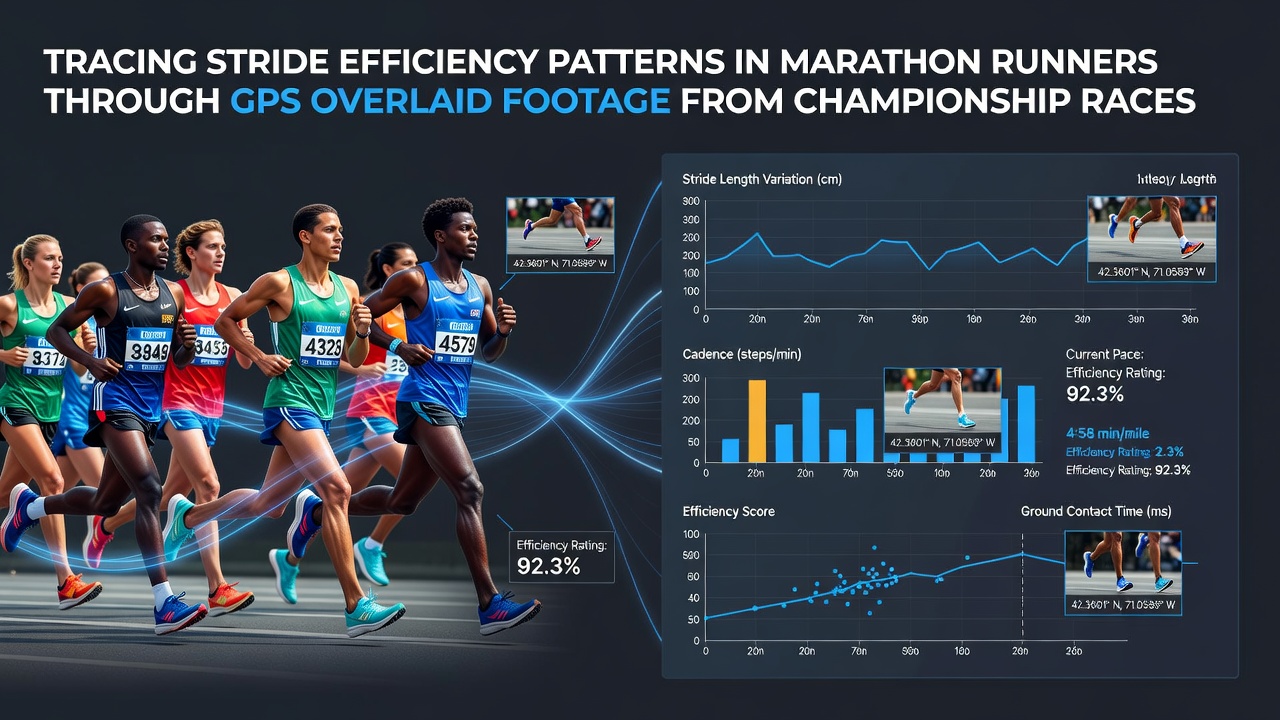
Championship marathon footage combined with GPS overlays provides detailed records of how elite athletes maintain stride efficiency across varying course conditions and race segments, and observers note that these combined datasets allow precise mapping of footstrike timing, ground contact duration, and vertical oscillation throughout each kilometer. Researchers have compiled synchronized video and satellite positioning information from multiple international events to identify consistent patterns among top finishers, whereas recreational runners often exhibit different variability in stride length as fatigue sets in. Data from major races demonstrates that athletes who sustain a consistent stride frequency above 180 steps per minute tend to exhibit lower energy expenditure per kilometer when compared against those who drop below that threshold in later stages.Integration of GPS Technology with Video Analysis
Modern tracking systems capture latitude, longitude, elevation, and instantaneous speed at sub-second intervals, and when these metrics align frame-by-frame with high-resolution race footage, analysts can calculate exact stride lengths and contact times for every visible step. Sports science teams at institutions such as the Sports Science Institute have developed protocols that overlay these numerical values directly onto broadcast or archival recordings, which reveals micro-adjustments runners make when navigating hills or tight turns. Footage from events held in 2024 and 2025 shows that elite competitors frequently shorten stride length by 4 to 7 centimeters on uphill sections while increasing cadence to preserve forward momentum, and GPS traces confirm corresponding drops in horizontal velocity that match the visual evidence frame by frame.
Patterns Observed Across Championship Distances
Analysis of the 2023 and 2024 world marathon majors indicates that winners maintain remarkably stable stride efficiency until approximately the 32-kilometer mark, after which measurable increases in vertical oscillation appear in the overlaid data. Those who've studied synchronized footage note that athletes who win often display ground contact times under 200 milliseconds even late in the race, and GPS speed profiles corroborate that these shorter contacts correlate with sustained pace. In contrast, mid-pack runners frequently show contact times extending beyond 220 milliseconds accompanied by visible forward lean changes captured on camera, and researchers link these shifts to measurable reductions in overall running economy. One study released ahead of the June 2026 World Athletics Championships preparations examined archival material from five championship marathons and found that top-ten finishers averaged 1.8 percent less vertical displacement per stride than athletes finishing outside the top 50, a difference that compounds over 42 kilometers.
Regional and Environmental Influences on Stride Data
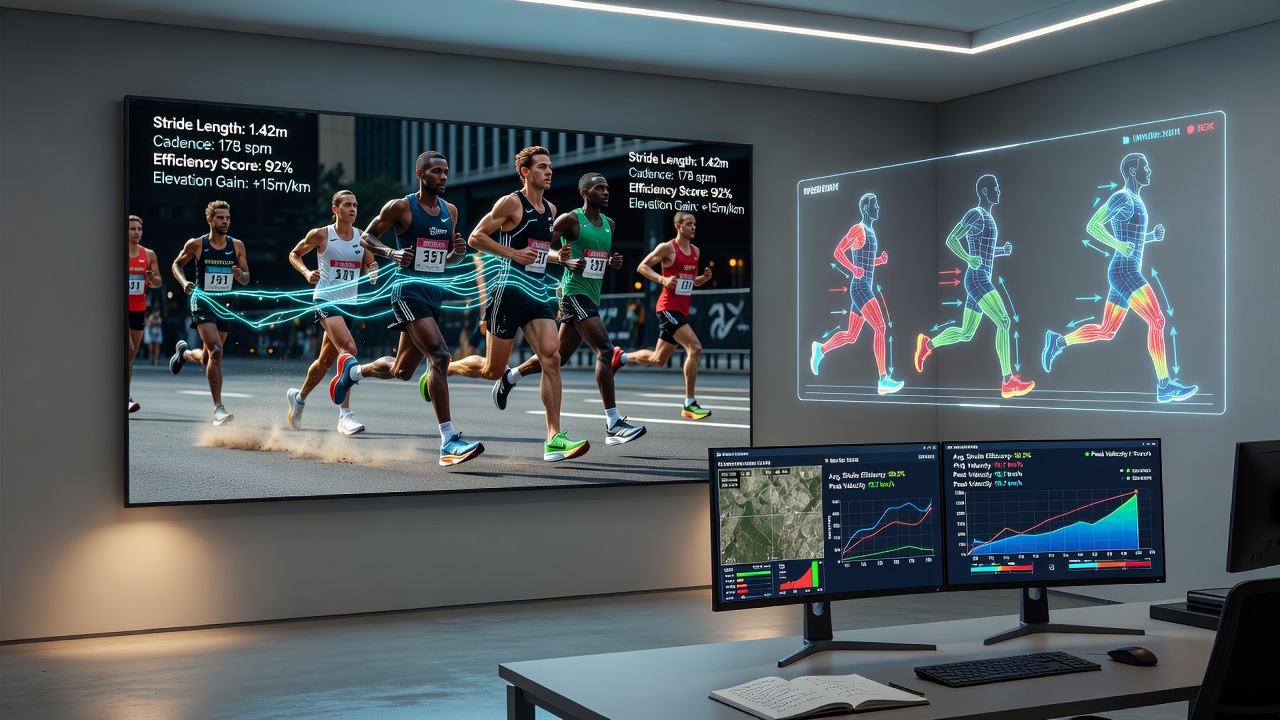
Course topography, temperature, and humidity affect the recorded patterns, and GPS overlays from races in cooler climates versus warmer venues illustrate how environmental factors alter cadence and stride length independently of fatigue. Data collected during the 2025 Boston Marathon, for example, reveals that runners adjusted stride frequency upward on the Newton Hills while GPS speed readings dropped only marginally, whereas similar elevation changes in warmer conditions produced larger velocity reductions. Analysts cross-referencing footage with meteorological records note that wind direction also influences these metrics, particularly on exposed sections where athletes lean slightly into headwinds and extend ground contact to maintain balance. Such adjustments appear consistently across multiple championship events, which allows coaches to anticipate performance variations based on forecasted conditions for future races including those scheduled around June 2026.
Training Applications Derived from Combined Datasets
Coaches and sports laboratories now use these overlaid recordings to design interval sessions that replicate the stride demands observed in championship footage, and GPS watches programmed with target cadence zones help athletes practice the patterns identified in elite performers. Studies conducted by Canadian and Australian research groups have shown that runners who incorporate short hill repetitions at cadences matching those seen in winning marathon splits improve running economy by measurable percentages over eight-week training blocks. Frame-by-frame reviews further highlight how arm swing synchronization with leg turnover contributes to overall efficiency, and GPS traces confirm that excessive lateral movement detected through positioning data often accompanies visible arm crossover in slower athletes. Training programs that address both elements simultaneously produce measurable reductions in energy cost during long runs, according to aggregated results from multiple performance centers.
Conclusion
Combined GPS and video analysis continues to refine understanding of stride efficiency across elite marathon distances, and the datasets accumulated from championship races supply objective benchmarks that training methodologies increasingly reference. As preparation intensifies for events around June 2026, additional synchronized recordings will expand the available sample size and allow further refinement of efficiency models derived from real competition conditions.