Unveiling Grip Variations That Transform Serve Accuracy in Competitive Tennis Through Sequential Motion Studies
Written by Iris Long · May 21, 2026
Unveiling Grip Variations That Transform Serve Accuracy in Competitive Tennis Through Sequential Motion Studies
Competitive tennis players refine their serves through precise grip adjustments that researchers track using sequential motion studies, and these analyses reveal how small changes in hand positioning alter ball trajectory and landing consistency. Athletes often experiment with continental, eastern, and semi-western grips while high-speed cameras record joint angles and racket paths frame by frame.
Core Grip Types and Their Kinematic Profiles
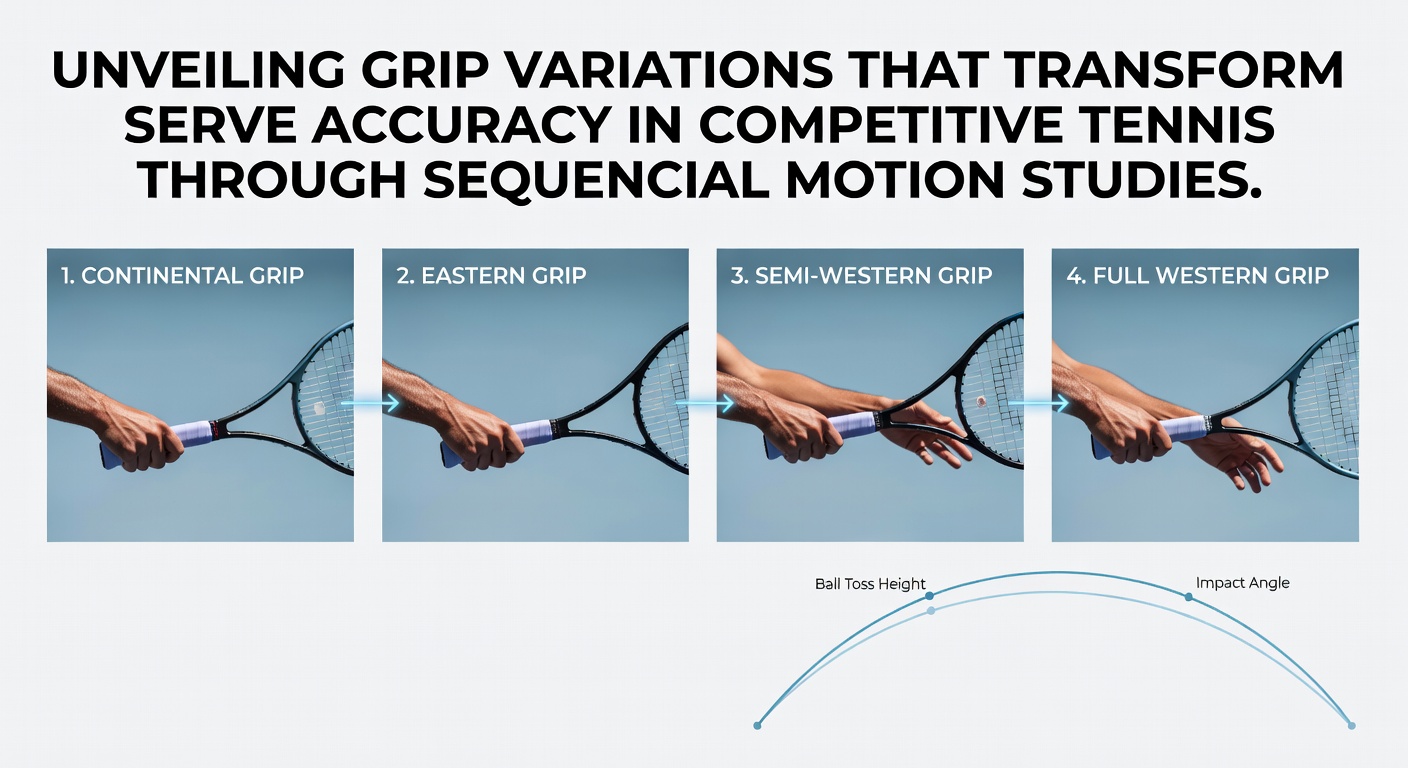
Sequential motion studies break down the serve into distinct phases that include the toss, racket drop, acceleration, and contact, while data from motion labs show that the continental grip creates a neutral wrist angle which supports both flat and slice deliveries without excessive pronation. Players who switch to an eastern grip during practice sessions notice altered supination patterns that increase topspin potential yet require compensatory shoulder rotation to maintain directional control. Researchers at sports science centers document these transitions through synchronized video sequences that capture racket face orientation at impact with millisecond precision.
Coaches incorporate these findings into training protocols that emphasize gradual grip shifts rather than abrupt changes, and studies indicate that athletes who practice grip variations under controlled conditions improve their first-serve percentages over multi-week periods. Motion analysis further demonstrates that semi-western grips produce pronounced wrist extension during the upward swing, which generates higher ball speeds but narrows the margin for error on wide serves.
Sequential Analysis Techniques in Modern Labs
Researchers employ multi-camera systems positioned around practice courts to reconstruct three-dimensional serve mechanics, and the resulting models highlight how grip pressure influences forearm muscle activation sequences. Data collected during May 2026 sessions at international training facilities reveal timing differences of 15 to 25 milliseconds between grip types at the moment of ball contact. Analysts compare these sequences across professional and developing players to identify patterns that correlate with higher accuracy rates on second serves.
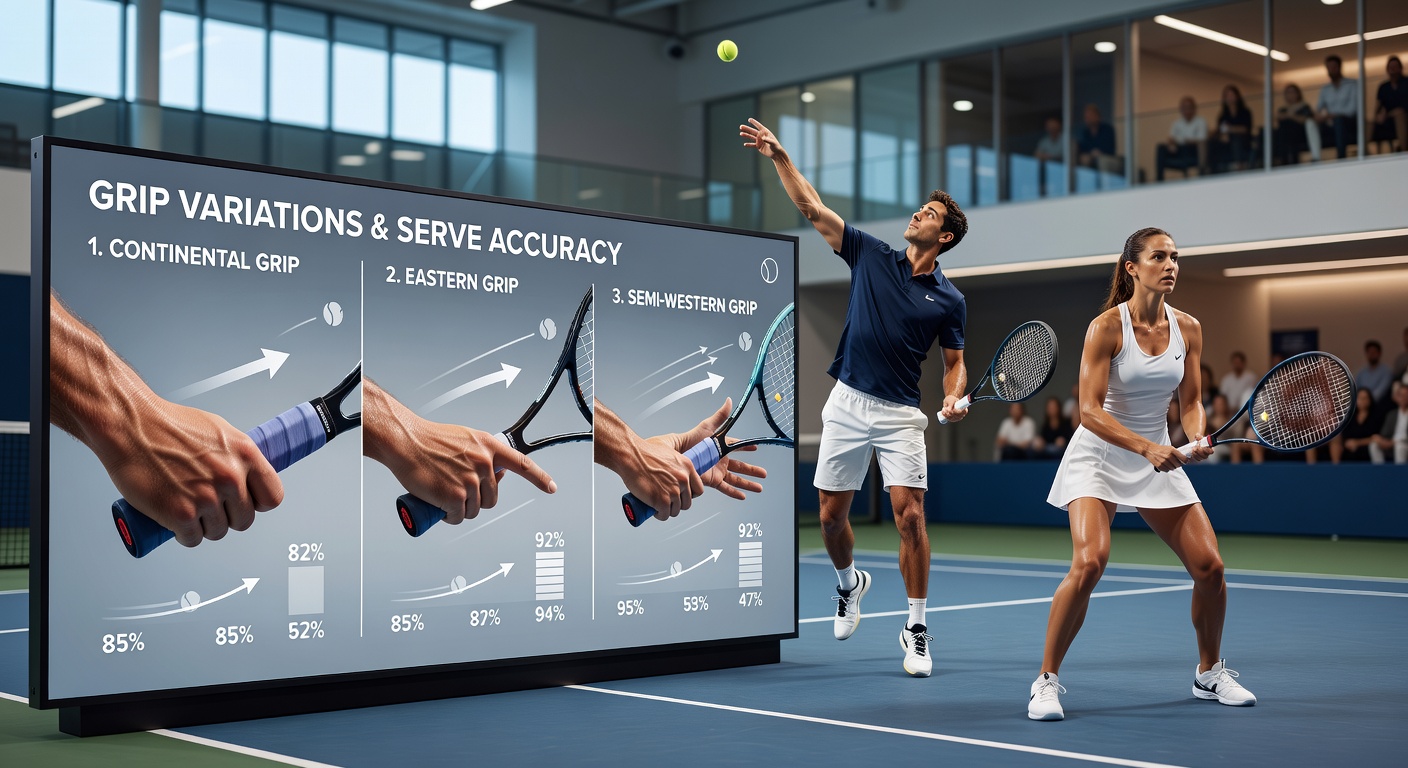
One study from an Australian research institute tracked elite competitors through entire match simulations while monitoring grip force sensors attached to racket handles, and results showed that subtle thumb repositioning along the bevels reduced net cord errors by measurable margins. European biomechanics groups have since replicated similar protocols using wearable technology that logs wrist deviation throughout the full kinetic chain. Observers note that these layered datasets allow coaches to prescribe individualized grip drills instead of generic technique corrections.
Practical Applications for Competitive Players
Training programs now integrate motion study outputs into daily routines that feature shadow serves performed with alternating grips, and athletes report steadier ball toss consistency when they maintain light finger pressure throughout the motion. Tournament preparation often includes review of personal motion capture footage so players can adjust grip angles before matches on varying court surfaces. Data from governing bodies such as Tennis Australia indicate measurable gains in serve placement statistics among juniors who follow evidence-based grip progression plans.
Coaching staff at professional academies cross-reference sequential studies with on-court performance metrics, which enables them to predict how a grip modification will affect serve direction under fatigue conditions. Players who adopt these methods frequently discover that minor bevel shifts produce outsized improvements in kick serve depth without sacrificing speed. Industry reports from the International Tennis Federation further support the integration of motion analysis into certification courses for performance analysts.
Future Directions in Grip Research
Ongoing projects combine artificial intelligence with existing motion libraries to simulate grip variations before players attempt them on court, and early trials suggest faster adaptation rates for athletes who preview predicted outcomes. Partnerships between university labs in Canada and Asia continue to expand datasets that account for different grip sizes and hand morphologies. Those who review the latest findings recognize that sequential motion studies provide objective benchmarks rather than subjective coaching cues.
Conclusion
Sequential motion studies continue to map the relationships between grip variations and serve accuracy, supplying competitive tennis with concrete kinematic evidence that guides technique refinement. Players and coaches apply these insights through targeted drills and video feedback loops that emphasize measurable outcomes over intuition alone. As research expands across continents and incorporates advanced sensor technology, the field moves toward increasingly personalized approaches that enhance consistency on every serve.